A Descent into Visceral Emotion: Exploring Francis Bacon’s Triptych 2
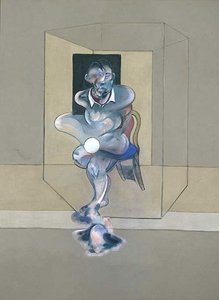
Francis Bacon's "Triptych 2" presents a stark and unsettling vision of the human condition, a world stripped bare of comfort and illusion. This triptych, comprised of three distinct yet interconnected paintings, embodies the artist’s signature style – a brutal honesty rendered in oil paint that confronts viewers with primal anxieties and the inherent loneliness of existence. The photograph captures not just images, but fragments of a psychological landscape, echoing themes prevalent throughout Bacon's oeuvre: isolation, fear, and the grotesque distortion of the human form.
Subject Matter and Compositional Dynamics
Each panel within "Triptych 2" depicts a moment of intense interaction, yet these moments are fraught with tension and ambiguity. The first painting showcases a solitary figure engaged in a seemingly innocuous activity – playing with a ball – but the oppressive darkness of the room suggests a profound sense of detachment and perhaps even despair. The second panel portrays dancers on stage, their movements frozen in a moment of apparent ecstasy, yet the composition hints at a desperate struggle for control or recognition. Finally, the third painting presents a disturbing tableau of two men, one holding a weapon, immediately introducing an element of threat and violence. The repetition of figures across the three panels reinforces the idea of fractured identities and the inescapable nature of human connection – often fraught with danger.
Technique and Style: A Masterclass in Expressionism
Bacon’s technique is characterized by a deliberate rejection of traditional representation. He employs thick, gestural brushstrokes, layering paint to create surfaces that appear almost sculptural. The use of black and white photography here emphasizes the raw physicality of his process, stripping away any potential for color distraction and intensifying the emotional impact. His figures are rendered with an unsettling distortion – elongated limbs, contorted faces, and a palpable sense of suffering. This technique isn’t merely stylistic; it's a deliberate attempt to bypass rational thought and tap directly into the viewer’s subconscious, triggering feelings of unease and discomfort. The influence of Surrealism is evident in his exploration of dreamlike imagery and psychological states, but Bacon transcends mere imitation, forging a uniquely personal and profoundly unsettling style.
Symbolic Resonance and Historical Context
"Triptych 2" was created during a period of immense social and political upheaval – the aftermath of World War II. The anxieties of the time, coupled with Bacon’s own troubled personal life (marked by instability and emotional detachment), fueled his artistic exploration of human vulnerability. The recurring motif of confinement—represented by the dark rooms and enclosed spaces—can be interpreted as a metaphor for the psychological prisons we create for ourselves. The gun in the third panel is not simply a symbol of violence, but perhaps a representation of the destructive forces within humanity itself. Bacon’s work reflects a broader artistic trend of the 20th century, moving away from representational art towards abstraction and exploring the darker aspects of human experience.
Emotional Impact and Artistic Legacy
“Triptych 2” is not a comfortable viewing experience. It demands engagement, forcing the viewer to confront uncomfortable truths about themselves and the world around them. Bacon’s work continues to resonate with audiences today because it speaks to universal anxieties – fear of isolation, loss of control, and the inherent absurdity of existence. As one of the most influential artists of the 20th century, Francis Bacon's legacy lies in his unflinching honesty and his ability to translate profound emotional experience into a powerfully visual language. A hand-painted reproduction of “Triptych 2” offers a unique opportunity to own a piece of this artistic genius, bringing its unsettling beauty and intellectual depth into your space.
Kysymykset ja vastaukset
Kuka on luonut teoksen "Triptych 2"?
Teos "Triptych 2" on yhdistetty Francis Bacon.
Kuinka tunnettu on Francis Baconn teos "Triptych 2"?
Teoksella Francis Bacon:n "Triptych 2" on Iconic suosioaste. Tämä luokitus heijastaa teoksen tunnettuutta.
Miten Francis Bacon:n "Triptych 2" yhdistää Expressionist Abstraction-suuntauksen taiteilijan kotimaahan?
Triptych 2 on Francis Bacon tekemä teos, joka on syntynyt Expressionist Abstraction-suuntauksen vaikutuksesta; taiteilija on kotoisin Irlanti. Taiteilijan alkuperä yhdistää teoksen Expressionist Abstraction-tyyliin, jota Irlanti-maasta kotoisin olevat taiteilijat edustavat.



 Esikatselu
 Osta käsinmaalattu taideteos
 Jaa teos
 Jaa
Jaa
 Tiedot
 Opas
Opas

 Lataa kuva
 Samanlaisia kohteita
 Röntgenkuvaus
 Diaesitys
 Q&A
Q&A Tilastot

 Lue lisää






































 Lasivaihtoehto on saatavilla vain alle 110 cm kokoisille teoksille