
Ilmainen taidekonsultointi

x
Tilaa maalaus Tilaa maalausOsta kuva Osta kuva JaaJaa
Tarkemmat tiedotTarkemmat tiedot Lisää suosikkeihin Lisää suosikkeihin LataaLataa SamanlaisiaSamanlaisia RöntgenkuvaRöntgenkuva DiaesitysDiaesitys

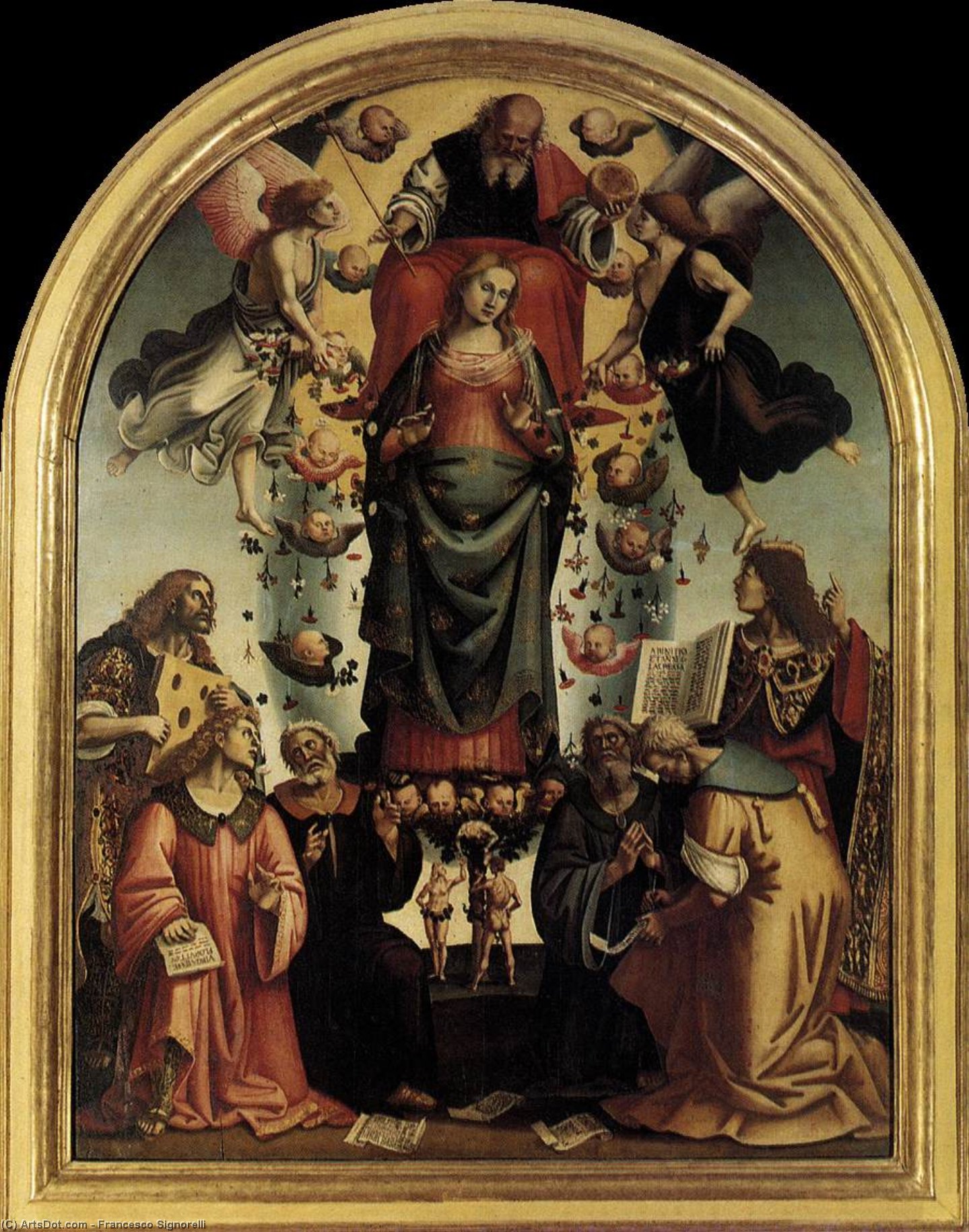
Immaculate Conception

Explore Francesco Signorelli's Renaissance artworks, known for religious themes & intricate details. Discover his legacy as an Italian master from Cortona.

Giclée-printit ja taideprintit

Museolaatuisia giclée- tai kankaitaulun tulosteita nopealla tuotannolla ja joustavilla viimeistelyvaihtoehdoilla.

Standard
custom
CM
INCH

Valitse valmiista mitoistamme sellaiset, jotka vastaavat teoksen alkuperäisiä mittasuhteita.

leveys
korkeus

Voit syöttää omat mitat sopiaksesi tiettyyn kehykseen tai tilaan. Jos valittu koko ei vastaa alkuperäisen kuvan mittasuhteita, rajaamme teosta tai laajennamme kuvaa peilatulla tai yhtenäisellä reunalla. Digitaalinen mallikuva lähetetään hyväksyttäväksi ennen tuotannon aloittamista.
Huomaathan, että näytöllä näkyvä esikatselu ei vastaa lopullista rajausta tai laajennusta. Vain mallikuva näyttää lopullisen sommittelun tarkasti.
Vaikka räätälöityjä kokoja on saatavilla, suosittelemme valitsemaan mitat valmiista listasta alkuperäisten mittasuhteiden säilyttämiseksi.

Toimitus maailmanlaajuisesti () kahdessa viikossa tavallisen 4–5 viikon sijaan. (20 heinäkuu)

why_choose_icon
Ilmainen pikatoimitus ympäri maailman
why_choose_icon
Korkealaatuinen pellavakangas
why_choose_icon
Kattava kuljetusvakuutus
why_choose_icon
Tulliveron palautustakuu
why_choose_icon
Täydellinen värien vastaavuustakuu
why_choose_icon
60 päivän palautusoikeus (vain valmistusvirheet)
why_choose_icon
100% rahat takaisin -takuu
why_choose_icon
Määräalennus tarjous

Kokonaishinta

-

reproduction

Immaculate Conception

Giclée-printit ja taideprintit

Replikaatin koko

-

Kokonaishinta

-


Taiteilijan elämäkerta

Francesco Signorelli: A Renaissance Master of Dramatic Foreshadowing

Francesco Signorelli (c.1495–1553) stands as a pivotal figure in the Italian Renaissance, largely overshadowed by his more celebrated uncle, Luca Signorelli, yet undeniably possessing an artistic legacy marked by profound innovation and masterful execution. Born in Cortona, Umbria—a region steeped in Etruscan history and burgeoning humanist ideals—Signorelli’s life unfolded amidst the intellectual fervor of the era, shaping him into a painter deeply attuned to both classical aesthetics and Christian spirituality. Precise biographical details remain elusive, primarily gleaned from his surviving artworks and scholarly interpretations, reflecting the common practice of documenting artists during this period.
  • Early Influences: Signorelli’s artistic education began under Luca Signorelli, who instilled in him a meticulous approach to anatomy and perspective—techniques that would become hallmarks of Signorelli's distinctive style. Luca’s influence extended beyond mere technical instruction; he fostered a commitment to portraying biblical narratives with dramatic intensity and psychological depth.
  • Cortona and Umbrian Patronage: Signorelli established his artistic career in Cortona, securing commissions from prominent ecclesiastical patrons—a testament to the esteem accorded to artists during the Renaissance. His frescoes adorning churches throughout Umbria showcase his mastery of color and composition, demonstrating a remarkable ability to convey emotion and narrative complexity.
  • Notable Works: Signorelli’s artistic output includes monumental frescoes depicting biblical scenes, notably “The Nativity” in Spoleto Cathedral—a masterpiece celebrated for its anatomical accuracy and emotive portrayal of the Virgin Mary and Joseph. Equally impressive is his depiction of “The Triumph of Saint Francis” in Pienza Cathedral, where he skillfully captures the saint's humility and spiritual fervor through nuanced shading and expressive gestures.

Technique and Artistic Innovation: Foreshortening and Dramatic Composition

Signorelli’s artistic approach distinguished itself from prevailing stylistic trends of his time—primarily through his pioneering use of foreshortening—a technique borrowed from classical sculpture that allowed him to create illusions of depth and realism within planar surfaces. This innovative method, meticulously applied in works like “The Nativity,” revolutionized painting conventions and foreshadowed developments in Baroque art. Signorelli’s compositions were characterized by dynamic movement and theatrical staging, reflecting a desire to engage the viewer emotionally and intellectually—a hallmark of Renaissance artistic ambition. He skillfully manipulated light and shadow to heighten dramatic impact, creating scenes imbued with palpable tension and spiritual resonance.
  • Classical Influence: Signorelli’s anatomical studies drew inspiration from classical sculpture, particularly Michelangelo Buonarroti's explorations of human form—demonstrating the enduring influence of Greco-Roman ideals on Renaissance art.
  • Dramatic Foreshortening: Signorelli’s masterful execution of foreshortening created astonishing illusions of depth and realism within frescoes, surpassing conventional techniques of his time.

Legacy and Historical Significance

Despite the relative obscurity surrounding Signorelli's personal life, his artistic achievements cemented his place as a significant contributor to the Italian Renaissance—a period defined by humanist scholarship, artistic experimentation, and religious fervor. Signorelli’s frescoes continue to captivate audiences today, serving as enduring symbols of Christian piety and artistic excellence. His innovative techniques—particularly foreshortening—influenced subsequent generations of painters, shaping the trajectory of Baroque art and establishing him as a precursor to dramatic visual storytelling. Francesco Signorelli's contribution to Renaissance art remains an inspiring testament to artistic vision and technical prowess.

Further Exploration

For deeper insights into Signorelli’s life and work, consult scholarly publications exploring his stylistic evolution and contextualizing his achievements within the broader intellectual landscape of the Renaissance. Examining his influence on Luca Signorelli and Michelangelo Buonarroti provides valuable perspective on artistic lineages and shared aesthetic sensibilities.
francesco signorelli

francesco signorelli

1495 - 1553 , Italy

Pikatiedot

  • Artistic Movement Or Style: Renaissance
  • Artists Or Movements Influenced By This Artist: ['Baroque']
  • Artists Who Influenced This Artist: ['Luca Signorelli']
  • Date Of Birth: c. 1495
  • Date Of Death: 1553
  • Full Name: Francesco Signorelli
  • Nationality: Italian
  • Notable Artworks: ['Holy Family with Saints John, Elisabeth, and Zacharias']
  • Place Of Birth: Cortona, Italy





































