Museolaatuisia giclée- tai kankaitaulun tulosteita nopealla tuotannolla ja joustavilla viimeistelyvaihtoehdoilla. ( Osta käsintehty maalaus Osta kuva)





























Valitse valmiista mitoistamme sellaiset, jotka vastaavat teoksen alkuperäisiä mittasuhteita.

Voit syöttää omat mitat sopiaksesi tiettyyn kehykseen tai tilaan. Jos valittu koko ei vastaa alkuperäisen kuvan mittasuhteita, rajaamme teosta tai laajennamme kuvaa peilatulla tai yhtenäisellä reunalla. Digitaalinen mallikuva lähetetään hyväksyttäväksi ennen tuotannon aloittamista.
Huomaathan, että näytöllä näkyvä esikatselu ei vastaa lopullista rajausta tai laajennusta. Vain mallikuva näyttää lopullisen sommittelun tarkasti.
Vaikka räätälöityjä kokoja on saatavilla, suosittelemme valitsemaan mitat valmiista listasta alkuperäisten mittasuhteiden säilyttämiseksi.
Toimitus maailmanlaajuisesti () kahdessa viikossa tavallisen 4–5 viikon sijaan. (6 syyskuu)


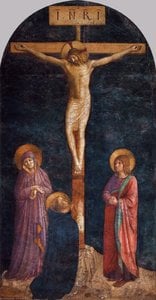
Perugian Triptyykki 3
Replikaatin koko
Fra Angelico’s *Perugia Triptych*, housed in the Galleria Nazionale dell’Umbria, is more than just a beautiful painting; it's a profound meditation on faith, intellect, and the very essence of the Early Renaissance. Completed between 1447 and 1448 for the Basilica of San Domenico in Perugia, this masterpiece transports viewers to a realm where divine grace intertwines with earthly beauty, offering a glimpse into the heart of a transformative era.
The triptych’s central panel showcases the *Madonna Enthroned with Child and Angels*, a composition that immediately establishes a sense of serene majesty. Fra Angelico masterfully employs geometric perspective – a technique still relatively novel at the time – to create an illusion of depth, drawing the eye upwards towards the celestial figures. The rich palette, dominated by golds, blues, and reds, evokes both the splendor of heaven and the earthly devotion that fueled its creation. The meticulous detail in rendering the drapery, the delicate features of the Virgin Mary, and the radiant wings of the angels speaks to Fra Angelico’s extraordinary skill and his unwavering commitment to portraying spiritual truth with breathtaking artistry.
Beyond its aesthetic beauty, the *Perugia Triptych* is laden with symbolism. The choice of Saint Augustine and Saint Jerome as central figures is deeply significant. These two Doctors of the Church—intellectual giants whose writings profoundly shaped Christian theology—represent the harmonious balance between faith and reason. Saint Augustine, holding a scroll, embodies wisdom gained through scholarly contemplation; his presence signifies the importance of intellectual pursuit in understanding God’s word. Saint Jerome, depicted in rich purple vestments, symbolizes penance and unwavering dedication to scripture – his translation of the Bible into Latin made it accessible to a wider audience, cementing his legacy as a champion of biblical study. The architectural setting itself—a stylized representation of a sacred city—functions as a potent symbol of the Church as a divine sanctuary, a place for learning, prayer, and spiritual growth.
The surrounding panels depict scenes from the life of Saint Nicholas, further enriching the triptych’s narrative tapestry. Each element, from the roses symbolizing purity to the table representing earthly sustenance, contributes to a complex web of meaning that invites contemplation and reflection. The use of geometric patterns in the background—a hallmark of Renaissance art—creates a sense of order and harmony, mirroring the divine structure of the universe.
Fra Angelico’s artistic technique is characterized by its exquisite detail, luminous colors, and masterful use of gold leaf. The painting was executed using tempera paint applied over a meticulously prepared wooden panel, then lavishly adorned with shimmering gold leaf. This gilding isn't merely decorative; it transforms the entire scene into something ethereal, evoking the heavenly realm and underscoring the sacredness of the figures. The smooth, polished surface of the gold contrasts beautifully with the subtle brushstrokes visible beneath, revealing the artist’s hand and adding a human touch to this divine representation.
Notably, Fra Angelico's style represents a transition from the rigidity of Gothic art towards the emerging clarity and proportional accuracy of the Renaissance. While perspective is present, it’s employed with restraint – subtly flattened to maintain a symbolic resonance rather than strict realism. The architectural elements—pointed arches, delicate spires, and intricately framed windows—create depth while simultaneously serving as a majestic setting for the saints.
The *Perugia Triptych* possesses an enduring emotional impact, radiating a sense of solemnity, reverence, and opulent beauty. The rich gold leaf creates a warm glow, while the dramatic lighting focuses attention on the central figures, fostering an intimate connection between viewer and subject. In an interior design context, this artwork—or a high-quality reproduction—would be ideally suited for spaces designed for quiet contemplation, such as libraries, studies, or meditation rooms. The painting’s serene quality lends itself well to creating a sanctuary of peace and reflection.
The color palette – dominated by gold, blue, and red – complements both warm and cool color schemes, adding a touch of historical elegance and spiritual depth. Its vertical format makes it ideal for hallways or above fireplaces, creating a striking focal point. Consider pairing with muted wall colors to allow the artwork’s luminosity to truly shine.


1395 - 1455 , Italia

Explore the profound iconography of Saint Jerome through art history's most iconic masterpieces. From Renaissance serenity to Baroque drama, discover how legendary painters captured divine devotion in breathtaking oil paintings and fine art reproductions.

Embark on a profound journey through the ethereal masterpieces of Fra Angelico. Discover the spiritual depth, divine light, and technical brilliance of the 'Angelic Painter' in this expert exploration of Early Renaissance devotion and sacred art history.

Discover the profound beauty of Saint Artworks. Explore the history, symbolism, and luminous mastery of Renaissance religious masterpieces through an expert art-historical lens.

Embark on a profound journey through art history with our exploration of Saint Francis's most iconic works. Discover Giotto’s revolutionary frescoes and the spiritual depth of Proto-Renaissance masterpieces through an expert lens for the true classic art enthusiast.

Embark on a sophisticated journey through art history with our exploration of Saint Peter's most powerful masterpieces. Discover the profound emotional depth and technical brilliance of Renaissance and Baroque icons, curated for the discerning classic art enthusiast.

 Esikatselu
 Jaa
Jaa Jaa
Jaa
 Tarkemmat tiedot

 Lataa
Lataa
 Samanlaisia
 Röntgenkuva
 Diaesitys

 Näytä lisää







 Lasivaihtoehto on saatavilla vain alle 110 cm kokoisina teoksina