A Fragmented Vision of Modernity
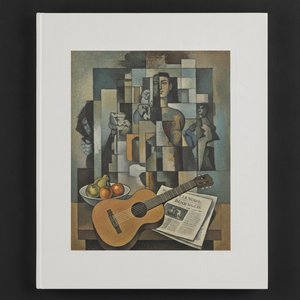
In the quiet intersection of Surrealist dreamscapes and the rigid precision of Cubism lies Fernand Léger’s 1932 masterpiece, The Bather. This is not merely a painting of a woman at rest; it is a profound meditation on the pulse of the machine age. As one gazes upon the canvas, the traditional boundaries of the human form begin to dissolve into a rhythmic arrangement of geometric shapes. Léger, a visionary who found beauty in the industrial and the mechanical, invites us to witness a moment where flesh and form are reimagineered through a lens of modern dynamism. The central figure, though undeniably present, serves as an anchor for a much larger exploration of how humanity might find its place within an increasingly structured, technological world.
The composition is a masterclass in controlled abstraction. Eschewing the deep, receding perspectives of classical art, Léger presents a flattened plane where shapes overlap and intersect with architectural intent. Two monumental, abstract forms—reminiscent of both natural boulders and industrial monoliths—flank the seated figure, creating a structural framework that feels both ancient and avant-garde. A delicate vase sits near the center, providing a subtle point of visual repose amidst the striking angles. Every line is deliberate, every edge sharp, mirroring the precision of the burgeoning factory lines and urban machinery that defined Léger’s era. It is a composition that demands active engagement, forcing the eye to reconstruct the fragmented reality presented on the canvas.
The Symphony of Color and Form
Léger’s palette in The Bather is a study in sophisticated restraint. Rather than overwhelming the viewer with a riot of color, he employs a nuanced selection of greens, creams, browns, and deep blacks to build a sense of weight and texture. The muted green background acts as a soft stage, allowing the pale, luminous skin tones of the bather to emerge with a striking, almost sculptural clarity. This contrast between the organic softness of the figure and the darker, more rigid geometric elements creates a palpable visual tension—a tug-of-war between the natural world and the man-made structure.
The technique itself is remarkably smooth, with minimal visible brushstrokes that lend the work an almost polished, industrial finish. This lack of painterly texture emphasizes the importance of shape and contour over individual gesture. Through subtle tonal variations, Léger suggests depth and volume without relying on traditional shading, creating a sense of "tubism"—his signature style where cylindrical forms provide a sense of three-dimensional presence within a two-dimensional space. For the collector or interior designer, this balance of muted tones and bold outlines offers a versatile aesthetic that can anchor a room with both historical gravity and modern elegance.
An Emotional Resonance for the Modern Space
Beyond its technical brilliance, The Bather carries an emotional weight that transcends its era. There is a certain introspection, perhaps even a touch of melancholy, found in the figure’s posture and the fragmented way her body is presented to the world. It evokes the feeling of a deconstructed identity, reflecting the fragmentation of modern life itself. Yet, there is also a sense of strength and permanence in the heavy, geometric elements that surround her, suggesting a resilience in the face of change.
For those seeking to curate a space filled with intellectual depth and artistic prestige, this reproduction offers more than just decoration; it offers a conversation piece. Whether placed in a contemporary minimalist gallery or a richly textured study, the painting’s ability to harmonize bold, structural lines with soft, evocative tones makes it an enduring choice. It remains a powerful symbol of the moment when art stopped merely reflecting life and began to actively re-engineer our perception of reality.



 Esikatselu
 Osta printti
 Jaa
Jaa Jaa
Jaa
 Tarkemmat tiedot

 Lataa
Lataa
 Samanlaisia
 Röntgenkuva
 Diaesitys


 Näytä lisää






































 Lasivaihtoehto on saatavilla vain alle 110 cm kokoisina teoksina