


x

Käsinmaalattu öljyväri kankaalle haluamassasi koossa ja kehyksissä, taiteilijoidemme valmistamana tilauksesta.
Valitse valmiista mitoistamme sellaiset, jotka vastaavat teoksen alkuperäisiä mittasuhteita.

Voit syöttää omat mitat sopimaan tiettyyn kehykseen tai tilaan. Jos valitsemasi koko ei vastaa alkuperäisen kuvan mittasuhteita, rajaamme taideteoksen tai jatkamme maalausta käsin maalatuilla elementeillä. Digitaalinen esikatselu lähetetään hyväksyttäväksi ennen tuotannon aloittamista.
Huomioithan, että näytöllä oleva esikatselu ei vastaa todellista rajausta tai jatkamista. Vain digitaalinen mallikuva näyttää lopullisen sommittelun tarkasti.
Vaikka mittatilaustyöt ovat mahdollisia, suosittelemme valitsemaan mitan ennalta määritetystä listasta alkuperäisten mittasuhteiden säilyttämiseksi.
Maailmanlaajuinen toimitus () 3–4 viikossa tavallisen 5 viikon sijaan. (3 heinäkuu). Laadusta ei tingitä.


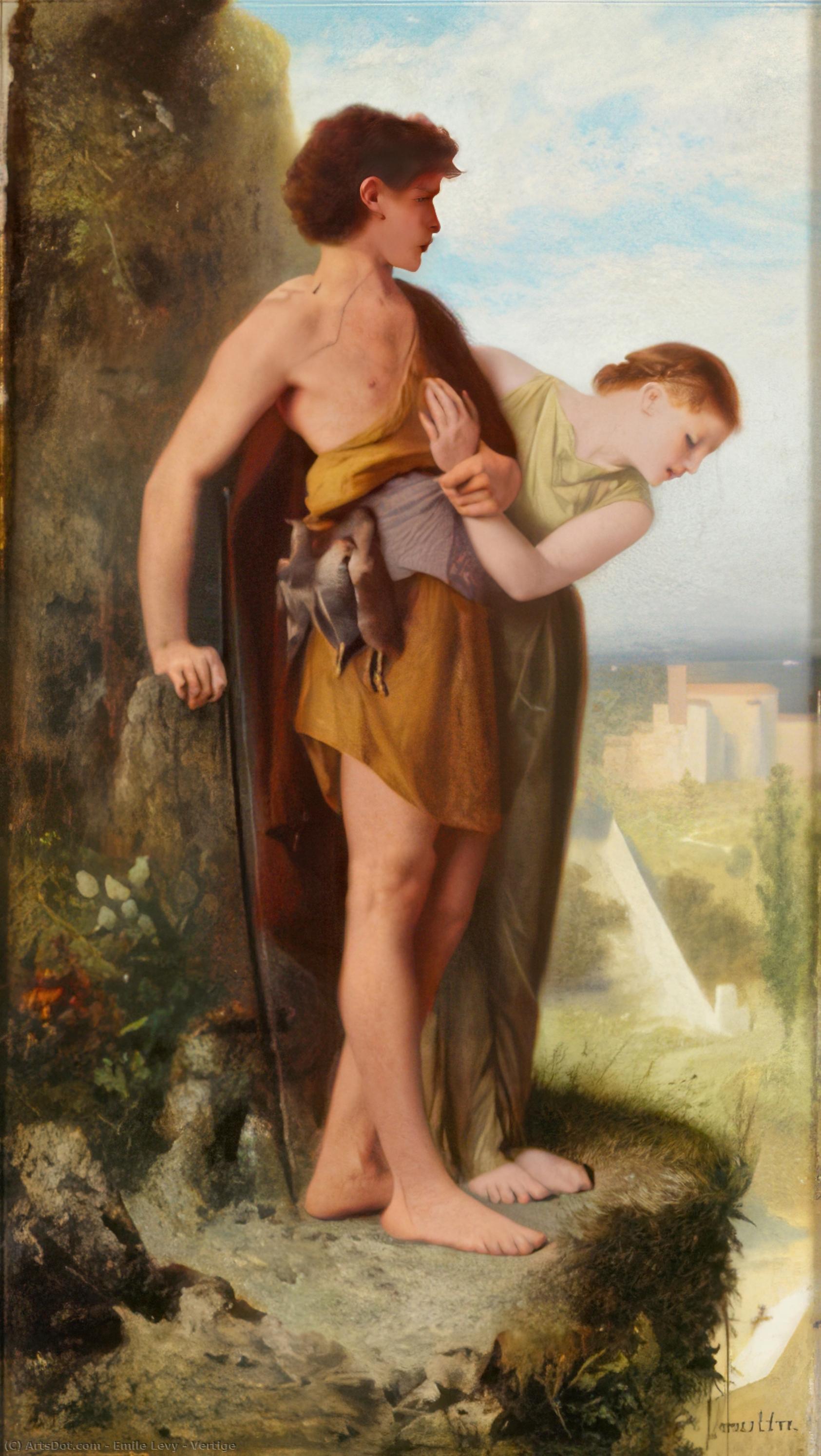
Vertige
Replikaatin koko


Émile Lévy, a French genre and portrait painter born in Paris on August 29, 1826, tragically passed away in 1890 at the young age of sixty-four. Despite his brief artistic career, Lévy left an indelible mark on the Impressionist movement, capturing fleeting moments of Parisian life with remarkable sensitivity and detail.
Lévy’s formative years were spent studying under François-Éouard Picot and Abel de Pujol at the École des Beaux-Arts in Paris. These influential teachers instilled in him a foundational understanding of classical technique alongside an appreciation for capturing atmospheric effects—a crucial element that would define his distinctive style.
His artistic breakthrough arrived with the prestigious Grand Prix de Rome in 1854, securing him considerable recognition and propelling him into the Parisian art scene. Immediately following his return from Italy, Lévy established himself as a dedicated portraitist, diligently documenting the faces of his era.
Lévy’s exhibitions at the Salon garnered critical acclaim, notably earning him a first-class medal in 1878 and subsequently receiving the Legion of Honor in 1867. Among his most celebrated works are “Noah cursing Canaan” (1855), depicting biblical drama with dramatic lighting and compositional dynamism; “Supper of the Martyrs” (1859), a poignant portrayal of religious devotion rendered with meticulous realism; “Death of Orpheus” (1866), housed in the Luxembourg Museum, showcasing his masterful handling of color and texture; “Love and folly” (1874); “Infancy” (1885); “The elements,” presented at the Ministry of State Salon, capturing the grandeur of nature; and “Presentation of the Virgin,” adorning Trinity Church in Paris.
Lévy’s artistic legacy resides primarily in his evocative depictions of everyday life—scenes from Parisian streets and interiors imbued with a palpable sense of atmosphere. His ability to convey emotion through subtle brushstrokes and nuanced tonal gradations cemented his position as a significant contributor to Impressionism, ensuring that his paintings continue to resonate with viewers today.
Despite his tragically short life span, Émile Lévy’s artistic vision endured, leaving behind a collection of paintings that offer invaluable glimpses into the spirit of Belle Époque Paris and exemplify the enduring power of Impressionist art.

1888 - 1890


Pysy ajan tasalla uusimmista taideuutisista, eksklusiivisista tarjouksista ja sisustusideoista.
Kerro meille projektistasi, niin taideasiantuntijamme tarjoavat sinulle kolme henkilökohtaista taidesuositusta.
Anna meidän kuratoida 3 vaihtoehtoa juuri sinulle – Ilmaiseksi!
 Tilaa painos
 Jaa
Jaa Jaa
Jaa
 Tiedot

 Lataa
Lataa
 Samanlaisia
 X-lähikuva
 Diaesitys
 Näytä lisää




































 Lasivaihtoehto on saatavilla vain alle 110 cm kokoisina teoksina


