Ilmainen taidekonsultointi

x
Tilaa maalaus Tilaa maalausOsta kuva Osta kuva JaaJaa
DetailsDetails Lisää suosikkeihin Lisää suosikkeihin LataaLataa SamanlaisiaSamanlaisia X-RayX-Ray DiaesitysDiaesitys

Spring frost

Discover 'Spring Frost' by Elioth Gruner – a captivating Australian landscape painting of cows bathed in golden light. Explore the serene beauty and artistic mastery of this iconic work.

Elioth Gruner (1882-1939) oli arvostettu australialainen maisemapeitevaateliisa, joka tunnetaan rauhallisista maalauksista maaseudun New South Walesista ja seitsemän kerran voittaneena Wynne-palkinnon. Tutustu hänen impressionistisiin valoelämänsä tutkimuksiinsa!

Giclée-printit ja taideprintit

Museolaatuisia giclée- tai kankaitaulun tulosteita nopealla tuotannolla ja joustavilla viimeistelyvaihtoehdoilla.

P118B $10
P118H $10
P118W $10
P438Z $10
P508JH $12
P508YH $12
P805H $10
P805Z $10
P919BZ $10
P919G $10
P919XJ $10
P959ZH $10
P968JZ $12
W106C $8
W218G $10
W218JH $8
W218Y $10
W307PJ $10
W316G $10
W316PJ $8
W316Y $10
W398PJ $8
W4111J $10
W500HY $15
W500JH $15
W692G $12
W849H $8
W940BG $15
W953PJ $8

Standard
custom
CM
INCH

Valitse valmiista mitoistamme sellaiset, jotka vastaavat teoksen alkuperäisiä mittasuhteita.

leveys
korkeus

Voit syöttää omat mitat sopiaksesi tiettyyn kehykseen tai tilaan. Jos valittu koko ei vastaa alkuperäisen kuvan mittasuhteita, rajaamme teosta tai laajennamme kuvaa peilatulla tai yhtenäisellä reunalla. Digitaalinen mallikuva lähetetään hyväksyttäväksi ennen tuotannon aloittamista.
Huomaathan, että näytöllä näkyvä esikatselu ei vastaa lopullista rajausta tai laajennusta. Vain mallikuva näyttää lopullisen sommittelun tarkasti.
Vaikka räätälöityjä kokoja on saatavilla, suosittelemme valitsemaan mitat valmiista listasta alkuperäisten mittasuhteiden säilyttämiseksi.

Toimitus maailmanlaajuisesti () kahdessa viikossa tavallisen 4–5 viikon sijaan. (2 heinäkuu)

why_choose_icon
Ilmainen pikatoimitus ympäri maailman
why_choose_icon
Korkealaatuinen pellavakangas
why_choose_icon
Kattava kuljetusvakuutus
why_choose_icon
Tulliveron palautustakuu
why_choose_icon
Täydellinen värien vastaavuustakuu
why_choose_icon
60 päivän palautusoikeus (vain valmistusvirheet)
why_choose_icon
100% rahat takaisin -takuu
why_choose_icon
Määräalennus tarjous

Kokonaishinta

-

reproduction

Spring frost

Giclée-printit ja taideprintit

Replikaatin koko

-

Kokonaishinta

-

Pikaista tietoa

  • Notable elements: Impressionistic light
  • Location: Art Gallery NSW
  • Dimensions: 157 x 206 cm
  • Year: 1919
  • Style: Landscape painting
  • Artist: Elioth Gruner
  • Title: Spring Frost

Taidevisa

Jokaisessa kysymyksessä on vain yksi oikea vastaus.

Kysymys 1:
What is the primary subject of Elioth Gruner’s ‘Spring Frost’?
Kysymys 2:
In what year was ‘Spring Frost’ painted?
Kysymys 3:
According to the provided text, what was a key factor in Gruner’s approach to painting ‘Spring Frost’?
Kysymys 4:
Which prize did ‘Spring Frost’ win in 1919?
Kysymys 5:
What artistic movement is most closely associated with Elioth Gruner’s style, as indicated by the text?

Teoksen kuvaus

A Dawn of Tranquility: Elioth Gruner’s “Spring Frost”

Elioth Gruner's "Spring Frost," painted in 1919, isn’t merely a depiction of a rural scene; it’s an immersion into the very essence of Australian light and landscape. This evocative work, now residing within the Art Gallery of New South Wales, captures a fleeting moment – the nascent warmth of early morning breaking over a pastoral vista—with a remarkable sensitivity to atmosphere and texture. Gruner, a pivotal figure in Australian Impressionism, masterfully translates the raw beauty of the Emu Plains countryside into a painting that resonates with both serenity and vibrant energy.

The scene unfolds before us: a small herd of dairy cows stands bathed in the soft glow of the rising sun, their forms rendered with a loose, expressive brushstroke. The foreground is dominated by a field of grass, its texture achieved through short, choppy strokes that seem to shimmer with reflected light. Beyond this immediate focus, the eye drifts into a hazy distance, where rolling hills and a muted sky create an expansive sense of space. Gruner’s choice of palette—a symphony of earthy browns, ochres, and subtle blues—evokes the cool tones of dawn while simultaneously injecting warmth through the golden highlights that dance across the cows' hides and the dew-kissed grasses.

The Influence of Light and Color

Gruner’s technique is deeply rooted in the Impressionist tradition, yet he possesses a distinctly Australian sensibility. He wasn’t simply aiming to replicate what he saw; instead, he sought to capture the *feeling* of that moment—the crispness of the air, the warmth on the skin, and the transformative power of light. His use of broken color, characteristic of Impressionism, creates a sense of movement and vibrancy within the painting. The colors aren’t blended smoothly; rather, they are applied in small, distinct strokes, allowing each hue to retain its individual identity and contribute to the overall luminosity of the scene.

Notably, Gruner was influenced by Max Meldrum's theories on color and light, a prominent figure in early 20th-century Australian art. Meldrum’s emphasis on “tone” – the fundamental quality of light—guided Gruner to prioritize capturing the subtle shifts in illumination across the landscape. This pursuit is evident in the painting’s masterful rendering of shadows and highlights, which create a dynamic interplay of form and atmosphere.

A Portrait of Rural Australia

"Spring Frost" isn't just a beautiful landscape; it’s also a poignant reflection on rural life in early 20th-century Australia. The presence of the cows—symbols of industry, sustenance, and connection to the land—underscores the importance of agriculture within the Australian identity. The solitary figure of the farmer, subtly integrated into the scene, suggests a quiet dignity and a deep understanding of his environment. This painting offers a glimpse into a world where life was intimately connected to the rhythms of nature.

Symbolism and Emotional Resonance

Beyond its representational qualities, “Spring Frost” is rich in symbolism. The title itself—"Spring Frost"—evokes a sense of delicate beauty and transient grace. The frost, barely perceptible yet undeniably present, hints at the fragility of life and the ephemeral nature of beauty. The painting’s overall mood is one of peaceful contemplation, inviting the viewer to slow down, appreciate the simple pleasures of rural existence, and connect with the natural world.

Reproductions of “Spring Frost” capture a significant portion of this original atmosphere. The artwork's enduring appeal lies in its ability to transport us to a bygone era—a time when life moved at a slower pace and the beauty of the Australian landscape was deeply revered. It remains a cornerstone of Australian art, embodying both the artistic innovation of its creator and the timeless allure of the bush.

Samankaltaisia teoksia


Taiteilijan elämäkerta

Elioth Gruner – Australian Landscape Painter Celebrated for Serene Depictions & Record Seven Wynne Prize Wins

Elioth Lauritz Leganyer Gruner, born December 16, 1882, in Gisborne, New Zealand, emerged from a family rooted in resilience and connection to the land—qualities that would profoundly shape his artistic vision. His father, Elliott Grüner, a Norwegian-born bailiff, instilled in him a steadfast spirit of determination alongside Mary Ann Brennan, his Irish mother, who nurtured his appreciation for beauty and observation. Their relocation to Sydney shortly after Elioth’s birth exposed him to an environment brimming with artistic fervor—a formative experience that ignited his lifelong passion for capturing the essence of the Australian landscape. Even as a young boy, Gruner demonstrated an innate talent for drawing, diligently cultivated by his mother who ensured he received instruction from Julian Ashton around twelve years old. However, fate dealt a cruel blow when both his father and older brother succumbed to illness, placing immense responsibilities upon him at just fourteen—a period marked by unwavering dedication to supporting his family while simultaneously pursuing his artistic pursuits with quiet perseverance.

Early Life & Artistic Beginnings – A Foundation of Observation

Gruner’s formative years were characterized by a deep immersion in the traditions of rural New Zealand and Australia. His father's practical experience as a bailiff instilled in him a grounded perspective, complementing Mary Ann Brennan’s nurturing influence—a combination that fostered his sensitivity to natural beauty and fueled his desire to translate it onto canvas. Recognizing his burgeoning talent, Ashton provided invaluable guidance, shaping Gruner’s artistic sensibilities and establishing a cornerstone for his future endeavors. The tragic loss of his family members underscored the importance of perseverance and reinforced his commitment to honoring their legacy through his art. From an early age, Gruner exhibited a remarkable aptitude for drawing—a passion nurtured by his mother who proactively arranged for lessons with Julian Ashton around twelve years old—demonstrating a dedication that would define his artistic journey.

Developing an Impressionistic Vision – Light and Atmosphere as Inspiration

Gruner’s artistic style is undeniably Impressionistic, though it evolved over time and absorbed influences from diverse sources. He possessed an extraordinary ability to capture the fleeting effects of light and atmosphere in the Australian bush—a skill that distinguishes his work from many contemporaries. This fascination with luminosity stemmed partly from Ashton's encouragement, bolstering his confidence and refining his artistic vision. Norman Lindsay’s admiration for Gruner’s artistry served as a catalyst for further growth—affirming his talent and reinforcing his commitment to pursuing excellence. A pivotal moment arrived between 1923 and 1925 when Gruner embarked on an extended journey to Europe—a transformative experience that broadened his artistic horizons and instilled in him a deeper understanding of European art traditions. During this period, he consciously simplified his compositions, prioritizing pattern and brushwork—reflecting the influence of Sir William Orpen’s constructive feedback. This deliberate stylistic shift underscored Gruner's willingness to adapt and refine his technique based on insightful observation.

Recognition & Major Achievements – Seven Wynne Prize Victories

Gruner’s unwavering dedication to his craft yielded remarkable results, culminating in seven prestigious Wynne Prizes—the most awarded by any Australian artist besides Hans Heysen—a feat that cemented his place as a titan of landscape painting and secured his enduring legacy within the annals of Australian art history. His triumphant paintings captivated audiences with their serene beauty and masterful rendering of light—establishing him as one of Australia’s foremost artistic voices. Notably, “Morning Light” (1916)—depicting a tranquil farmhouse scene bathed in golden sunlight—became Gruner's most celebrated work—a testament to his ability to convey the profound emotional resonance of the Australian landscape. Similarly, “Spring Frost” (1919)—capturing the delicate beauty of a frosty dawn over cattle pastures—earned him widespread acclaim and solidified his reputation as an artist who excelled at capturing ephemeral moments of natural splendor. The Art Gallery of New South Wales acquired "Morning Light," recognizing its artistic merit and enshrining it as a cornerstone of Australian landscape painting. Furthermore, Gruner’s commission by the AGNSW to paint “The Valley of the Tweed”—a monumental undertaking that showcased his technical prowess and artistic ambition—underscored his significance as a cultural icon.

Legacy & Enduring Appeal – A Timeless Vision

Elioth Gruner's influence extends far beyond his own lifetime, inspiring subsequent generations of artists and captivating audiences with his timeless vision of the Australian bush. His paintings continue to resonate deeply with viewers—evoking feelings of serenity, contemplation, and appreciation for the sublime beauty of nature. Gruner’s unwavering commitment to observation, coupled with his masterful technique—particularly his ability to capture light and atmosphere—established him as a singular figure in Australian art history. Recent scholarly research has reaffirmed his importance as a pioneer of Impressionism in Australia—demonstrating that his artistic legacy persists today. His paintings are not merely representations of places; they are evocative expressions of emotion and experience—a testament to Gruner’s profound understanding of the human condition and his enduring contribution to Australian culture.
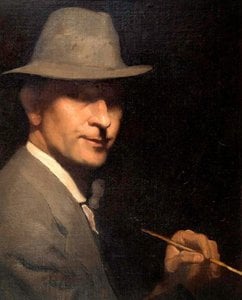
Elioth Gruner

Elioth Gruner

1882 - 1939 , Uusi-Maailma

Pikatiedot

  • Artistic Movement Or Style: Impressionisme
  • Artists Who Influenced This Artist:
    • Julian Ashton
    • Norman Lindsay
  • Date Of Birth: 16 décembre 1882
  • Date Of Death: 17 octobre 1939
  • Full Name: Elioth Lauritz Leganyer Gruner
  • Nationality: Australien
  • Notable Artworks:
    • Morning Light
    • Spring Frost
    • The Valley of the Tweed
  • Place Of Birth (City And Country): Gisborne, Nouvelle-Zélande