x
Litografia
Muut
El Lissitzky's 'Wendingen' exemplifies Cubist prin
1921
Modernismi
Museum of Modern ArtMuseolaatuisia giclée- tai kankaitaulun tulosteita nopealla tuotannolla ja joustavilla viimeistelyvaihtoehdoilla.
Valitse valmiista mitoistamme sellaiset, jotka vastaavat teoksen alkuperäisiä mittasuhteita.
Voit syöttää omat mitat sopiaksesi tiettyyn kehykseen tai tilaan. Jos valittu koko ei vastaa alkuperäisen kuvan mittasuhteita, rajaamme teosta tai laajennamme kuvaa peilatulla tai yhtenäisellä reunalla. Digitaalinen mallikuva lähetetään hyväksyttäväksi ennen tuotannon aloittamista.
Huomaathan, että näytöllä näkyvä esikatselu ei vastaa lopullista rajausta tai laajennusta. Vain mallikuva näyttää lopullisen sommittelun tarkasti.
Vaikka räätälöityjä kokoja on saatavilla, suosittelemme valitsemaan mitat valmiista listasta alkuperäisten mittasuhteiden säilyttämiseksi.
Toimitus maailmanlaajuisesti () kahdessa viikossa tavallisen 4–5 viikon sijaan. (2 heinäkuu)
Wendingen
Replikaatin koko
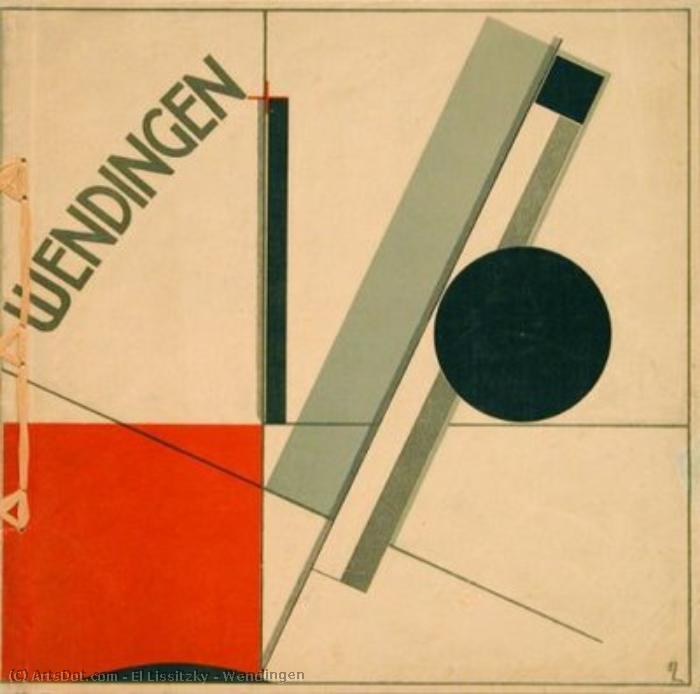
El Lissitzky’s “Wendingen,” created in 1921, stands as a cornerstone of early abstract art—a testament to the burgeoning Constructivist and Suprematist movements that reshaped artistic expression during the turbulent years following World War I. More than merely a painting; it was a cover design for the Dutch magazine “Wendingen,” dedicated to modern architecture and design, embodying Lissitzky’s ambitious vision of “Proun”—a conceptual framework striving to synthesize architecture, engineering, and art into a unified visual language.
“Wendingen” eschews representational imagery entirely, presenting instead a purely abstract composition dominated by geometric forms. Sharp angles, intersecting lines, and flat planes command attention on the canvas, generating a palpable sense of structured dynamism. Rectangles, circles, and diagonal lines engage in intricate interplay to produce spatial tension and visual pathways—a deliberate departure from traditional artistic conventions.
The artwork’s stylistic influences are profoundly rooted in Constructivism, prioritizing functional design principles alongside geometric abstraction. Simultaneously, it draws inspiration from Suprematism, spearheaded by Kazimir Malevich, whose movement championed pure artistic feeling conveyed through fundamental geometric shapes. Lissitzky's singular approach transcends these movements, forging a distinctive style that balances rigorous structural precision with emotive resonance.
Considered within the context of its publication—a magazine devoted to architectural innovation—the piece served a dual purpose. Beyond aesthetic beauty, “Wendingen” aimed to communicate ideas effectively through visual design; Lissitzky’s cover was conceived not just as decoration but as a conduit for conveying architectural concepts and fostering dialogue amongst designers.
The stylized lettering of “WENDINGEN,” integrated seamlessly into the composition on the left side, underscores this communicative function. Lissitzky's meticulous attention to typography reflects the broader ethos of Constructivism—a belief that visual language could powerfully shape perception and advance societal progress.
Lissitzky skillfully employed lithography, a printing technique renowned for its ability to reproduce intricate lines and nuanced tonal variations with exceptional accuracy. This method proved ideal for capturing the artwork’s characteristic geometric forms—particularly the sharp angles and planar surfaces—and achieving a restrained color palette that enhances visual clarity.
The texture of the printed surface appears smooth and flat, indicative of lithographic printing—a deliberate choice reflecting Lissitzky's commitment to precision and minimizing visual clutter. The artwork’s color scheme utilizes bold contrasts between red, gray, black, and beige against a neutral background, maximizing impact and reinforcing the piece’s conceptual core.
Created in 1921—immediately following World War I— “Wendingen” embodies the era's fervent desire for radical transformation across all disciplines—art, architecture, and society. Lissitzky’s artwork reflects this spirit of innovation, articulating a belief that art could actively contribute to constructing a more rational and harmonious world.
The geometric forms within “Wendingen” can be interpreted as symbols of progress, order, and the transformative capacity inherent in embracing new ideas—a sentiment deeply aligned with the optimism characterizing the early 20th century’s artistic landscape. Lissitzky's vision anticipates the Bauhaus movement's emphasis on functional design and experimentation with materials—establishing “Wendingen” as a pivotal exemplar of modernist aesthetics.
Despite its abstract nature, “Wendingen” evokes a profound sense of visual harmony and balance. Lissitzky’s careful arrangement of geometric shapes generates a pleasing composition that stimulates intellectual curiosity while simultaneously satisfying aesthetic sensibilities—a testament to the enduring power of pure abstraction.
Lissitzky's influence extends far beyond “Wendingen,” resonating throughout graphic design, typography, and architectural aesthetics. This artwork remains an iconic representation of early modernism, inspiring generations of artists and designers to explore the expressive potential of geometric forms—a legacy that continues to shape visual culture today.
1890 - 1941 , Venäjä
Kerro meille projektistasi, niin taideasiantuntijamme tarjoavat sinulle kolme henkilökohtaista taidesuositusta.
Anna meidän kuratoida 3 vaihtoehtoa juuri sinulle – Ilmaiseksi!