


Museolaatuisia giclée- tai kankaitaulun tulosteita nopealla tuotannolla ja joustavilla viimeistelyvaihtoehdoilla. ( Osta käsinmaalattu taideteos Siirry digitaaliseen kuvaan)





























Valitse valmiista mitoistamme sellaiset, jotka vastaavat teoksen alkuperäisiä mittasuhteita.

Syötä tarvitsemasi leveys ja korkeus, jotta tuloste sopii kehyksiisi tai seinällesi. Tulostetta voidaan vain leikata, sitä ei voida koskaan suurentaa alkuperäistä kuvaa suuremmaksi, joten eri muotoinen koko aiheuttaa osan kuvasta katoamisen. Lähetämme sinulle digitaalisen mallikuvan hyväksyttäväksi ennen kuin aloitamme tulostuksen. Tällä sivulla näkyvä kuva ei näytä lopullista rajausta — vain mallikuva näyttää sen.
Maailmanlaajuinen toimitus () 2 viikossa tavallisen 4–5 viikon sijaan. (10 marraskuu)
Saint Bernardino
Replikaatin koko
El Greco's "Saint Bernardino," painted in 1603, is not merely a depiction of a religious figure; it’s an immersion into the profound spirituality and turbulent emotional landscape that defined the artist’s life. This intimate portrait captures a moment of quiet contemplation, revealing a man wrestling with faith, perhaps even suffering, beneath a cloak of monastic humility. The subject, Saint Bernardino of Siena – famed for his zealous preaching and miraculous healing – is rendered not as an idealized saint but as a deeply human individual, marked by the weight of experience etched onto his face and reflected in his gaze.
The painting’s power resides largely in El Greco's masterful manipulation of color and form. The rich browns of Bernardino’s robe contrast dramatically with the luminous white of the flower he holds – a potent symbol of purity, innocence, and divine grace. Notice how El Greco employs a technique known as *tenebrism*, utilizing strong contrasts between light and shadow to draw the viewer's eye directly to the figure, amplifying his solemnity. The background, deliberately muted and indistinct, serves not as a distraction but as a subtle reinforcement of the saint’s inner world, suggesting a landscape both earthly and spiritual.
Born Doménikos Theotokópoulos in Crete in 1541, El Greco's artistic development was shaped by a complex interplay of influences. His early training within the Byzantine tradition instilled a rigorous attention to detail and an understanding of religious iconography – hallmarks that would remain throughout his career. However, he quickly transcended these foundations, forging a style uniquely his own. His relocation to Venice and then Rome exposed him to the burgeoning Renaissance ideals, yet he resisted assimilation, retaining a distinctly personal vision. It was in Toledo, Spain, a city steeped in religious fervor and marked by a vibrant multiculturalism, that El Greco truly blossomed, creating works of unparalleled intensity and emotional resonance.
The year 1603, the date of “Saint Bernardino,” represents a pivotal moment in El Greco’s artistic trajectory. He was increasingly recognized as a master, yet he continued to push boundaries, experimenting with scale, color, and composition. This painting exemplifies his willingness to depart from conventional portraiture, prioritizing psychological depth and spiritual significance over realistic representation.
Beyond the obvious symbolism of the flower – representing divine grace and humility – several other elements contribute to the painting’s layered meaning. The hillside upon which Bernardino stands is often interpreted as a metaphor for the human condition, suggesting a precarious balance between earthly desires and spiritual aspirations. The building in the background, partially obscured, could represent the monastery where he spent his life, or perhaps even a symbolic representation of heaven.
Crucially, consider the expression on Bernardino’s face. It is not one of serene piety but rather a subtle blend of sorrow and contemplation. Many scholars believe that Saint Bernardino suffered from a debilitating illness throughout his life, which may have informed El Greco's portrayal – suggesting that faith and suffering are inextricably linked. The slight furrow in his brow, the downward tilt of his mouth, all speak to an inner struggle, making this portrait profoundly moving.
"Saint Bernardino" is a work that continues to resonate with viewers centuries after its creation. WahooArt offers meticulously crafted hand-painted reproductions that capture the essence of El Greco’s genius – the dramatic lighting, the expressive brushstrokes, and the profound emotional depth. Our reproductions are created using archival-quality materials and techniques, ensuring their longevity and authenticity. Whether you're a seasoned art collector, an interior designer seeking to infuse your space with spiritual resonance, or simply an admirer of El Greco’s extraordinary vision, a WahooArt reproduction of “Saint Bernardino” is a remarkable addition to any collection. Experience the power of this iconic painting in exquisite detail – a testament to the enduring legacy of one of art history's most singular figures.
El Greco:n "Saint Bernardino"-teoksen röntgennäkymä löytyy teoksen Röntgentutkimus-sivulta: interaktiivinen tutkimusmatka kuvaan yhdenentoista optisen kerroksen läpi.
Teoksen El Greco:n "Saint Bernardino" luminanssi on Gentle Luminance.
Teoksen El Greco:n "Saint Bernardino" Samankaltaisia teoksia -sivu esittelee samankaltaisia teoksia.

Doménikos Theotokópoulos, historian tunteva nimellä El Greco, aloitti elämänsä vuonna 1541 Kreetan saarella. Tuolloin saari oli Venetsian alaisuudessa, mikä mahdollisti hänelle myöhemmin sillan rakentamisen itäisen ja läntisen perinteen välille. Hänet koulutettiin ikoneiden maalaajaksi bysanttilaisen perinteen piirissä, mikä vaati äärimmäistä tarkkuutta yksityiskohdissa ja keskittymistä kohteen hengelliseen olemukseen pelkän fyysisen ulkonäön sijaan. Tämä varhainen uppoutuminen kreetalaiseen kouluun antoi hänelle symbolisen tarkkuuden tunnun, joka säilyi vakiona, vaikka hänen tyylinsä koki myöhemmin radikaaleja muutoksia.
Yllettäessään 26 vuoden ikään hän muutti Venetsiaan laajentaakseen ymmärrystään luonnon maailmasta. Venetsian tasavallassa hän kohtasi Tizianin ja Tintoreton teokset, imien itseensä heidän mestarillisuuttaan värin käytössä ja valon hyödyntämisessä muodon määrittelyssä. Hän oppi siirtymään nuoruutensa jäykistä linjoista kohti sulavampaa siveltimenjälkeä ja dynaamisuutta. Tämä ajanjakso ei ollut hylkäys hänen juurilleen, vaan niiden laajentaminen, kun hän alkoi yhdistää kreikkalaisen perintönsä kurinalaisen ikonografian italialaisen renessanssin ilmavampaan aistillisuuteen.
Rooman vierailun jälkeen, jossa hän kohtasi manierismin pitkänomaiset muodot ja hienostuneet sommitelmat, El Greco asettui Toledoon, Espanjaan, vuonna 1577. Tämä siirto osoittautui ratkaisevaksi. Toledo oli vastatuton uskonnollisen intohimon keskus vastatutonuskon ajan aikana, tarjoten maiseman, joka sopi täydellisesti hänen yhä mystisemmälle visiolleen. Täällä hänen tyylinsä saavutti erottuvimman vaiheensa, jota leimasivat venytetyt ja vääristyneet hahmot, kuin näkymätön hengellinen voima olisi vetänyt niitä. Hän ei käyttänyt värejä todellisuuden jäljittelemiseen, vaan voimistamaan emotionaalista vaikutusta, hyödyntäen usein epäluonnollisia sävyjä kuvatakseen jumalallista.
Hänen tuotantonsa Espanjassa leimautui maallisen ja taivaallisen välisellä jännitteellä. Teoksessa The Burial of the Count of Orgaz (1586–1588) hän asetti vastakkain nykyhetken hahmojen realistisen kuvauksen ja pitkänomaiset, taivaalliset muodot, luoden visuaalisen sillan kuolevaisen ja jumalallisen välille. Kyky hallita valoa ja varjoa antoi hänelle mahdollisuuden luoda draamaa, joka tuntui samanaikaisesti teatraaliselta ja syvän henkilökohtaiselta. Hän ei ainoastaan maalannut kohtauksia; hän pyrki ilmentämään niitä emotionaalisia ja hengellisiä todellisuuksia, jotka lepäävät fyysisen maailman pinnan alla.
Hänen elämänsä loppuvuosiaan leimasi pyrkimys kohti vielä suurempaa abstraktiota ja mystiikkaa. Sommitelmat muuttuivat monimutkaisemmiksi ja hahmot vääristyneemmiksi, mikä heijasti kasvavaa etääntymistä perinteisistä taiteellisista normeista. Vaikka hän saavutti menestystä ja sai merkittäviä tilauksia kirkoilta ja luostareilta Toledossa, hänen vaikutuksensa ei välittömästi ulottunut laajempaan taidemaailmaan kuolemansa jälkeen vuonna 1614. Pitkään häntä pidettiin eksentrikkinä taiteilijana, ja taidehistorian valtavirta oli pitkälti sivuuttanut hänen työnsä.
Vasta 1900-luvulla hänen merkityksensä tunnustettiin täysin. Modernistit löysivät hänen teoksistaan esimuodon tuleville ekspressiivisille ja fragmentoiduille tyyleille. Hänen kykynsä vääristää mittasuhteita ja käyttää rohkeaa, tunteikasta väriä puhutteli niitä, jotka pyrkivät välittämään sisäisiä psykologisia tiloja. Nykyään hänen maalauksiaan pidetään ikkunoina ihmismielen syvyyksiin, ja niitä ylistetään ainutlaatuisesta kyvystään vangita uskon intensiteetti ja pyrkimys transsendenssiin.
Merkittäviä teoksia ovat:

1541 - 1614 , Kreikka

Embark on a profound journey through art history with our exploration of Saint Francis's most iconic works. Discover Giotto’s revolutionary frescoes and the spiritual depth of Proto-Renaissance masterpieces through an expert lens for the true classic art enthusiast.

Embark on a scholarly journey through the golden era of Byzantine art. Discover the profound symbolism, masterful mosaics, and imperial grandeur that defined an epoch of spiritual and aesthetic splendor in this expert-led guide for art enthusiasts.

Discover the profound beauty of Saint Artworks. Explore the history, symbolism, and luminous mastery of Renaissance religious masterpieces through an expert art-historical lens.

Explore the profound iconography of Saint Jerome through art history's most iconic masterpieces. From Renaissance serenity to Baroque drama, discover how legendary painters captured divine devotion in breathtaking oil paintings and fine art reproductions.
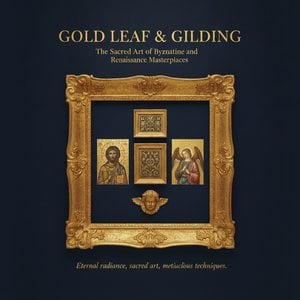
Explore the divine mastery of Byzantine gold leaf and gilding. Discover how ancient artisans used gold ground and mosaics to create celestial light, a timeless legacy of spiritual splendor and technical excellence in sacred art history.
 Esikatselu
 Jaa teos
 Jaa
Jaa
 Tiedot
 Opas
Opas

 Lataa kuva
 Samanlaisia kohteita
 Röntgenkuvaus
 Diaesitys
 Kysymykset ja vastaukset
 Tilastot


 Lue lisää









 Lasivaihtoehto on saatavilla vain alle 110 cm kokoisille teoksille


