Doménikos Theotokópoulos: A Visionary Bridging Byzantium and Venice
Doménikos Theotokópoulos, universally known as El Greco (1541–1614), stands apart from his contemporaries not merely as a painter but as an artist who fundamentally reshaped visual expression. Born in Crete under Venetian dominion, he embarked on a transformative artistic journey that propelled him through Venice and Rome—cities brimming with Renaissance ideals—yet ultimately anchored him in the spiritual heartland of Toledo, Spain. This confluence of influences yielded a singular style, anticipating the emotive fervor of Expressionism and foreshadowing the fragmented forms of Cubism centuries ahead.
El Greco’s formative years within Byzantine iconography instilled in him an unparalleled precision of detail and a profound understanding of religious symbolism. However, he refused to be confined by tradition; instead, he absorbed the dynamism of Mannerism and the grandeur of Renaissance art—particularly the canvases of Tintoretto and Titian—weaving them into his distinctive aesthetic tapestry.
St. John the Evangelist: A Masterpiece of Mannerist Drama
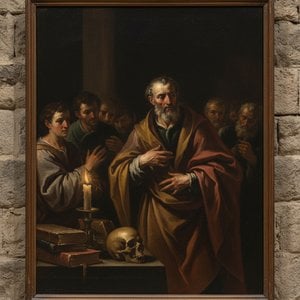
“St. John the Evangelist,” painted in 1585, exemplifies El Greco’s unparalleled command of Mannerism. This oil on canvas depicts St. John, one of Jesus’ twelve apostles, embodying unwavering faith and contemplation. The painting transcends mere representation; it pulsates with spiritual energy—a testament to El Greco's ability to convey profound emotion through stylized form.
The elongated figures characteristic of Mannerism dominate the composition, creating a palpable sense of movement and dynamism. Color is employed boldly and deliberately, eschewing naturalistic hues for luminous shades that heighten the painting’s otherworldly atmosphere. The artist skillfully utilizes chiaroscuro—the dramatic interplay of light and shadow—to sculpt the figure of St. John, emphasizing his solemn posture and gaze fixed heavenward.
The Technique: Prolonged Figures and Intense Color
El Greco's technique involved meticulous layering of paint—often applying multiple glazes to achieve remarkable depth and luminosity. He employed a pyramidal composition, directing the viewer’s eye upwards towards St. John’s radiant halo—a visual symbol of divine grace. The landscape background, rendered in muted tones, serves as a counterpoint to the figure's brilliance, reinforcing the painting’s spiritual core.
The artist’s deliberate distortion of proportions—particularly the elongation of limbs—was not an arbitrary stylistic choice but a conscious effort to convey psychological intensity. This technique aligns perfectly with Mannerist principles, prioritizing expressive gesture and emotional impact over strict adherence to classical ideals of beauty.
Where to Behold El Greco's Legacy
Today, “St. John the Evangelist” resides in the Museo del Prado in Madrid—a pilgrimage for any devotee of Spanish art history. This monumental collection houses masterpieces by Velázquez, Goya, and El Greco himself, offering visitors an unparalleled opportunity to immerse themselves in the artistic heritage of Spain.
At WahooArt.com, you can acquire a stunning hand-painted reproduction of “St. John the Evangelist,” crafted with meticulous attention to detail using traditional techniques. Bring home a piece of El Greco’s visionary spirit and experience the enduring beauty of this iconic artwork.



 Esikatselu
 Osta käsintehty maalaus
 Jaa
Jaa Jaa
Jaa
 Tarkemmat tiedot

 Lataa
Lataa
 Samanlaisia
 Röntgenkuva
 Diaesitys
 Tilastot

 Näytä lisää






































 Lasivaihtoehto on saatavilla vain alle 110 cm kokoisina teoksina