Museolaatuisia giclée- tai kankaitaulun tulosteita nopealla tuotannolla ja joustavilla viimeistelyvaihtoehdoilla. ( Osta käsinmaalattu taideteos Siirry digitaaliseen kuvaan)





























Valitse valmiista mitoistamme sellaiset, jotka vastaavat teoksen alkuperäisiä mittasuhteita.

Syötä tarvitsemasi leveys ja korkeus, jotta tuloste sopii kehyksiisi tai seinällesi. Tulostetta voidaan vain leikata, sitä ei voida koskaan suurentaa alkuperäistä kuvaa suuremmaksi, joten eri muotoinen koko aiheuttaa osan kuvasta katoamisen. Lähetämme sinulle digitaalisen mallikuvan hyväksyttäväksi ennen kuin aloitamme tulostuksen. Tällä sivulla näkyvä kuva ei näytä lopullista rajausta — vain mallikuva näyttää sen.
Maailmanlaajuinen toimitus () 2 viikossa tavallisen 4–5 viikon sijaan. (16 marraskuu)
untitled (1348)
Replikaatin koko
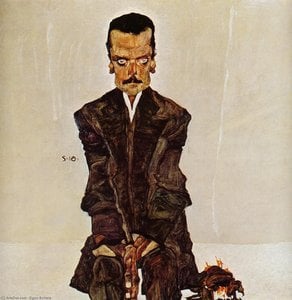
In the hauntingly beautiful monochrome sketch untitled (1348), Egon Schiele invites us into a profound confrontation with the human psyche. Created around 1918, during the twilight of his tragically short life and amidst the global upheaval of the First World War, this work serves as a visceral window into the soul. The subject—a solitary male figure—is captured in a moment of piercing intensity. His gaze does not merely observe the viewer; it pierces through the surface of the paper, demanding an emotional reckoning. There is an unsettling intimacy in the way Schiele positions the head and shoulders, forcing us to meet an expression that oscillates between profound vulnerability and a defiant, almost confrontational, strength.
The power of this piece lies in its masterful use of Expressionist technique, where the artist deliberately rejects the polished perfection of academic realism to prioritize raw, psychological truth. Schiele’s hand is visible in every jagged, angular line that defines the contours of the face and torso. Through a sophisticated application of hatching and cross-hatching, he creates depth and shadow without the need for color, using only the stark contrast of black and gray against a stark white void. These energetic, gestural marks do more than delineate form; they vibrate with a nervous energy, mirroring the internal tremors of anxiety and existential dread that characterized much of Schiele’s oeuvre.
Beyond its technical brilliance, untitled (1348) is a masterclass in symbolic minimalism. By stripping away the distractions of color, Schiele isolates the essential elements of human suffering and resilience. The monochromatic palette serves to amplify the dramatic impact of the composition, turning the artwork into a study of light and shadow that feels both timeless and immediate. The organic, often distorted shapes of the figure reflect the artist's preoccupation with the fragility of life—a theme deeply rooted in his personal history of loss and the broader cultural anxieties of early twentieth-century Vienna.
For the discerning collector or interior designer, this artwork offers a sophisticated focal point that commands attention through its quiet intensity. It is a piece that does not merely decorate a space but transforms it, providing a contemplative anchor for rooms designed for introspection and intellectual depth. Whether displayed in a modern gallery setting or as a striking element within a curated residential collection, Schiele’s work brings an unparalleled sense of historical gravity and emotional complexity. To possess a reproduction of such a seminal work is to hold a fragment of the Expressionist revolution, capturing that fleeting, beautiful moment where art transcends representation to become pure feeling.
Teoksen "untitled (1348)" tekijänoikeustilanne (vapaasti käytettävissä – tekijänoikeussuoja on päättynyt) määräytyy taiteilijan kuolinvuoden 1918 perusteella.
"untitled (1348)" on WallArt-teos.
"untitled (1348)"-teoksen reproduktio sopii hyvin Living Room-tilaan.


1890 - 1918 , Itävalta

Immerse yourself in the raw emotion of Egon Schiele. Explore 25 iconic Expressionist masterpieces, from haunting self-portraits to profound sketches. Find museum-quality art reproductions and curated decor inspiration. Discover all masterpieces on WahooArt.com.

Explore the profound artistry of black and white photography. From historical mastery to the interplay of light and shadow, discover how monochrome captures timeless emotion and form through a sophisticated lens of art history.

Immerse yourself in the profound emotion of Abstract Expressionism. Explore our curated guide to the top 25 Mark Rothko masterpieces, from iconic color field paintings to museum-quality reproductions for your decor. Discover all masterpieces on WahooArt.com.

Immerse yourself in the visceral world of Francis Bacon. Explore 25 iconic masterpieces, from distorted figures to haunting portraits. Discover the stories behind these expressionist legends and find museum-quality art reproductions for your collection at WahooArt.com.
 Esikatselu
 Jaa teos
 Jaa
Jaa
 Tiedot
 Opas
Opas

 Lataa kuva
 Samanlaisia kohteita
 Röntgenkuvaus
 Diaesitys
 Kysymykset ja vastaukset
 Tilastot

 Lue lisää









 Lasivaihtoehto on saatavilla vain alle 110 cm kokoisille teoksille