EsikatseluEsikatselu Esikatsele AR-tilassaEsikatsele AR-tilassa Osta käsintehty maalaus Osta käsintehty maalausSiirry digitaaliseen kuvaan Siirry digitaaliseen kuvaan JaaJaa
Tarkemmat tiedotTarkemmat tiedot Lisää suosikkeihin Lisää suosikkeihin LataaLataa SamanlaisiaSamanlaisia RöntgenkuvaRöntgenkuva DiaesitysDiaesitys TilastotTilastot

Puku

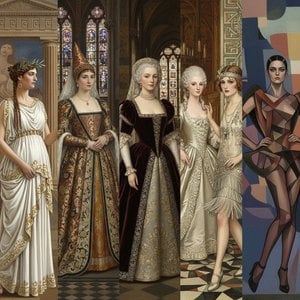
Cristóbal Balenciagan ikoninen 1956 valmistettu puku – yksinkertainen eleganssi ja tyylikäs yksityiskohtien huomiointi. Tutustu Balenciagan mestariteokseen!

Cristóbal Balenciaga: Espanjalainen muotisuunnittelija, tunnettu elegantista ja innovatiivisesta tyylistään. Hänen suunnitelmansa inspiroivat sukupolvia! Tutustu teoksiin.

Giclée-printit ja taideprintit

Museolaatuisia giclée- tai kankaitaulun tulosteita nopealla tuotannolla ja joustavilla viimeistelyvaihtoehdoilla. (Osta käsintehty maalaus Osta käsintehty maalausSiirry digitaaliseen kuvaan Siirry digitaaliseen kuvaan)

P118B $10
P118H $10
P118W $10
P438Z $10
P508JH $12
P508YH $12
P805H $10
P805Z $10
P919BZ $10
P919G $10
P919XJ $10
P959ZH $10
P968JZ $12
W106C $8
W218G $10
W218JH $8
W218Y $10
W307PJ $10
W316G $10
W316PJ $8
W316Y $10
W398PJ $8
W4111J $10
W500HY $15
W500JH $15
W692G $12
W849H $8
W940BG $15
W953PJ $8

Vakiokoko
räätälöity
CM
INCH

Valitse valmiista mitoistamme sellaiset, jotka vastaavat teoksen alkuperäisiä mittasuhteita.

leveys
korkeus

Voit syöttää omat mitat sopiaksesi tiettyyn kehykseen tai tilaan. Jos valittu koko ei vastaa alkuperäisen kuvan mittasuhteita, rajaamme teosta tai laajennamme kuvaa peilatulla tai yhtenäisellä reunalla. Digitaalinen mallikuva lähetetään hyväksyttäväksi ennen tuotannon aloittamista.
Huomaathan, että näytöllä näkyvä esikatselu ei vastaa lopullista rajausta tai laajennusta. Vain mallikuva näyttää lopullisen sommittelun tarkasti.
Vaikka räätälöityjä kokoja on saatavilla, suosittelemme valitsemaan mitat valmiista listasta alkuperäisten mittasuhteiden säilyttämiseksi.

Toimitus maailmanlaajuisesti () kahdessa viikossa tavallisen 4–5 viikon sijaan. (10 syyskuu)

why_choose_icon
Ilmainen pikatoimitus ympäri maailman
why_choose_icon
Korkealaatuinen pellavakangas
why_choose_icon
Kattava kuljetusvakuutus
why_choose_icon
Tulliveron palautustakuu
why_choose_icon
Täydellinen värien vastaavuustakuu
why_choose_icon
100 päivän palautusoikeus (vain valmistusvirheet)
why_choose_icon
100% rahat takaisin -takuu
why_choose_icon
Määräalennus tarjous

Kokonaishinta

$ 68

reproduction

Puku

Giclée-printit ja taideprintit

Replikaatin koko

-

Kokonaishinta

$ 68

Pikaista tietoa

  • Movement: Avant-garde
  • Title: Dress
  • Location: Museoa
  • Year: 1956
  • Subject or theme: Formal gown
  • Notable elements or techniques: Tie belt
  • Artistic style: Sculptural

Taidevisa

Jokaisessa kysymyksessä on vain yksi oikea vastaus.

Kysymys 1:
What is the primary material used in Cristóbal Balenciaga’s ‘Dress’?
Kysymys 2:
The dress features a distinctive embellishment – what is it?
Kysymys 3:
In what year was this dress created?
Kysymys 4:
Cristóbal Balenciaga is considered a pivotal figure in the history of fashion. Which artistic movement heavily influenced his designs?
Kysymys 5:
What best describes Balenciaga’s signature style?

Cristóbal Balenciaga Eizaguirre: Een Pionier van Elegance en Sculpturale Pracht

Cristóbal Balenciaga Eizaguirre (Basque: Cristobal Balentziaga Eizagirre; 21 januari 1895 – 23 maart 1972) was een Spaanse modeontwerper, en de oprichter van het Balenciaga kledingmerk. Hij werd beschouwd als een couturier van compromissoloze standaard en stond bekend als “de meester van ons allemaal” door Christian Dior en als “de enige couturier in de meest rechtlijnige zin van het woord” door Coco Chanel. Zijn geboorteplaats Getaria, Spanje, vormde een belangrijke inspiratie voor zijn stijl en werkethiek. Een kunstenaar die zich niet liet leiden door trends maar zichzelf nastreefte, Balenciaga creëerde een naam voor zich als een icoon van haute couture.

De Filosofie Achter Zijn Ontwerpen

Balenciaga’s filosofie lag bij het verkennen van de grenzen van vorm en beweging binnen de beperkingen van stof en draagbaarheid. Hij geloofde dat eenvoud essentieel was voor echte schoonheid, waarbij elke lijn en elke draperie zorgvuldig werd overwogen om een gevoel van balans en harmonie te creëren. Zijn werk werd sterk beïnvloed door het avant-garde kunstenaarschap van zijn tijd, met name de surrealistische stroming die een fascinatie uitlokte voor het onverwachte en het onderbewuste. Deze invloed manifesteerde zich in zijn gedurfde vormen en innovatieve technieken, waardoor hij een unieke stijl ontwikkelde die hem onderscheidt van andere couturiers. Een kunstenaar die zichzelf voortdurend uitdaagde om nieuwe horizonten te verkennen, Balenciaga bleef trouw aan zijn visie op kunst als een manier om emoties en ideeën over te brengen.

Iconische Stukken Uit Zijn Oeuvre

Balenciaga’s nalatenschap wordt gekenmerkt door enkele van de meest tijdloze stukken couture die ooit zijn gemaakt, waaronder het prachtige “Dress” uit 1956 – een eenvoudige zijden jurk met een geborduurde blouse en een vloeiende rok. Deze jurk illustreert Balenciaga’s aandacht voor detail en zijn beheersing van technische vaardigheden, waarbij hij gebruik maakte van innovatieve draperieën en stofcombinaties om een gevoel van beweging en elegantie te creëren. Ook het schilderij “Tree Roots” (50 x 100 cm), uitgevoerd in olie op doek, laat zien hoe Balenciaga de natuurlijke wereld verkende en probeerde vast te leggen met zijn kunstenaarschap. Een werk dat een prachtige balans vindt tussen eenvoud en kracht, het schilderij is een bewijs van Balenciaga’s artistieke stijl en zijn vermogen om emoties en ideeën over te brengen. Daarnaast staan zijn sculpturale vestidos zoals “Cocktail dress in ivory wool and gold metallic yarn” (1962) symbool voor zijn innovatieve ontwerpfilosofie en zijn prachtige gebruik van kleur en materiaal. Een kunstwerk dat een gevoel van luxe en verfijning oproept, het stuk is een blijvende inspiratie voor zowel kunstenaars als interieurdesigners.

Symbolisme en Emotionele Impact

Balenciaga’s kunstenaarschap werd gedreven door een diepe emotionele betrokkenheid bij zijn onderwerp en een bewustzijn van de kracht van beeldspraak om gevoelens en ideeën over te brengen. Hij gebruikte vaak geometrische vormen en kleurpaletten om bepaalde emoties en gevoelens weer te geven, waarbij hij aandacht besteedde aan het creëren van een bepaalde sfeer en atmosfeer. Zijn werk werd gekenmerkt door een gevoel van melancholie en nostalgie, maar ook door een optimistische kijk op de toekomst – een reflectie van zijn persoonlijke ervaringen en zijn filosofie over het leven. Een kunstenaar die zichzelf voortdurend uitdaagde om nieuwe perspectieven te verkennen, Balenciaga bleef trouw aan zijn visie op kunst als een manier om schoonheid en inspiratie te bieden aan het publiek. Zijn stijl blijft relevant vandaag de dag omdat hij een prachtige balans vindt tussen eenvoud en kracht, waardoor hij een blijvende plaats inneemt in de geschiedenis van de kunst en mode.

Taiteilijan elämäkerta

Early Life and Artistic Beginnings

Cristóbal Balenciaga Eizaguirre, a name synonymous with revolutionary elegance in the world of haute couture, was born in 1895 in Getaria, a picturesque fishing village nestled on the rugged coast of Basque Country, Spain. His early life was deeply intertwined with the rhythms of the sea and the traditions of his family – his father, José Balenciaga Basurto, a skilled skipper and local mayor, and his mother, Martina Eizaguirre Embil, a talented seamstress who instilled in him an appreciation for meticulous craftsmanship from a very young age. Balenciaga’s childhood was spent amidst the sounds of the waves and the scent of salt air, experiences that would profoundly shape his artistic sensibilities. He began his apprenticeship at the tender age of twelve, learning the fundamentals of tailoring under the guidance of a local master craftsman, absorbing techniques and developing an innate understanding of fabric and form. A pivotal moment in his formative years occurred when he was presented with a challenge by the marchioness of Casa Torres, a prominent figure in Getaria society – to recreate one of her exquisite gowns using the finest materials available. This commission not only honed his skills but also introduced him to the world of aristocratic patronage, an experience that would prove crucial to his future success. Balenciaga’s early exposure to both the practicalities of tailoring and the refined aesthetics of high fashion laid the foundation for his groundbreaking career.

The Rise in San Sebastián and Early Parisian Influence

Following his apprenticeship, Balenciaga moved to San Sebastián, a vibrant coastal city known for its artistic community and fashionable clientele. There, he established his first couture house, Eisa, in 1917, quickly gaining recognition for his impeccable tailoring and innovative designs. His early collections were heavily influenced by the Spanish Renaissance, evident in the opulent fabrics, intricate embroidery, and dramatic silhouettes that defined his style. The patronage of Queen María Cristina further elevated his status, solidifying his position as a leading designer within Spain’s elite circles. However, Balenciaga's ambition extended beyond the borders of his homeland. In 1937, amidst the turmoil of the Spanish Civil War, he bravely relocated to Paris, the undisputed center of the fashion world. This move marked a significant turning point in his career, exposing him to new influences and allowing him to collaborate with some of the most influential figures in the industry. He quickly established himself as a respected couturier, attracting discerning clients from across Europe. His time in Paris was also characterized by a deep appreciation for the work of other masters, including Coco Chanel and Elsa Schiaparelli, whose innovative approaches to design inspired him to push the boundaries of traditional couture.

Revolutionizing Silhouette and Defining Modern Style

Balenciaga’s genius lay not merely in his technical skill but in his ability to fundamentally reshape women's silhouettes. Rejecting the prevailing hourglass shapes popularized by Christian Dior after World War II, he introduced a series of groundbreaking designs that redefined elegance and sophistication. His signature “balloon” jackets, with their voluminous sleeves and sculpted forms, created an illusion of height and movement, while his sack dresses – simple, straight-cut garments devoid of a waistline – challenged conventional notions of femininity. Balenciaga’s influence extended beyond individual garments; he pioneered new construction techniques, utilizing innovative draping methods and experimenting with unconventional fabrics to achieve breathtaking results. He was a master of volume, expertly manipulating fabric to create shapes that were both sculptural and fluid. His designs were characterized by their understated elegance, a testament to his belief that true style lay in simplicity and refinement. Balenciaga’s willingness to experiment and challenge established norms cemented his reputation as a visionary designer who consistently pushed the boundaries of fashion.

Legacy and Lasting Impact

Cristóbal Balenciaga's career spanned several decades, culminating in his retirement in 1968. Despite the rise of ready-to-wear and changing trends, his designs continued to be admired for their timeless elegance and impeccable craftsmanship. His influence can still be seen in contemporary fashion, with designers frequently referencing his iconic silhouettes and innovative techniques. Balenciaga’s legacy extends far beyond the world of haute couture; he is regarded as a true artist whose work transcends mere clothing—it's an exploration of form, texture, and movement. His meticulous attention to detail, combined with his unwavering commitment to quality, established him as one of the greatest couturiers of all time. Balenciaga’s name remains synonymous with sophistication, innovation, and enduring style, a testament to his remarkable talent and lasting impact on the world of fashion.

Cristóbal Balenciaga

Cristóbal Balenciaga

1895 - 1972 , Espanja

Pikatiedot

  • Artistic Movement Or Style: Avant-garde / Surrealismi
  • Artists Or Movements Influenced By This Artist: ['Velázquez']
  • Artists Who Influenced This Artist:
    • Chanel
    • Dior
  • Date Of Birth: 21. tammikuuta 1895
  • Date Of Death: 23. maaliskuuta 1972
  • Full Name: Cristóbal Balenciaga Eizaguirre
  • Nationality: Espanjalainen
  • Notable Artworks:
    • Song of Songs IV
    • Tree Roots
    • Acrobat
  • Place Of Birth: Getaria, Espanja
Tutustu teoksiin, jotka on järjestetty aiheiden, tyylien ja ominaisuuksien mukaan.