William Hogarth, 1697 – 1764

William Hogarth maalid: 100 kuulsumat teost järjestatud

William Hogarth kõige kuulsam teos on Plate one, from A Rake's Progress. koos Plate kuus, A Rake's Progress ja Gin Lane (1750) moodustavad need kolm teost, mis on kõigile tuttavad. Meie kataloogis on 307 teost kunstnikult William Hogarth; alljoonas on 100 kõige vaadeldavamat teost koos nende loomisaea, säilitaja museumi ja olulisuse selgitusega.

Reiting põhineb meie populaarsusindeksil, mis koondab iga teose otsingud, külastused ja tellimused. Uuendatud oktoober 2026. Iga selle lehekülje meistriteos on tellitav muuseumikvaliteedse käsitsi maalatuna õlireproduktsiona või fine art trükkina vastavalt valitud suurusele.

William Hogarth portree
William Hogarth · 1697 – 1764
Sündinud · surnud
1697 – 1764, London
Meie kataloogis olevad teosed
307
Kõige tuntud
Plate one, from A Rake's Progress
Enamasti teoseid on
Sir John Soane's Museum

10 kõige kuulsumat William Hogarth maali

Plate one, from A Rake's Progress autor William Hogarth
1

Plate one, from A Rake's Progress

Gravüür

Koht: Pilk loovusse segasesse maailma Langeutage end teose "Plate one, from A Rake's Progress" vibrantses energias, mis viib meid otse kunstniku atelje südamesse. William Hogarthi see keeruline etsing jäädvustab tihedat ja elu täis stseen, mis on täis liikumist ja detaile. Keskel on elegantses riietuses mees, kes on süvenenud maalist Easelil (easel) asuva teose uurlemisse, ümbritsetuna inimestega, kes on hõvatus või omaga vestlust hõivates omal tegevusel. Kompositsioon on rikkust täis interaktsioonide…

Plate kuus, A Rake's Progress autor William Hogarth
2

Plate kuus, A Rake's Progress

Gravüür

Pilk 18. sajandi satiirile Langege William Hogarthi meistralikul graveeringul "Plate six, from A Rake's Progress" karge segaduses. See keeruline mustvalge stseen tabab rahvarikكَ taverni frenetistlikku energiat, pakkudes elavat hetkeavet 18. sajandi sotsiaalkonstalaatsist ja moraalist. Kompositsioon ja stiil Hogarthi iseloomulik stiil paistab läbi selles detailikus kompositsioonis, kus iga tegelane ja objekt jutustab oma lugu. Monokromne palett rõhutab kontrasti ja sügavust, tõmbates vaatajat sisse teose maailma. Peenide lintsiduste ja ristliniidete kasutamine loob…

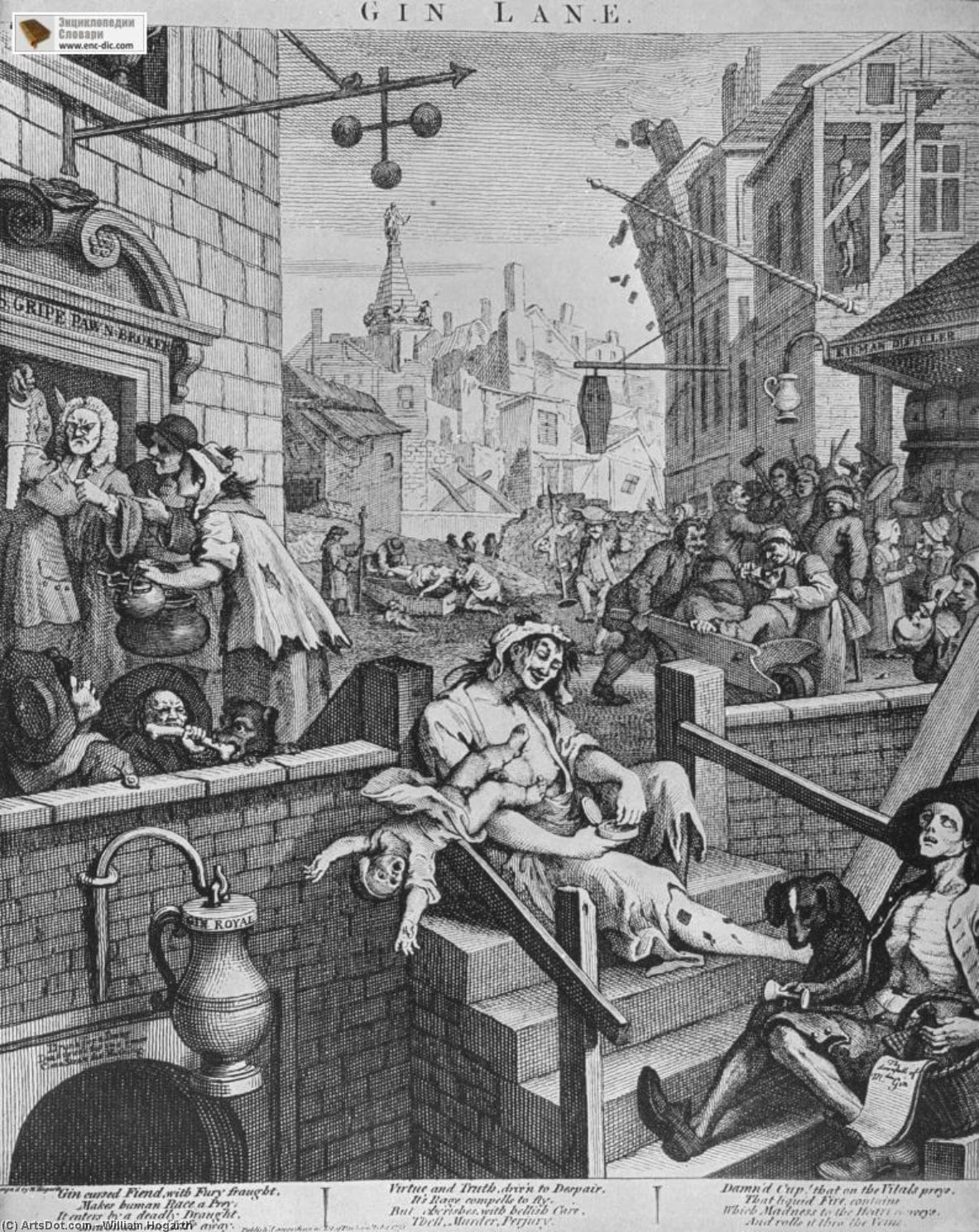
Gin Lane (1750) autor William Hogarth
3

Gin Lane

1750 · Engraving

In the heart of 18th-century London, amidst the swirling fog and the growing shadows of social upheaval, William Hogarth captured a moment of profound human tragedy that continues to haunt the viewer centuries later. His masterpiece, Gin Lane, is far more than a mere engraving; it is a visceral, breathing chronicle of a city in the throes of moral and physical decay. Completed in 1751, this work serves as a…

The Marriage Contract (1745) autor William Hogarth
4

The Marriage Contract

1745 · Acrylic On Canvas

A Window Into Georgian Society In the heart of 1745, William Hogarth captured more than a mere domestic arrangement; he froze a pivotal moment of social negotiation in "The Marriage Contract." This meticulously crafted tableau invites the viewer into a room thick with the palpable anxieties and lofty aspirations of Georgian England. As we gaze upon the central table where a man proposes to his prospective bride, we are not…

Pidula (1755) autor William Hogarth
5

Pidula

1755 · Õlimaal kangaruumil · Sir John Soane's Museum, London

A Revelrous Scene of 18th-Century Life: Unpacking William Hogarth’s *The Banquet* (1755) William Hogarth’s *The Banquet*, painted in 1755, is a vibrant and densely populated oil painting that offers a fascinating glimpse into the social customs of Georgian England. Measuring 101 x 127 cm, this large-scale work isn't merely a depiction of a feast; it’s a carefully constructed commentary on society, indulgence, and the often-chaotic nature of human interaction. Subject…

Satan, patu ja surm (Stseen Miltoni teosest (1735) autor William Hogarth
6

Satan, patu ja surm (Stseen Miltoni teosest

1735 · Õlimaal kangaruumil · Tate Britain, London

William Hogarthi teos „Satan, pat ja surm“, mida on maalitud aastal 1735, on palju enamat kui pelgalt illustratsioon John Miltoni eepilisest poemist *Kadunud paradiis*; see on hoolikalt välja mõeldud moraalne alegoria, mis uputab vaataja kiusatuse, tagajärgede ja igavene konflikti maailma. See õli lauasel, mis kuulub praegu Londoni Tate Britainile, ulatub 74 x 61 cm ning pakub üllatavalt intiimset vaadet Hogarthi sügavale arusaatusele Miltoni teemadest – patu kütkavat jõudu, surma vältimatust…

The Painter and his Pug (1745) autor William Hogarth
7

The Painter and his Pug

1745 · Oil On Canvas · Tate Gallery, London

A Portrait of Intimacy: William Hogarth’s ‘The Painter and his Pug’ Subject & Composition: This captivating 1745 portrait by William Hogarth offers a charmingly informal glimpse into the artist's personal life. It depicts Hogarth himself, seated and gazing directly at the viewer, accompanied by his beloved pug, Trump. The composition is remarkably balanced; Hogarth occupies the central space while Trump rests comfortably to his right, creating an intimate and relaxed…

The Suicide of the Countess autor William Hogarth
8

The Suicide of the Countess

Oil On Canvas

William Hogarth's "The Suicide of the Countess," part of his renowned series "Marriage A-la-Mode," offers a stark and poignant commentary on the societal ills of 18th-century England. Created between 1743 and 1745, this painting serves as a powerful culmination to a narrative exploring the destructive consequences of marriages based on financial gain rather than genuine affection.

The Four Times of Day: Night (1738) autor William Hogarth
9

The Four Times of Day: Night

1738 · Acrylic On Canvas · Cleveland Museum of Art, Cleveland

William Hogarth's "The Four Times of Day: Night," painted in 1738, isn’t merely a depiction of a London street scene; it’s a meticulously crafted window into the social and moral landscape of eighteenth-century England. This remarkable work, now immortalized through WahooArt’s hand-painted reproductions, captures a moment of revelry – or perhaps reckless abandon – with an unparalleled level of detail and satirical observation that defines Hogarth's unique artistic legacy. The…

A Harlot's Progress: Quarrels with her Jewish Protector (1743) autor William Hogarth
10

A Harlot's Progress: Quarrels with her Jewish Protector

1743 · Oil On Canvas · Ascott House, Leighton Buzzard

The room holds a sudden, sharp noise. A tea-table tilts, porcelain clatters, and the heavy weight of an argument settles over the fine fabrics. Mary, known as Moll Hackabout, moves with a violent intent, her arm a decisive line against the opulent interior. She kicks at the furniture to draw eyes away from the doorway, where a lover slips quietly into the shadows. A black serving boy stands near, a…

William Hogarth, maalid 11 kuni 100

Eneseportreet (1757) autor William Hogarth
#11

Eneseportreet

1757 · National Portrait Gallery

William Hogarthi Eneseportreet, mida maalis 1757. aastal, pakub lummavat vaadet ühe Briti ajaloo olulisema kunstniku ellu ja loovpraktsesse. See õliõlupind (45 x 42 cm) on klassitsimi par excellence,…

Tellinige käsitsi maalatud koopia →
Soliciting Votes (1754) autor William Hogarth
#12

Soliciting Votes

1754 · Sir John Soane's Museum

William Hogarth's "Soliciting Votes," completed in 1754, stands as a masterful distillation of Enlightenment satire and a poignant reflection on the burgeoning political landscape of London. More than…

Tooge see koju →
The heir (1735) autor William Hogarth
#13

The heir

1735 · Sir John Soane's Museum

William Hogarth’s “The Heir,” completed in 1735, is more than simply a depiction of a domestic scene; it’s a meticulously crafted social commentary rendered with the precision and…

Tellinige käsitsi maalatud koopia →
South Sea Scheme autor William Hogarth
#15

South Sea Scheme

In the swirling currents of 1721 London, amidst a fever of unbridled greed and financial delirium, William Hogarth unleashed a visual critique that would forever etch itself into…

Tooge see koju →
Marriage à la Mode (1743) autor William Hogarth
#16

Marriage à la Mode

1743 · National Gallery

Üliilmses XVIII sajandi Briti kunsti k上有tapestis on vähegi teoseid, millel oleks nii teravat naljakust kui ka narratiivset sügavust nagu William Hogarthi Marriage à la Mode teles. See erakordne…

Telli reproduktsiooni →
Plate kaks, A Rake's Progress autor William Hogarth
#17

Plate kaks, A Rake's Progress

Plate Two, from A Rake's Progress – A Window Into Eighteenth Century Excess William Hogarth’s *Plate Two* from *A Rake’s Progress*, published in 1735, stands as a cornerstone…

Tooge see koju →
Hudibras autor William Hogarth
#19

Hudibras

William Hogarth's *Hudibras*, specifically the frontispiece and related engravings from Samuel Butler’s satirical poem, offers far more than a simple illustration; it’s a meticulously crafted social commentary frozen…

Tooge see koju →
Külastus näpukliiniku juures (1745) autor William Hogarth
#20

Külastus näpukliiniku juures

1745

18. sajandi Londri vibreerivas, kuid teravas maailmas ilmneb William Hogarthi “Külastus näpukliiniku juures” kui sügav mõttemere, mis on pildil kätte vormitud teatraalne esitlus. Umbes aastal 1745 valminud rokokooperioode…

Tooge see koju →
Eneseportree (1745) autor William Hogarth
#24

Eneseportree

1745

William Hogarth’s 1745 self-portrait isn’t merely a likeness; it’s a meticulously crafted window into the mind of one of England’s most astute and satirical observers. Painted during a…

Tellinige käsitsi maalatud koopia →
Miss Mary Edwards (1742) autor William Hogarth
#25

Miss Mary Edwards

1742 · The Frick Collection

A Portrait of Privilege and Virtue: Examining William Hogarth’s Miss Mary Edwards William Hogarth's "Miss Mary Edwards," completed in 1742, stands as an emblem of Enlightenment England—a meticulously…

Tooge see koju →
Suicide of the Countess (1745) autor William Hogarth
#27

Suicide of the Countess

1745

Georgian England was gripped by a fervor for moral reform following the Enlightenment. Writers like Jonathan Swift satirized aristocratic excesses and championed reason over superstition, influencing artists like…

Tooge see koju →
Canvassing for Votes autor William Hogarth
#28

Canvassing for Votes

William Hogarth’s “Canvassing for Votes” isn't merely a painting; it’s a meticulously crafted social commentary, a vibrant snapshot of corruption and manipulation embedded within the seemingly convivial atmosphere…

Tooge see koju →
The Ball (1745) autor William Hogarth
#30

The Ball

1745

To stand before William Hogarth's depiction of "The Ball" is to be instantly transported across the threshold of time, directly into the glittering heart of an 18th-century London…

Tooge see koju →
The Bench (1758) autor William Hogarth
#31

The Bench

1758

A Gathering of Characters: Decoding Hogarth’s ‘The Bench’ Subject & Narrative: William Hogarth's 1758 engraving, ‘The Bench’, presents a tightly composed group of six men, each meticulously rendered…

Tellinige käsitsi maalatud koopia →
Self-Portrait autor William Hogarth
#36

Self-Portrait

National Gallery of Ireland

A middle-aged man gazes directly from an oval vignette, his expression calm and steady. He wears a soft red cap and a patterned blue robe, the heavy silk…

Telli reproduktsiooni →
The triumph of Representatives (1755) autor William Hogarth
#38

The triumph of Representatives

1755 · Sir John Soane's Museum

A Window Into Georgian Society: Examining William Hogarth’s “The Triumph of Representatives” William Hogarth's "The Triumph of Representatives," completed in 1755, isn’t merely a depiction of an event;…

Tooge see koju →
Second stage of cruelty (1751) autor William Hogarth
#42

Second stage of cruelty

1751

This powerful engraving, created by William Hogarth in 1751, offers a chilling glimpse into the realities of 18th-century England. Far from idealized landscapes or flattering portraits, this work…

Telli reproduktsiooni →
The Reward of Cruelty (1751) autor William Hogarth
#45

The Reward of Cruelty

1751

The Reward of Cruelty William Hogarth’s “The Reward of Cruelty,” published in 1751 as part of his monumental *Four Stages of Cruelty*, stands as a chilling indictment of…

Telli reproduktsiooni →
Simon, Lord Lovat autor William Hogarth
#46

Simon, Lord Lovat

William Hogarth’s “Simon Lord Lovat” stands as a remarkable testament to the artistic sensibilities of the mid-18th century, capturing not merely a likeness but also the essence of…

Tooge see koju →
Scholars at a Lecture autor William Hogarth
#48

Scholars at a Lecture

A Window Into Enlightenment: Examining William Hogarth’s “Scholars at a Lecture” The etching by William Hogarth, "Scholars at a Lecture," transcends mere depiction; it's an exquisitely crafted snapshot…

Tooge see koju →
Gin Lane (1751) autor William Hogarth
#52

Gin Lane

1751

In the heart of 18th-century London, amidst the swirling fog and the growing shadows of social upheaval, William Hogarth captured a moment of profound human tragedy that continues…

Tellinige käsitsi maalatud koopia →
The Enraged Musician (1741) autor William Hogarth
#54

The Enraged Musician

1741

In the heart of 1741 London, amidst the burgeoning energy of the Enlightenment, William Hogarth captured a moment of pure, unadulterated sensory overload. The Enraged Musician is not…

Telli reproduktsiooni →
The Bathos autor William Hogarth
#55

The Bathos

William Hogarth's *The Bathos*, a powerfully unsettling engraving created towards the end of his life, is not merely an artwork; it’s a visual lament—a darkly satirical reckoning with…

Tooge see koju →
The Beggar's Opera (1729) autor William Hogarth
#59

The Beggar's Opera

1729 · Yale Center for British Art

A Window Into Georgian Society: Exploring Hogarth's "The Beggar's Opera" William Hogarth’s “The Beggar’s Opera,” completed in 1729, transcends mere visual representation; it serves as a meticulously crafted…

Tooge see koju →
A Harlot's Progress, plate 4 autor William Hogarth
#60

A Harlot's Progress, plate 4

The artwork A Harlot's Progress, plate 4 is an etching and engraving that captures a scene within Bridewell Prison. The subject matter depicts the protagonist beating hemp in…

Tooge see koju →
Lame theater autor William Hogarth
#62

Lame theater

William Hogarth’s “Lame Theater,” completed around 1730, stands as a cornerstone of English Rococo satire and a remarkably astute observation of the social landscape of Georgian London. More…

Tellinige käsitsi maalatud koopia →
Südparki müüki autor William Hogarth
#63

Südparki müüki

A Window into 18th-Century London: William Hogarth’s Southwark Fair Lisulude kirje XVIII sajandi Londonisse: William Hogarthi Südparki müük Subject & Narrative: Südparki müük (c. 1733) on värvilik ja…

Tooge see koju →
Self Portrait autor William Hogarth
#64

Self Portrait

In the quiet intimacy of his studio, William Hogarth presents us with more than just a likeness; he offers a profound window into the very essence of Enlightenment…

Telli reproduktsiooni →
A Harlot's Progress, plate 2 autor William Hogarth
#66

A Harlot's Progress, plate 2

A Window into 18th-Century London: William Hogarth’s *A Harlot's Progress*, Plate 2 This engraving, plate two from William Hogarth’s celebrated series *A Harlot’s Progress*, offers a remarkably detailed…

Telli reproduktsiooni →
Plate five, from A Rake's Progress autor William Hogarth
#69

Plate five, from A Rake's Progress

A Scene of Deceit: Unveiling Hogarth’s “Plate Five” from A Rake's Progress This striking engraving, *Plate Five* from William Hogarth’s renowned series *A Rake’s Progress*, offers a chilling…

Tooge see koju →
Tyburn Large autor William Hogarth
#72

Tyburn Large

“Tyburn Large,” painted by William Hogarth in 1746, isn't merely a depiction of an execution; it’s a meticulously rendered snapshot of 18th-century London life, brimming with social commentary…

Telli reproduktsiooni →
Royalty, Episcopacy and Law autor William Hogarth
#75

Royalty, Episcopacy and Law

William Hogarth’s “Royalty, Episcopacy and Law,” created circa 1724-5, stands as a masterful exemplar of satirical engraving during the Restoration period in England. More than just a visually…

Telli reproduktsiooni →
The Mackinen Children (1747) autor William Hogarth
#77

The Mackinen Children

1747 · National Gallery of Ireland

“The Mackinen Children,” painted by William Hogarth in 1747, stands as a cornerstone of British Rococo art and exemplifies the artist’s masterful command of classical principles. More than…

Telli reproduktsiooni →
Engraving of John Wilkes autor William Hogarth
#78

Engraving of John Wilkes

A Portrait of Moral Decay: Examining Hogarth’s Engraving of John Wilkes William Hogarth's "Engraving of John Wilkes" stands as a cornerstone of 18th-century British art and satire, capturing…

Tooge see koju →
Times of the Day: Morning autor William Hogarth
#86

Times of the Day: Morning

William Hogarth’s “Times of the Day – Morning,” a cornerstone of his celebrated series, isn’t merely a depiction of a London street; it’s a meticulously crafted observation of…

Tooge see koju →
Satire on False Perspective autor William Hogarth
#87

Satire on False Perspective

Satire on False Perspective William Hogarth’s *Satire on False Perspective*, created in 1754 for Joshua Kirby's pamphlet *Method of Perspective*, stands as a masterful demonstration of artistic critique…

Tooge see koju →
Thomas Pellett, M.D. (1737) autor William Hogarth
#93

Thomas Pellett, M.D.

1737

An elderly gentleman, Thomas Pellett, M.D., occupies the center of this 1737 oil portrait. The composition utilizes a dark, oval vignette to focus attention on the subject's face…

Tooge see koju →
Self-Portrait (1735) autor William Hogarth
#95

Self-Portrait

1735 · Yale Center for British Art

In this 1735 self-portrait, we encounter the artist not as a distant figure, but in an intimate, eye-level encounter. The composition focuses on a bust-length view of a…

Telli reproduktsiooni →
The Lottery autor William Hogarth
#96

The Lottery

The image is a black and white painting of a theater scene featuring a group of people gathered around a stage. The main focus of the painting is…

Tooge see koju →
Beer Street (1751) autor William Hogarth
#99

Beer Street

1751

Beer Street, an iconic engraving created by William Hogarth in 1751, is a masterpiece that showcases the artist's ability to blend social commentary with artistic finesse. This work…

Tooge see koju →
Rake's Progress' The Gaming House (1735) autor William Hogarth
#100

Rake's Progress' The Gaming House

1735 · Sir John Soane's Museum

A Window into Georgian Society: Examining Hogarth’s “Rake’s Progress” William Hogarth's "Rake's Progress," completed in 1735, stands as a cornerstone of British Baroque art and a searing indictment…

Tooge see koju →

William Hogarth maalid ajastuse kaupa

Teemad, mida William Hogarth kõige rohkem maalis

Neli kõige sagedamini esinenud teemat nende meistriteoste seas, koos iga teema parima näitega.

Kust näha William Hogarth maale

Kümne 8 muuseumi kollektsioonid, mis sisaldavad kõige rohkem sellel lehel esitatud teoseid.

Muuseumid Linn William Hogarth teosid Selle nimekirja maalid
Sir John Soane's Museum, LondonSir John Soane's Museum London 14 Pidula, Soliciting Votes, The heir
Yale Center for British Art, New HavenYale Center for British Art New Haven 11 The Beggar's Opera, The Family of John, 2nd Duke of Montagu and an attendant, William Augustus, Duke of Cumberland
National Gallery of Ireland, DublinNational Gallery of Ireland Dublin 7 Self-Portrait, The Mackinen Children
Upton House, BanburyUpton House Banbury 3 The Four Times of Day: Night, Gerard Anne Edwards Hamilton (1732–1773) in his Cradle
Ascott House, Leighton BuzzardAscott House Leighton Buzzard 2 A Harlot's Progress: Quarrels with her Jewish Protector, An Unknown Lady, possibly Miss Woodley, later Mrs Henry Vaughan (not Mrs Jane Hogarth)
National Gallery of Art, WashingtonNational Gallery of Art Washington 2 A Scene from The Beggar's Opera, A Scene from the Beggar's Opera
National Gallery, LondonNational Gallery London 9 Marriage à la Mode
Fitzwilliam MuseumFitzwilliam Museum 9 A prisoner of the Fleet being examined before a committee of the House of Commons

William Hogarth kõige kuulsam maala igas kümnendis

  1. 1720s
    A Scene from The Beggar's Opera (1729) autor William Hogarth
    Nr 14 100st

    A Scene from The Beggar's Opera

    Vanus 23–32 · National Gallery of Art

    William Hogarth's "A Scene from The Beggar’s Opera," painted in 1729, isn’t merely a depiction of a theatrical performance; it’s a meticulously crafted snapshot of 18th-century London life…

  2. 1730s
    Satan, patu ja surm (Stseen Miltoni teosest (1735) autor William Hogarth
    Nr 6 100st

    Satan, patu ja surm (Stseen Miltoni teosest

    Vanus 33–42 · Tate Britain

    William Hogarthi teos „Satan, pat ja surm“, mida on maalitud aastal 1735, on palju enamat kui pelgalt illustratsioon John Miltoni eepilisest poemist *Kadunud paradiis*; see on hoolikalt välja…

  3. 1740s
    The Marriage Contract (1745) autor William Hogarth
    #4 / 100

    The Marriage Contract

    Vanus 43–52

    A Window Into Georgian Society In the heart of 1745, William Hogarth captured more than a mere domestic arrangement; he froze a pivotal moment of social negotiation in…

  4. 1750s
    Gin Lane (1750) autor William Hogarth
    Reede 3 / 100

    Gin Lane

    Vanus 53–62

    In the heart of 18th-century London, amidst the swirling fog and the growing shadows of social upheaval, William Hogarth captured a moment of profound human tragedy that continues…

  5. 1760s
    The Times, plate 2 (1763) autor William Hogarth
    Nr 22 100st

    The Times, plate 2

    Vanus 63–67

    The Pulse of an Era: London Unveiled In the year 1763, as the gears of the Industrial Revolution began to turn and the streets of London swelled with…

Küsimused William Hogarth maalide kohta

Mis on William Hogarth kõige kuulsam maaliam?Näita vastus

Plate one, from A Rake's Progress. Järgnevad Plate kuus, A Rake's Progress ja Gin Lane (1750).

Millised on William Hogarth 10 kõige populaarsemat maalatist?Näita vastus

Plate one, from A Rake's Progress, Plate kuus, A Rake's Progress, Gin Lane, The Marriage Contract, Pidula, Satan, patu ja surm (Stseen Miltoni teosest, The Painter and his Pug, The Suicide of the Countess, The Four Times of Day: Night ja A Harlot's Progress: Quarrels with her Jewish Protector. Ülemine reiting näitab iga teose puhul aastat ja muuseumi.

Kui palju maali William Hogarth teinud on?Näita vastus

Meie kataloogis on 307 teost kunstnikult William Hogarth, aastatest 1721 kuni 1763.

Kus asuvad William Hogarth kõige kuulsamad maalid?Näita vastus

Enamik neist asub Sir John Soane's Museum (London), Yale Center for British Art (New Haven) ja National Gallery of Ireland (Dublin). Ülemal olev tabel on loetelnud muuseumid üks-eiralt.

Millal maalas William Hogarth oma kuulsamaid teoseid?Näita vastus

Ajalisel perioodil 1740s: 18 100 sellel lehel olevat teost on sellest ajast, მათhulgas The Marriage Contract.

Millised on William Hogarth esimesed ja viimad kuulsad maalid?Näita vastus

Sellel lehel on kõige vanem teos Emblematical print of the South Sea Scheme (1721) ja kõige uuem The Times, plate 2 (1763).

Mida William Hogarth kõige enam maalis?Näita vastus

Social commentary (27), 18th century (26) ja Satire (25), 100 teose seas sellel lehel.

Mida William Hogarth kõige rohkem kasutas?Näita vastus

Acrylic On Canvas: 30 100 teosest sellel lehel.

Milliseid William Hogarth maale saan näha Sir John Soane's Museum muuseumis?Näita vastus

Pidula, Soliciting Votes ja The heir on üks 5 teosest sellel lehel, mida hoiab Sir John Soane's Museum, London.

Kas ma saan osta William Hogarth maali reproduktsiooni?Näita vastus

Jah. Iga maali sellel lehel on võimalik tellida muuseumikvaliteedilisena käsitööna valminud õlimaalina või fine art trükkina vastavalt valitud måõduna otse maali oma lehekülalt.

Info William Hogarth kohta

William Hogarthi elu

London, 1697. Bartholomew Close õhk on täis kasvava metropooli kohinat ja müminat. Siin astub William Hogarth maailma, kus stabiilsus on habras ja ebakindel. Tema isa, Richard Hogarth, püüab toime tulla latini koolmeisteri ja õpikauthorina, kuid pere majanduslik olukord on pidevas muutumises; ühel hetkel on Richard silmitsi Fleet'i vangla karmilise reaalsusega, kuhu ta on võlgede tõttu vangistatud. See varane kokkamine linnaelu ebakindluse ja äärmuslike olukordidega jätab süva jälje. William Hogarth kasvab üles jälgides sotsiaalsete klasside vahelist lõiget – vaatepunkt, mis määrab hiljasti tema karjääri maaliarstina, graveerija, satiiriku, karikatuuristi ja kirjanikuna.

Poisi tee ei ole päranditud rikkuse või kerge meelepidamise teel kulgemine. Selle asemel on see elu, mida on vormitud linna kareduse ja pragiga. Ta liigub läbi Londoni tänavate, jälgides inimesi, kes täidavad kohvikuid ja targid. Tema ema, Anne Gibbons, pakub kodust ankrut elule, mida sageli iseloomustavad ajastu majanduslikud kõlinalised. Kuni ta jõuab hetkuni, mil ta hakkab oma nime maailma pärima, on ta juba mitmekülgne meister, kes kasutab tint ja värvi, et dissemeerida just seda ühiskonda, mis ta on suvanud.

  • A Harlot's Progress (1731/1732)
  • A Rake's Progress (1735)
  • Marriage A-la-Mode (1743–1745)

Varane elu, pere ja õppimisaastad

London, 1697. William on täitumas latini kooli õpetaja ja ajandajakirjeliku kirjutaja Richard Hogarthi poega, kasvades keskmel muutuva õnne ja linna rasketu elu rütmis. Pere siseelamuse ebakindlus saab dramaatiliseks pööriseks, kui Richard satub viieks aastaks Fleet'i vanglasse võlgaide tõttu. See raskete periood, mida isvestas perese majandiline ebakindlus, jätab süva ja püsiva jälje metropoli noorele vaatlejale.

Kuni 1714. aastal on tähelepanu keskpunktis käsitletav käsitöö tehnilised nüanssid. Hogarth alustab õppetööd Ellis Gamble'i juures, kes oli Leicester Fieldsis tegutlev kuld- ja hõbetrabaja. Ta õpib täpsust, mida nõuavad reklaamikaardid ja sarnased tooted, arendades samal ajal vankat kontrolli vaseplaadi üle. See tehniline alus annab talle tööriistad karjääriks, mis liigub eventually kaugele pelgast kommersiaalsest reproduktsioonist.

Tema elutee muutub, kui ta suunas oma huvid püsivama kunstilise õppimise poole. 1720. aastal registreerub ta St Martin's Lane Academiale. Tema kunstiline haridus laieneb veelgi Sir James Thornhilli all, kes oli kuningas George I peamaalik. Thornhilli õppetööde käigus liigub tähelepanu väikese mõõduga täpsest graveerimisest suuremate maali- ja kompositsioonite loogika juurde. Ta astub sammudega eemale käsitöömeeste täpiksest, liikudes suurema ja väärtuslikuma fine'i kunsti suunas.

Tehnika ja kunstiline stiil

William Hogarth liigub sujuvalt realistliku portreemalingu täpsuse ja koomiliste sarjade kiire, sekveneeritud energia vahel. Ta ei pelgalt maali; ta loob narratiive. See lähenemine jõuab oma peaküsimuse juurde tema arendades "kaasaegsed moraalsed teemad" – meetodi, kus ta kasutab visuaalset jutustamist ühiskondliku tekstuuri kritiseerimiseks. Ta kohtub lina ja veega nagu lavaga, kus avaneb dramaatika, kasutades sageli humori ja terava satiiri sümbioosi, et oma sõnumid vaataja hingeavusse suruda.

Tema loominguline alus on müstiline graveerimise meisterlikkus. Ta mõistab joone kaali ja printi võimekust jõuda masspublikasini. 1753. aastal astub ta visuaalse kunsti juurest teoreetilise maailma, avaldades teose Analysis of Beauty. Siin liigub ta pelgast jälglemisest oma esteetika teoide kodustamise suunas, rõhutades eriliselt "serpentiinjoone" olulisust kui kaune ja liikumise põhilist printsiipi.

  • A Harlot's Progress (1731/1732)
  • A Rake's Progress (1735)
  • Marriage A-la-Mode (1743–1745)

Peamised teosed ja sarjad

Tema loomingulise jõu tipppunkt on "kaasaegsed moraalsed teemad" – maalistuste sarjad, mis on loodud toimima visuaalsete romaandidena. 1731/1732. aastal avaldatud A Harlot's Progress (Lootuse kadutus) jälgab tragöödiaga lõppevat noore naise teekonda, kes saabub Londoni täis lootust, kuid langeb lõpuks linna kiusatuste ohjule. Sarnane sotsiaalne languse mustri jätkub 1735. aastal teoses A Rake's Progress (Lõbusmehe kadutus), mis kirjeldab Tom Rakewelli tragöödiat, kes pillerdab oma pärandi kumalatust mängu, debaušis ja lõpuks madnessuses. Need teosed ei kujusta pelgalt stseene, vaid kaartavad moraalset lagunemist läbi ääretult detailset detailide ja sügava sümbolika.

Tema loovus liigub edasi üksiklikust hukkusest sotsiaalsete klasside kokroosoni, mida näitame sarjas Marriage A-la-Mode (Lootuse kadutus), mis loodi aastate 1743–1745 vahel. Siin kasutab kunstnik teravalt välja sotsiaalse staatuse pursuitimise ja järjestatud abielude katastroofsed tagajärjed. Äärkujuline pinge rikkade lopsikate sisekujunduste ja vaestuse rängaste reaalsuste vahel muutub tema loomingus korduvaks teemaks. Isegi tema hilisematel aastatel on tema kommentaar jääv erakordseks teravaks. 1748. aastal käsitleb O the Roast Beef of Old England rahvuslikku identiteeti, samal ajal kui 1750. aasta teos The March of the Guards to Finchley esitab militaarpide elu kaotilise ja mürdikendava vaate, kontrasteerides kauge orjadest nähtav disiplineeritud rida eesplaanis toimiva sõdade rühusliku käitumisega.

  • A Harlot's Progress (1731/1732)
  • A Rake's Progress (1735)
  • Marriage A-la-Mode (1743–1745)
  • O the Roast Beef of Old England (1748)
  • The March of the Guards to Finchley (1750)

Pärand ja püsiv mõju

18. sajand on nn eripärase Briti kunstikooli sünnik, liikumise, mille teeliseks jõukustamiseks oli Hogarthi keeldumine sõltuda Euroopa mandri koolkonnadest. Ta astus välja puhtast välisstiilide imiteerimisest, et luua visuaalne keeles, mis oli juurdunud sügavalt Londoni tänavates. See muutus on survev; ta sai oma põlvkonna kõige olulisemaks inglise kunstnikuks. Tema mõju on nii laialt levinud, et terminit "hogarthian" hakati kasutama sõnavarus, et kirjeldada tema eripärast satiirilist vaatlemist.

Tema edu komersiaalne realiteet tõi kaasa uue liigi konflikte. Kui tema graveerised saavutasid massilise populaarsuse, tõid need ka kaasa lüta loavate, lubaeta reproduktsioonide laine. Plagiaat muutus pidevaks ohuks tema elupõlvile. See pinge sundis esile kehtestama õigusliku vastastuasetu, mis muutus intellektuaalse omandiõiguse maastiku. Ta lobis 1735. aasta autoriõiguste seaduse eest – samm, mis kinnitas loovkrijaide õigused neile, kes sooviksid ilma loata nende töödest kasum saada.

Tema meetod, mis põhineb järjekujulise visuaalse narratiivi loomisel, on loonud blueprint'i tuleviku meediale. Ta toimib kaasaegse poliitilise karikääri ja trükikomiksi otsesena eeltulevikuna. Kasutades piltide sarja ühiskondliku käitumise lahkustamiseks, pakkus ta šablooni visuaalsetele lugudele, mis nõuavad vaatajalt rohkem kui lihtsalt pilgu suunatamist – need nõuavad lugemist. Tema mõju ulatub 1700-ndate satiirilistest trükisedest kuni popkultuuri sügavatesse vundamentidesse.

Kus näha tema teoseid täna

William Hogarthi sotsiaalsete kriitika füüsilised jäljed on hajutanud üle maailma suuremate kunstimuuseumide. Londonis hoiab National Gallery osa Marriage à la Mode sarjast, säilitades visuaalse narratiivi ühiskondlikust lagunemisest. Vahetult selle lähedal asub Tate Britain, mis hoiab Satan, Sin and Death (A Scene from Milton teost – näidis, mis demonstreerib tema võimet tõlkida keerulisi kirjanduslikke teemasid visuaalseks vormiks. Samuti on linnas kohal Foundling Museum, mis säilitab teose The March of the Guards to Finchley, mis püüab kinni 18. sajandi militaarpide kaotilise energia.

Tema loominguline mõju ulatub kaugele ka Ühendkuningriigi piiridele. New Yorkis säilitab Frick Collection portreeti Miss Mary Edwards, mis peegeldab tema oskust vangistada üksik inimlik iseloom. Need kolleksioonid pakuvad võimalust kohtuda tema graveerimiste ja maalide spetsiifiliste detailidega nende algsetes kontekstides. Külastajad võivad märkata tema pärandit måhel viisil – måhel måttes, kuidas need institutsioonid haldavad pingeid fine'i kunsti ja populaarse satiiri vahel.

Kõik 307 teost William Hogarth →