


Meie kunstnike poolt tellimusel valmistatud käsitsi maalitud õli-kainaste teos teie soovitud suuruses ja raamis. ( Osta print Osta pilt)
Vali meie eelmääratud suurused, mis vastavad teose algupärastele proportsioonidele.

Sa võite sisestada oma mõõtmed konkreetse raami või ruumi sobivuse tagamiseks. Kui teie valitud suurus ei vasta originaalpildi proportsioonidele, siis kärvime kunstiteost või laiendame maali täiendavate käsitsi maalitud elementidega. Enne tootmise algust saadetakse teile heakskiitmiseks digitaalne eelvaade.
Palun pidage meeles, et ekraanil kuvatav eelvaade ei kajasta tegelikku kärpimist või laiendamist. Ainult eelvaade näitab täpselt lõplikku kompositsiooni.
Kuigi on saadaval kohandatud suurused, soovitame originaalproportsioonide säilimiseks valida mõõdud eelmääratletud nimekirjast.
Maailmline tarne 3–4 nädala jooksul tavalise 5 nädala asemel. (7 september). Kvaliteedis kompromisse ei tehta.


A Harlot's Progress, plate 1
Reproduktsiooni suurus
William Hogarth's “A Harlot’s Progress,” specifically Plate 1, stands as a cornerstone of English art history and social commentary. Executed in etching and engraving on copper around 1730-31, this print transcends mere visual representation; it’s a meticulously crafted narrative designed to provoke reflection on societal hypocrisy and the perilous path toward moral decline.
The composition itself is deliberately unsettling. A crowded street dominates the background, populated by figures engaged in various activities – a gentleman observing the unfolding drama from horseback, an older woman attempting to offer guidance (perhaps subtly manipulative), and Hackabout herself, vulnerable and exposed. The arched doorway above serves as a visual barrier, emphasizing the isolation of Hackabout’s predicament.
Beyond its narrative content, “A Harlot’s Progress” is laden with symbolic significance. The older woman embodies temptation and exploitation—a critique of societal institutions that fail to protect vulnerable individuals. The horseman represents authority and power, highlighting the disparity between those who uphold moral standards and those who succumb to vice. Hogarth's intention wasn’t merely to depict a scandalous affair; he aimed to expose the corrosive effects of social pressures on individual conscience.
The print’s emotional impact is palpable—a blend of observation, pity, and judgment. It compels viewers to confront uncomfortable truths about human behavior and societal failings. Hogarth's stylistic choices – his meticulous attention to detail, his dramatic use of light and shadow, and his unflinching portrayal of moral decay – cemented “A Harlot’s Progress,” Plate 1 as a seminal work of English art and continues to resonate with audiences today.


1697 - 1764 , Ühendunud kuningriik

Explore the profound artistry of black and white photography. From historical mastery to the interplay of light and shadow, discover how monochrome captures timeless emotion and form through a sophisticated lens of art history.

Master the nuances of Giclée printing with our expert guide. Discover how pigment-based inks and museum-grade substrates create fade-resistant, high-fidelity art reproductions designed for discerning collectors seeking unparalleled quality and longevity.
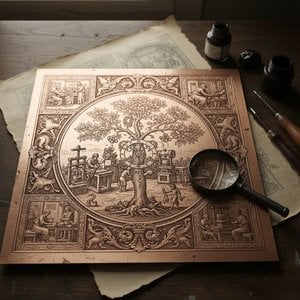
Explore the intricate world of etching and intaglio printmaking. Discover how masters use acid and metal to create profound textures and lines, from Romanticism to modern era, through an expert lens of art history and technical mastery.

 Eelvaade
 Saada
Saada Jaga
Jaga
 Teave teose kohta

 Laadi alla
 Sarnased teosed
 Röntgenuuring
 Slaidietendus

 Loe lähemalt




































 Klaasivalik on saadaval ainult suuruses kuni 110 cm


