High Medieval artistid, ranked

96 Famous High Medieval Kunstnikud: The Definitive Ranking

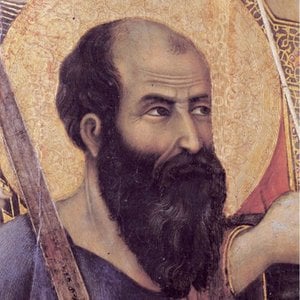
The most famous High Medieval kunstnik is Giotto Di Bondone (1267–1337), known for Madonna in Maest (Ognissanti Madonna) ja Nr 19 Kristuse elu streenid: 3. Kristuse esitamine tempel. Next come Duccio Di Buoninsegna, Cimabue, Zhao Mengfu ja Zhu Xi. This ranking of the 96 most famous High Medieval artistid runs from Xu Daoning (born 970) to Huang Gongwang (born 1269), across 23 countries.

How this list is ranked. Artists whose works our catalogue files under High Medieval, in the order of our fame ranking of artists. Artists without a Wikidata identifier born after 1955 are left out until verified. The Wikipedia figure next to each name is the number of our 32 languages in which Wikipedia has an article on the artist.

  1. Madonna in Maest (Ognissanti Madonna) teos, autor Giotto Di Bondone1Giotto Di Bondone
  2. Rucellai Madonna teos, autor Duccio Di Buoninsegna2Duccio Di Buoninsegna
  3. The Madonna in Majesty (Maestà) teos, autor Cimabue3Cimabue

The essentials

High Medieval at a glance

  • 96Kunstnikud
  • 970–1269Sünniaastad
  • 23Sünnimaad
  • 3Naised
  • 3Elavad kunstnikud
  • 1429Meie kataloogis olevad teosed
Linnad kõige rohkem sünnilaikadega
Kyoto (12), Hangzhou (5), Siena (4), Kaifeng (3)
Muuseumid, kus on kõige rohkem olulisi teoseid
Metropolitan Museum of Art (13), Cleveland Museum of Art (9), The Palace Museum (9), National Palace Museum (7)

Ranked, with their masterpieces

The ranking: 96 High Medieval Kunstnikud and their key works

1of 96

Giotto Di Bondone

Itaalia Born in Firenze Vararenessanss Wikipedia in 31/32 languages

Giotto Di Bondone

Umbes 1267. aastal Firenze lähedal, Toscana kergelt kurulistel mäenõlvadel sündinud Giotto di Bondone on kunstiajaloo üks olulisemaid tegelasi, kes sillutas vahet keskaja kunstiliste konventsioonide ja renessansi poole. See algav naturalism on näha Ülemise Püha Francisci basiilika freskode osades Assisis – kuigi autorlus jääb vaidlusaluseks, tunnustavad paljud teadlased Giotto käekirja stseenides, mis eristuvad selgesti valitsevast Bütsantsi esteetikast.

Pupil of Cimabue #3 · Teacher of Pietro Cavallini #84

Key works · The 100 most famous works

2of 96

Duccio Di Buoninsegna

Itaalia Born in Siena Sienese koolkond, Trecento gooti stiil Wikipedia in 31/32 languages

Duccio Di Buoninsegna

Sienas, Itaalias, umbes aastal 1255 sündinud Duccio Di Buoninsegna elas elu, mis oli sügavalt sisse põimitud Toskaani religioosse ja civiilse pulssiga. The Virgin and Child with Saints Dominic and Aurea (1312). Sienas, Itaalias, umbes aastal 1255 või 1256 sündinud Duccio Di Buoninsegna pärines suguvõnast, mis kujastas tema isiklikku identiteeti.

Pupil of Cimabue #3

Key works · The 100 most famous works

3of 96

Cimabue

Italian Born in Firenze Byzantine & Renaissance Wikipedia in 28/32 languages

Cimabue

He was a child of the Florentine streets, growing up in a landscape where the heavy, golden formality of the East met a new, restless desire for something more human.

Where to see To follow the path of his brush is to travel across the great cities of Europe and beyond.

Key works · The 100 most famous works

4of 96

Zhao Mengfu

Hiinlane Born in Huzhou Literatoratuurimaalimine; Maastikumaalimine Wikipedia in 18/32 languages

Zhao Mengfu

Zhao Mengfu (1254–1322) seisab kui monumentaalne figuur Juani dinastia kunstis ja on tõenäoliselt kaasaegse Hiina maastikumaali algupõhja loomis. Sündides aujuisas Songi sugukonnas oli Zhao varajane elu tähistatud privileegeeritud seisusega, kuid seda mõjutasid ka turbulentlikud poliitilised ajad — mongoolide vallutus muutis Hiina kultuurilist maastikku sügavalt. Kuigi ta teenis Kublai Khani ja tema järglaste all sõjaväeljana, ei loobnud Zhao Mengfu kunagi oma armastust teadlikule uurimisele ja kunstilistele püüdlustele.

Key works · The 100 most famous works

5of 96

Zhu Xi

Hiinlane Wikipedia in 31/32 languages

Zhu Xi

Zhu Xi was a Chinese philosopher, historian, politician, poet, and calligrapher of the Southern Song dynasty. Born in Fujian, he was a leading figure in the development of Neo-Confucianism, seeking to integrate moral self-cultivation, classical interpretation, ritual practice, and cosmological theory into a coherent framework.

Key works · The 100 most famous works

6of 96

Ma Yuan

Hiina Born in Hangzhou Ma-Xia kooli, Lõuna-Songi dynastii Wikipedia in 19/32 languages

Ma Yuan

Et mõista Lõuna-Songi dynastii maaparidmaali, tuleb vaadata, kuidas Ma Yuan käsitas tühiku. Teosetena Scholar Viewing a Waterfall on muste laviend kihitud täpsusega, kasutades peeneid toonilisi üleminekuid sügavuse ja atmosfääri loomiseks, ilma et ta tuguks rasketele kontuuridele. Tema suguvõsa oli sügavalt juurdunud keiserlikus õiguskonnas: tema vanemapaga Ma Fen teenis Põhja-Songi õiguskonnas ning nii tema isa kui vanaisa heldid sarnaseid ametikohti Lõuna-Songi ajal.

Key works · The 100 most famous works

7of 96

Guo Xi

Hiina Born in Yancheng Põhja Songi maalimus Wikipedia in 16/32 languages

Guo Xi

Guo Xi (郭熙), kes sündis umbes aastal 1020 Hiinas, Jiangsu provinsi Yanchengis, pärines Konfutseuse õpetusest süvenenud perekonnast – traditsioonist, mis kujendas sügavalt tema kunstilist mõttemustri. Guo Xi panus Hiina kunstile on lahutusmatult seotud Põhja Songi dynastias kukkunud maastikumaali liikumisega, mis muutis kunstilist keelekoodi igavesti.

Key works · The 100 most famous works

8of 96

Songi Keiser Huizong

Hiinlane Born in Kaifeng Songi dynastii; Slender Gold kalligraafia Wikipedia in 19/32 languages

Songi Keiser Huizong

Hiina ajaloo annalsis on väheseid tegelasi, kes kehastavad nii sügavalt sublimeeritud kunstilise geniaali kui ka poliitilise katastrofi traagilist ristumist kui Songi Keiser Huizong. 1082. aastal Zhao Ji nimega sündinud keiser tõusis troonile ajal, mil kultuur oli oma võimukaimasse õitsemisharjastikus, kuid tema reign becomeer ultimately sümboliks Põhja Songi dinastia langusele. Toetajana transformaatsioonis ta keiserliku õõri talentide pühapaigaks, asutades Hanlin Imperial Painting House, et koguda parimad meistrid üle kogu keiserkonna.

Key works · The 100 most famous works

9of 96

Muqi

Hiinlane Born in Sichuan Chan-maalamine Wikipedia in 14/32 languages

Muqi

Muqi Fachang, kes on ajalooos tuntud oma kunstinime Muqi või Muxi all, ei olnud pelgalt maalari, vaid vaimne kanal, kes tõlkis Chan-budismi sügava vaikuse muste ja paberiks. Süninud Lõuna Songi dynastii lõpus, elas Muqi tohutu kultuurilise ülemineku ajal ning tema kunstitöö becomeks sild mineviku struktuursete traditsioonide ja uue, intuitiivse maailmapildi vahel. Muqi meistriklassi alatused panid astenu austatud Chan-meister Liang Kai juhendamisel.

Key works · The 100 most famous works

10of 96

Guido Da Siena

Prantsuse Born in Itaalia Keskaegne arhitektuur/disain Wikipedia in 17/32 languages

Guido Da Siena

Villard de Honnecourt, salapära ning lummav tegelane, seisab 13. sajandi Prantsus Aust üks olulisemaid, kuid samas kõige enigmatilisemaid kunstnereid. Sündinud umbes 1230. aastal Picardies – piirkonnas, mis oli selle ajastu kunstiline tulbad –, rests Villardi pärand peaaegu täielikult ülalmutu sketsiraamatil ehk albumil, mis säilitatakse praegu Pariisis Bibliothèque nationale de France'is.

Key works · The 100 most famous works

11of 96

Bonaventura Berlinghieri

Itaalia Born in Lucca Betsantiini stiil Wikipedia in 14/32 languages

Bonaventura Berlinghieri

Bonaventura Berlinghieri, silmapärane Itaalia kunstnik Lucca linnast, õitstes 13. sajandil (1210–1287). Tema isaga, Berlinghiero Berlinghieril ning vendade Barone ja Marco Berlinghieril, oli samuti erakordselt osavad kunstnikud, luues ühist pärandi. Assisi sveta Franciscus (1235), mis on tellimusel loodud teos San Francescos kiriku jaoks Pescias linnas, on üks varasemaid Assisi sveta Franciscuse kujutusi, kes kanoniseeriti aastal 1228.

Key works · The 100 most famous works

12of 96

Master Mateo

Spanish Romanesque Sculpture

Master Mateo

His mastery of limestone carving was unparalleled, particularly through his use of a technique known as trabajo vivo. This method involved layering stone slabs to create textured surfaces that mimicked the appearance of flesh and fabric, lending a sense of movement and vitality to the static medium.

Key works · The 100 most famous works

13of 96

Giovanni Pisano

Itaalia Born in Pisa Gootika ja Rooma segunemine

Giovanni Pisano

Giovanni Pisano sai maailmale osaks Itaalia Pisas 1248. aastal, sündides kunstilises tulistuses. Tema varajased koostööd Nicola eest asutatud oluliste teostega, nagu Siena katedraali pulpiit (1265–1268) ja Perugia suure uus fontein (lõpetatud 1278), paljastavad hädavõimetut vormivaldabust, mis pärines otse tema isa käest. Pivotaalne hetk saabus tema tellimustega Pisa katedraalis, kus ta hoolis aastatel 1277 kuni 1284 skulptureerima kujud, mis kaunistavad ristamisjärgi kahte nokaosa.

Key works · The 100 most famous works

14of 96

Mi Fei

Hiinlane Born in Jiangsu Songi dynastii kunst Wikipedia in 17/32 languages

Mi Fei

Mi Fei, Hiina maaler, luuletaja ja kalligraaf, sündis aastal 1051 Songi dynastias Taiyuanis. See unikaalne tehnika tõi talle au nimetena üheks Songi dinasti neljast suuremast kalligraafist, püsides samas nimekülgluse kõrgel koos Su Shi, Hung Tingjian ja Cai Xian -ga. Zhao Mengfu: ratsad juhtimas valget hobust (Indianapolis Kunstimuuseum, siid) — see teos näitab Mi Feis'i püsivat mõju järgnevaid kunstnikke.

Key works · The 100 most famous works

15of 96

Lorenzo Maitani

Italian Born in Siena Gothic & Renaissance

Lorenzo Maitani

By blending the verticality and ornamentation of the Gothic style with a new, more human-centric focus on narrative clarity and structural harmony, he helped pave the way for the Renaissance masters who would follow.

Key works · The 100 most famous works

16of 96

Li Gonglin

Born in Tongcheng Song Dynasty painting Wikipedia in 9/32 languages

Li Gonglin

Li Gonglin’s painting style is often described as a deliberate revival of earlier traditions, particularly those of the Five Dynasties period (907-960). Instead, he turned to the works of artists like Zhan Ziqian, known for his precise depictions of horses, and Fan Kuan, celebrated for his monumental landscapes. Unlike many artists who enjoyed patronage from the imperial court or wealthy collectors, Li Gonglin’s path was one of scholarly independence and deliberate stylistic choices rooted in a deep reverence for earlier masters.

Key works · The 100 most famous works

17of 96

Ma Lin

Hiina Born in Baoding 'Luusteta' maaliuteknika Wikipedia in 7/32 languages

Ma Lin

et süvenemaks Ma Lini kunstile ja Songi dinastia Hiina õlakunsti kontekstile, uurige järgmisi ressursse: Ilkhani kunstiliikumine - mõistke selle ajastu laiemat kunstilist maastikku. Tenshō Shūbun'i mäemandust - hindage Hiina kunsti mõju Jaapani maalari.

Key works · The 100 most famous works

18of 96

Yi Kyu-Bo

Korean Confucianism

Yi Kyu-Bo

Rooted in Confucian ethics—emphasizing filial piety, righteousness, benevolence, and ritual propriety—his poetry reflects a deep engagement with moral dilemmas and explores the human condition through the lens of ethical contemplation. This dual commitment to tradition and creativity distinguishes Yi Kyu-Bo as a singular voice in Korean literary history—a figure who simultaneously honored the past while forging new paths toward artistic excellence.

Key works · The 100 most famous works

19of 96

Gislebertus

French Romanesque Sculpture

Gislebertus

Born sometime around 1120, Gislebertus lived through an era where art served as the primary language of the faithful. While biographical details remain scarce, scholars believe he was trained at Cluny Abbey, arguably the epicenter of European monastic art and intellectual life at the time. Cluniac Influence: He carried the high intellectual and spiritual standards of Cluny Abbey into the public sphere of cathedral architecture.

Key works · The 100 most famous works

20of 96

Badīʿ Az-Zaman Abu L-ʿIzz Ibn IsmāʿĪl Ibn Ar-Razāz Al-Jazarī

Muslim Born in Jazirat Ibn Omar Islamic Golden Age Engineering

Badīʿ Az-Zaman Abu L-ʿIzz Ibn IsmāʿĪl Ibn Ar-Razāz Al-Jazarī

He represents a pivotal figure in the Golden Age of Islam, a period characterized by intellectual flourishing and groundbreaking innovation across diverse fields.

Key works · The 100 most famous works

21of 96

Giunta Pisano

Italian Born in Pisa Renaissance style Wikipedia in 10/32 languages

Giunta Pisano

The Crucifix of San Raniero demonstrates this perfectly, showcasing the artist’s ability to convey both physical pain and spiritual anguish with astonishing realism. Italian Realism: He gradually introduced elements of Italian realism, evident in his attention to anatomical detail and emotional expression. Notably, Giunta’s depiction of Christ as a suffering figure paved the way for Cimabue's own groundbreaking crucifixes, which further solidified this new artistic direction.

Key works · The 100 most famous works

22of 96

Xia Gui

Song dynasty Born in Hangzhou Wikipedia in 16/32 languages

Xia Gui

The surviving works of Xia Gui include various genres, such as small album leaves and hand scrolls. Notable examples of his work include: His influence extended far beyond his own era, impacting the Japanese master Sesshū Tōyō, who was influenced by Xia's idiom and made studies of his landscape fans. Xia Gui was a Chinese landscape painter of the Song dynasty, most likely born in Hangzhou, People's Republic of China.

Key works · The 100 most famous works

23of 96

Nicola Pisano

Itaalia Born in Apulia Romaaniline kunst

Nicola Pisano

Nicola Pisano (umbik 1220/1225 – umbik 1284) tõuseb Itaalia skulptuuris hiiglisena, teda tunnustatakse mitte ainult tema kunstilise oskuse, vaid eelkõige kui põhimõtteliku modernse skulptuuri sünnikuna. Vaatamata ebaselgustele tema sünnadate ja täpse päritolu kohta – ta sündis Itaalias, Apulias – on Pisano mõju kunstilukule vääramatu.

Key works · The 100 most famous works

24of 96

Li Tang

Song dynasty Born in Meng Prefecture Academy-style landscape Wikipedia in 15/32 languages

Li Tang

The brush moves with a sharp, decisive energy. Through this precision, his approach became the foundation for what is recognized as the academy-style landscape of the Southern Song. Southern Song painters Xia Gui and Ma Yuan studied his compositions and techniques, absorbing his approach to space and form.

Where to see The physical remnants of Li Tang's brushwork reside primarily within major institutional collections.

Key works · The 100 most famous works

25of 96

Qian Xuan

Chinese Born in Wuxing District Fur and feathers painting; Song realism blended with archaic Tang style Wikipedia in 12/32 languages

Qian Xuan

The historical significance of Qian Xuan lies in his ability to use art as a vessel for memory and identity.

Key works · The 100 most famous works

27of 96

Jingdezhen Ceramic Kiln

Chinese Born in Jingdezhen Imperial porcelain

Jingdezhen Ceramic Kiln

While archaeological evidence confirms that pottery production existed in the region as early as the sixth century CE, it was during the Yuan Dynasty (1271–1368) that the kilns truly ascended to global prominence.

Key works · The 100 most famous works

28of 96

Herrad of Landsberg

Wikipedia in 16/32 languages

Herrad of Landsberg

Herrad of Landsberg, a woman of noble Alsatian lineage, emerged not merely as a religious leader but as one of the most significant polymaths of the Middle Ages. The historical significance of Herrad of Landsberg extends far beyond the cloister walls of Hohenburg.

Key works · The 100 most famous works

30of 96

Joannes Koulix

Byzantine Born in standardized city name Manuscript illumination

Joannes Koulix

Creating such a masterpiece demanded immense patience and skill. Gold leaf, painstakingly hammered into incredibly thin sheets, was then carefully adhered to the surface using a special adhesive. Johannes Koulix’s ‘Epistle to the Hebrews’ leaf stands as a poignant reminder of the artistic achievements of the Byzantine era.

Key works · The 100 most famous works

32of 96

Villard De Honnecourt

French Gothic architecture

Villard De Honnecourt

He clearly drew upon the established traditions of medieval architecture, particularly the Cistercian style prevalent in northern France. However, he also incorporated elements from other sources: the writings of classical mathematicians like Euclid, the techniques employed by medieval workshops, and perhaps even contemporary innovations in engineering.

Key works · The 100 most famous works

33of 96

Fujiwara No Sadanaga

Japanese Born in Kyoto Waka poetry

Fujiwara No Sadanaga

His most famous poem, included in the renowned Hyakunin Isshu anthology, vividly depicts mist rising over dew-kissed pines on an autumn evening—a motif that resonated deeply with later artists and poets. His personal collection, Jakuren Hoshi Shu, further reveals the breadth of his poetic vision and the depth of his spiritual journey. Though Jakuren’s life was tragically cut short in 1202—before the completion of the Shin Kokin Wakashū—his legacy endured.

Key works · The 100 most famous works

34of 96

Zhang Zeduan

Chinese Empire Born in Zhucheng shan shui Wikipedia in 15/32 languages

Zhang Zeduan

Zhang Zeduan’s technical precision helped define the early development of shan shui, the foundational Chinese landscape art style. By employing these precise boundaries, he captured the complexity of the Song dynasty's social and commercial infrastructure. They show how subsequent generations of painters from the Ming and Qing dynasties interpreted his specific visual language.

Where to see Tracing the physical presence of Zhang Zeduan's output requires looking toward two major institutions in East Asia.

Key works · The 100 most famous works

35of 96

Sū Hànchén

Chinese Born in Kaifeng Song Dynasty painting

Sū Hànchén

He wasn't a prolific artist leaving behind an extensive body of work, but those pieces that have survived are testaments to his exceptional skill and sensitivity. His subjects were often drawn from domestic life – children at play, women engaged in scholarly pursuits or gentle pastimes. Although Su Hanchen’s surviving oeuvre is relatively small, his influence on subsequent generations of Chinese painters is undeniable.

Key works · The 100 most famous works

37of 96

Gaddo Gaddi

Italian Born in Florence Gothic Art

Gaddo Gaddi

The Coronation of the Virgin: A breathtaking mosaic situated over the interior door of the Florence Cathedral, dated to approximately 1307, which stands as a testament to his ability to marry spiritual grandeur with technical precision.

Key works · The 100 most famous works

38of 96

Huang Gongwang

Yuan dynasty Born in Changzhou Literati painters (wenrenhua) Wikipedia in 12/32 languages

Huang Gongwang

Rather than adhering to the formal structures of his contemporaries, he sought a more personal expression of the natural world. This technical mastery was not merely intuitive; he sought to codify his understanding of the medium in his treatise, Secrets of Landscape Painting (寫山水訣, Xiě Shānshuǐ Jué). His approach moved away from the rigid conventions of the imperial academies, favoring instead a personal, scholarly expression.

Key works · The 100 most famous works

40of 96

Meliore Of Jacopo

Italian Medieval Italian art

Meliore Of Jacopo

This work, depicting Christ alongside the Virgin, Saint Peter, Saint Paul, and Saint John the Evangelist, represents a significant departure from his earlier geometric roots, embracing a style that is reminiscent of the great Cimabue. Madonna and Child (Art Institute of Chicago): An early work that demonstrates his foundational skill in capturing the tender, human connection within divine subjects. By integrating the geometric discipline of the Master of the Bigallo Crucifix with the more expressive, proto-Renaissance techniques seen in the works of Cimabue, Meliore helped pave the way for the dramatic innovations that would later define Florentine art.

Key works · The 100 most famous works

42of 96

Philippe le Bel

French Born in Fontainebleau

Philippe le Bel

The development of institutions like the Musée Baron Gérard and the Musée Maurice Denis, coupled with the emergence of talented artists such as Labrèche de Carpentras, Chagall, Pissarro, Monet, and Bouguereau, demonstrates the enduring legacy of this complex and often misunderstood king.

Key works · The 100 most famous works

43of 96

Coppo di Marcovaldo

Italian Born in Florence Italo-Byzantine Art Wikipedia in 12/32 languages

Coppo di Marcovaldo

He was a bridge-builder, an artist who took the established language of the Byzantine Empire and began to translate it into a local, Florentine dialect.

Key works · The 100 most famous works

46of 96

Arnolfo Di Cambio

Hiina Born in Colle Val d'Elsa Jüan-dinastia maalidist

Arnolfo Di Cambio

Sündinud Colle Val D'Elsas umbes aastal 1245, hõlmab tema elu sügavalt kunstilist üleminekut, võimaldades tal imetleda Rooma antikule suurmeedlust ning samal ajal pioneerida uusi vorme, mis määratasid gootika tundlikkuse sajandeid. Tema varajane õpilaskõnda meistrite, nagu Nicola Pisano, all pakkus talle vääramatu aluse, mis on eriti nähtav tema töös marmorist pulpiidi loomisel Sienas asuvasse Duomoost katedraali jaoks vahemikus 1eks 1265 ja 1268 aastate vahel.

Key works · The 100 most famous works

47of 96

Muhammad Ibn Ammar

Briti Born in Silves Botaaniline illustratsioon

Muhammad Ibn Ammar

Muhammad Ibn Ammar, tuntud ka nimega abū bakr muḥammad ibn ʿammār ibn al-ḥusayn ibn ʿammār al-quḍā'ī, oli silvesest Portugalist pärit silmapaistev arabipoet ja maalari, kes sündis aastal 1031. Tema elu on mähitud salajandusse, kuna tema varasest ajast on saadaval vaid piiratud teavust. ibn ammari tõus Sevillas asunud taifa vizieri ametikohtasse oli tema karjääris märkimisväärne pöördepunkt.

Key works · The 100 most famous works

53of 96

Hemachandra

Born in Dhandhuka Wikipedia in 10/32 languages

Hemachandra

Hemachandra was a prolific scholar and monk of the Śvetāmbara school of Jainism. Born in Dhandhuka, India, he was a man of immense intellect, earning the title kalikālasarvajña, meaning "the knower of all knowledge in his times." His vast contributions spanned numerous disciplines, including mathematics, history, philosophy, poetry, and grammar.

Key works · The 100 most famous works

54of 96

Bolesław Iv The Curly

Polish Born in Krakow Medieval Art

Bolesław Iv The Curly

In the turbulent landscape of twelfth-century Poland, where the echoes of the Piast dynasty's greatness still resonated, Bolesław IV the Curly emerged not merely as a ruler, but as a transformative force. Following the untimely passing of his elder brothers, Leszek and Casimir, Bolesław ascended to the dukedom of Masovia, stepping into a political arena fraught with tension and the looming shadow of his half-brother, Władysław II the Exile.

Key works · The 100 most famous works

55of 96

Fujiwara No Koreyuki

Japanese Born in Zama Heian calligraphy & poetry

Fujiwara No Koreyuki

Koreyuki flourished during a period marked by political upheaval and shifting power dynamics, yet his art reflects a deliberate retreat into established aesthetic values rather than engagement with these turbulent times. These were not simply copies; Koreyuki imbued each character with a subtle energy, demonstrating mastery over brushstroke variation and spatial composition.

Key works · The 100 most famous works

56of 96

Adelhog

German Born in Hildesheim Medieval Art

Adelhog

The legacy of Adelhog can be summarized through several key contributions to the medieval landscape: Integration of Iconography: He successfully merged religious symbolism, such as the lily and the cross, with functional objects like coinage. Cultural Connectivity: Through his education in Toulouse, he acted as a conduit for French artistic influences within the German ecclesiastical tradition. This international perspective allowed him to bring a sense of continental elegance back to the German territories, bridging the gap between local tradition and the burgeoning artistic movements of the high Middle Ages.

Key works · The 100 most famous works

57of 96

Urtu Saqaltu

Khitan Born in Beijing Literati painting, Confucian tradition

Urtu Saqaltu

Chucai’s artistic style is most accurately described as “literati painting,” a genre deeply rooted in Chinese tradition. The use of gold leaf – particularly evident in works like “Landscape with Tower” – added an element of luxury and spiritual significance, elevating the paintings beyond mere representations of the world to symbolic expressions of higher ideals. Recognizing his intelligence, diplomatic skills, and understanding of both Chinese and Khitan cultures, the young Mongol leader brought him into his inner circle in 1218.

Key works · The 100 most famous works

58of 96

Fernando Martins De Bulhões

Portuguese Born in Lisbon Religious Art

Fernando Martins De Bulhões

This image symbolizes his deep love for Christ and his role as a protector of children. Paintings often portray him as a humble Franciscan friar, radiating an aura of peace and devotion. He was canonized less than a year after his death in 1231 – an astonishingly swift recognition of his sanctity by the Catholic Church.

Key works · The 100 most famous works

61of 96

Master Of Cabestany

Italian Romanesque

Master Of Cabestany

What sets the Master of Cabestany apart is not merely the quality of his work—though that is undeniably exceptional—but also its surprisingly broad geographic distribution. Unlike many artists of the period who were tied to a specific location or patron, the Master appears to have been remarkably mobile, leading a workshop that traversed considerable distances. His work reveals clear influences from earlier French Romanesque centers, such as Saint-Sernin in Toulouse, and the innovations coming out of Tuscany—particularly those of Master Guilielmus in Pisa.

Key works · The 100 most famous works

62of 96

Hōgen En’I

Japanese Born in Kyoto Yamato-e & Emakimono

Hōgen En’I

His era was one of profound transition, where the rugged energy of the Kamakura period met the refined aesthetic sensibilities of the Yamato-e tradition. His ability to blend the sacred with the beautiful, and the historical with the poetic, set a standard for the emakimono tradition that few could ever hope to reach.

Key works · The 100 most famous works

65of 96

Benedetto Antelami

Born in Lombardy Romanesque

Benedetto Antelami

This evolution is evident in masterpieces such as the Deposition from the Cross, where dramatic relief carving and poignant religious scenes showcase a burgeoning Gothic influence. The historical significance of Benedetto Antelami lies in his role as a foundational pillar of Italian sculpture. Whether carving the intricate Histories of the Virgin or the symbolic History of Borgo, Antelami utilized a multi-layered arrangement to guide the viewer’s eye through sacred timelines, turning architectural surfaces into epic tapestries of stone.

Key works · The 100 most famous works

67of 96

Qingmao Gulin

Chinese Born in Leying Zen Calligraphy, Wanshi-ha Poetry

Qingmao Gulin

Zen Calligraphy Master: He is widely considered to be the most distinguished Zen calligrapher of his time, elevating calligraphy beyond mere aesthetics into a form of spiritual expression. Wanshi-ha Poetry Movement: Qingmao Gulin was an integral part of the Wanshi-ha poetry movement, known for its unique writing style influenced by the Sōtō monk-poet Hongzhi Zhengjue. He not only produced stunning works of art but also contributed significantly to the intellectual and artistic landscape of his time through his involvement in the Wanshi-ha poetry movement.

Key works · The 100 most famous works

68of 96

Hildegard von Bingen

German

Hildegard von Bingen

This impulse leads to the creation of Scivias, a work completed around 1151 or 1152. The themes of spiritual combat and the triumph of virtue are further explored in The Book of the Rewards of Life. Her compositions move through the air with a specific, ornamental neume notation, a late German style that preserves the reverence for the Virgin Mary through its very structure.

Key works · The 100 most famous works

70of 96

Filippo Rusuti

Italian Roman School

Filippo Rusuti

However, scholars believe he was born in Rome around 1255, likely inheriting a family tradition of craftsmanship—a common characteristic among artists active during this time. The Basilica of St Mary Major mosaic project was Rusoti’s first major commission and it cemented him as a prominent artist of his time. His contributions include: The Synthesis of Styles: Merging Byzantine formality with nascent Italian naturalism.

Key works · The 100 most famous works

71of 96

Toba Sōjō

Prantsus Born in Toba Realism Wikipedia in 10/32 languages

Toba Sōjō

Toba Sōjō, tuntud ka nimega Kakuyū, oli Jaapanis 1053. aastal sündinud kunstnik-munk ning Minamoto no Takakuni poeg. Tema elu teekond viis teda sügavale vaimulisuse kurgu, muutudes Tendai budismist kõrge preestrina ning saades 1138. aastal Tendai sektsiooni 48. zasu ehk peapreestri positsioonile. Tema meistraldus erinevates kunstivõidetes on kinnistunud selliste väärtuslikke teostega nagu Fudōmyō'ō-ritsuzō Daigo-jis, mis on Jaapani oluline kultuuriväärtus.

Key works · The 100 most famous works

74of 96

Yi Yuanji

Chinese Born in Changsha Northern Song Dynasty Wikipedia in 7/32 languages

Yi Yuanji

In the vibrant artistic landscape of the Northern Song Dynasty, few names resonate with as much specialized brilliance as Yi Yuanji. However, a pivotal moment of creative evolution occurred when he encountered the groundbreaking works of Zhao Chang. The zenith of Yi Yuanji's career was marked by his summons to the imperial court.

Key works · The 100 most famous works

75of 96

Nicolas Of Verdun

Flemish [Gothic art](https://www.britannica.com/art/Gothic-art)[Romanesque art](https://www.britannica.com/art/Romanesque-art)[Mosan school](https://www.britannica.com/topic/Mosan-school)

Nicolas Of Verdun

Around 1205, Nicolas turned his attention to Cologne Cathedral, undertaking the creation of the Shrine of the Three Kings—a reliquary intended to house the bones of the biblical Magi. The Shrine of the Three Kings is remarkable for its expressive power and dynamic composition. Nicolas of Verdun’s impact on medieval art extends far beyond his individual creations.

Key works · The 100 most famous works

76of 96

Wuxue Zuyuan

Chinese Born in Hangzhou Zen Buddhist ink art and calligraphy

Wuxue Zuyuan

His posthumous title, Bukko Kokushi, or the "National Preceptor of the Buddha's Radiance," serves as a testament to the immense respect and spiritual authority he commanded.

Key works · The 100 most famous works

79of 96

Liu Songnian

Chinese Born in Hangzhou Southern Song Dynasty Wikipedia in 7/32 languages

Liu Songnian

Furthermore, Liu was influenced by other artists like Gion Nankai, a prominent Nanga painter who brought a more expressive and emotionally charged approach to landscape painting.

Key works · The 100 most famous works

80of 96

Master of Taüll

Born in Roda de Isábena Wikipedia in 7/32 languages

Master of Taüll

The name of the person who painted the walls of Sant Climent remains lost to time, leaving only the title of the Master of Taüll to mark their presence. The focus remained on the central figure, a Christ in Majesty, seated upon a throne and surrounded by the symbols of the four Evangelists.

Key works · The 100 most famous works

83of 96

Fujiwara Nobuzane

Japanese Born in Kyoto Nise-e, Yamato-e, Kamakura period Wikipedia in 8/32 languages

Fujiwara Nobuzane

In his approach to painting, Nobuzane utilized a technique that favored clarity and psychological depth over mere decoration. To capture the soul of his subjects, he used a more economical method for the face, employing sketchy, sparse lines to evoke individual features and personality. Beyond the poetry sets, several other works are attributed to his hand or influenced by his direction: Portrait of Sugawara no Michizane in Formal Attire: A study in the dignity of courtly dress.

Key works · The 100 most famous works

84of 96

Pietro Cavallini

Itaalia Born in Room Rooma naturalism

Pietro Cavallini

Sündinud umbes 1240. aastal Roomas, on tema elu jäänud ajaloolise hämaruse varju—ajaloolised allikad viitavad, et ta kirjutas oma teostele pictor romanus, mis viitab sügavale sidumisele San Paolo fuori le mura basilika kirikuga, kus ta oma illusteeritud karjääri alustas. See esmane tellimus märkis julget lahkumist sellest stiilsetest kujundustest, mis olid tollal Euroopas valitsevad, kinnistades Cavallini kui ühte varasemaid seda, mida hiljem hakati nimetama Rooma naturalismiks.

Key works · The 100 most famous works

85of 96

Naumburg Master

French High Gothic Wikipedia in 10/32 languages

Naumburg Master

From there, his path led toward the Holy Roman Empire, possibly reaching Metz. By around 1230, he was working at Mainz Cathedral. This focus on the individual is a hallmark of his hand, seen also in the founder figures of Meissen Cathedral and the tomb slab of Hermann von Hagen in Merseburg Cathedral.

Where to see Tracing the physical remains of his hand requires traveling across several locations.

Key works · The 100 most famous works

86of 96

Li Jie

Chinese Born in Xinzheng Tribal Art Wikipedia in 9/32 languages

Li Jie

However, these symbols transcend mere decoration; they serve as vehicles for conveying spiritual truths—a hallmark of Daoist art alongside Buddhist principles. Jie's meticulous technique—characterized by subtle gradations of color and masterful brushwork—elevates his landscapes to a realm of sublime beauty. Pulleyblank and Alexander Vovin arguing for a profound connection between Jie’s name ("jie") and Proto-Yeniseian (qeˀt/s), “stone.” This hypothesis posits that the root qeˀt/s underlies the ethnonym itself—a daring proposition that suggests Jie's art reflects an awareness of linguistic structures predating Chinese civilization.

Key works · The 100 most famous works

87of 96

Dietisalvi di Speme

Born in Siena Wikipedia in 8/32 languages

Dietisalvi di Speme

The evolution of Dietisalvi's style is visible through his surviving works, moving toward a greater similarity with the work of Giunta Pisano and Cimabue, as well as the freer strokes of Guido da Siena. His technique showed a movement toward a more substantial depiction of bodies and a greater attention to color.

Key works · The 100 most famous works

88of 96

Margaritone d'Arezzo

Italian Born in Arezzo Byzantine influence Wikipedia in 8/32 languages

Margaritone d'Arezzo

Margarito d’Arezzo, a name whispered through the annals of 13th-century Italian painting, remains an elusive figure despite leaving behind a surprisingly substantial body of work. Unlike many artists of his era, Margarito consistently signed his creations, offering a rare personal connection across the centuries. His work was largely forgotten until its rediscovery by Giorgio Vasari in the 16th century.

Key works · The 100 most famous works

90of 96

Cui Bai

Chinese Born in Fengyang County Northern Song Dynasty painting Wikipedia in 8/32 languages

Cui Bai

Born around 1050 CE in the Anhui Province, Cui Bai was far more than a mere chronicler of nature; he was an artist who masterfully synthesized meticulous observation with profound emotional resonance. His journey eventually led him to the imperial capital of Kaifeng, where he sought to align his talents with the highest e

Key works · The 100 most famous works

91of 96

Su Hanchen

Song dynasty Born in Kaifeng Wikipedia in 7/32 languages

Su Hanchen

Su Hanchen lived during the Song dynasty, a period of significant change in China. Born in Kaifeng, he spent much of his life in Zhejiang. His talent was recognized early by the imperial court, where he served as a Painter-in-Attendance for Emperor Huizong.

Key works · The 100 most famous works

92of 96

Xu Daoning

Chinese Born in Xi'an Northern Song Dynasty Wikipedia in 7/32 languages

Xu Daoning

Daoning’s artistic journey was profoundly shaped by Li Cheng (李成, 919–967), one of the most celebrated landscape painters of the Mid-Song period. Daoning deeply admired Li Cheng's masterful use of atmospheric perspective – the subtle gradations of color and tone that create a sense of depth and distance – and meticulously emulated his techniques. His early works, such as “ Snow-covered Mountains ” (雪山), demonstrate this clear influence; the composition is characterized by broad washes of ink, suggesting vast distances and an ethereal quality.

Key works · The 100 most famous works

93of 96

Zhao Boju

Chinese Blue-and-green landscape painting Wikipedia in 6/32 languages

Zhao Boju

Zhao Boju’s brushwork was defined by a meticulous precision that bridged the gap between different eras of Chinese tradition. Rather than relying solely on color, he integrated ink wash techniques into this established Tang dynasty tradition.

Key works · The 100 most famous works

95of 96

Ren Renfa

Born in China Tang dynasty style Wikipedia in 6/32 languages

Ren Renfa

Ren Renfa was an expert of irrigation works, artist, and a government official of the Yuan dynasty. Born in Qinglong Town, Songjiang, he also served as a hydrological engineer, where his work included dredging an area in what is now Beijing to improve the water supply and leading a team to build embankments after the Yellow River burst its banks.

Key works · The 100 most famous works

The paintings behind the names

Famous High Medieval works and the artists who made them

  1. Madonna in Maest (Ognissanti Madonna) teos, autor Giotto Di Bondone

    Madonna in Maest (Ognissanti Madonna)

    Giotto Di Bondone

    1310

  2. Rucellai Madonna teos, autor Duccio Di Buoninsegna

    Rucellai Madonna

    Duccio Di Buoninsegna

    1285 · Galleria degli Uffizi, Firenze

  3. The Madonna in Majesty (Maestà) teos, autor Cimabue

    The Madonna in Majesty (Maestà)

    Cimabue

    1285 · Galleria degli Uffizi, Firenze

  4. ESSAY ON ASPIRATION (LEZHI LUN), PAINTING AND CALLIGRAPHY teos, autor Zhao Mengfu

    ESSAY ON ASPIRATION (LEZHI LUN), PAINTING AND CALLIGRAPHY

    Zhao Mengfu

  5. Thatched Hut Hand Scroll teos, autor Zhu Xi

    Thatched Hut Hand Scroll

    Zhu Xi

  6. The Football Players teos, autor Ma Yuan

    The Football Players

    Ma Yuan

    1207 · Cleveland Museum of Art

  7. Early Spring teos, autor Guo Xi

    Early Spring

    Guo Xi

    1072 · National Palace Museum, Taipei

  8. Five-colored parakeet on a blossoming apricot tree teos, autor Songi Keiser Huizong

    Five-colored parakeet on a blossoming apricot tree

    Songi Keiser Huizong

    1110 · Museum of Fine Arts, Boston

Through time

A High Medieval timeline in masterpieces

  1. 1055
  2. 1072
  3. 1085
  4. 1110
  5. 1124
  6. 1180
  7. 1201
  8. 1205
  9. 1207
  10. 1235
  11. 1235
  12. 1240
  13. 1250
  14. 1265

In figures

By the numbers

All of them, in order

List of the 96 famous High Medieval artistid

  1. 1Giotto Di BondoneGiotto Di BondoneItaalia · 1267–1337
  2. 2Duccio Di BuoninsegnaDuccio Di BuoninsegnaItaalia · 1255–1319
  3. 3CimabueCimabueItalian · 1240–1302
  4. 4Zhao MengfuZhao MengfuHiinlane · 1254–1322
  5. 5Zhu XiZhu XiHiinlane · 1130–1200
  6. 6Ma YuanMa YuanHiina · 1160–1225
  7. 7Guo XiGuo XiHiina · 1020–1090
  8. 8Songi Keiser HuizongSongi Keiser HuizongHiinlane · 1082–1135
  9. 9MuqiMuqiHiinlane · 1210–1269
  10. 10Guido Da SienaGuido Da SienaPrantsuse · 1230–1290
  11. 11Bonaventura BerlinghieriBonaventura BerlinghieriItaalia · 1210–1287
  12. 12Master MateoMaster MateoSpanish · 1161–1217
  13. 13Giovanni PisanoGiovanni PisanoItaalia · 1248–1318
  14. 14Mi FeiMi FeiHiinlane · 1051–1107
  15. 15Lorenzo MaitaniLorenzo MaitaniItalian · 1255–1330
  16. 16Li GonglinLi Gonglin1049–1106
  17. 17Ma LinMa LinHiina · 1180–1256
  18. 18Yi Kyu-BoYi Kyu-BoKorean · 1168–1241
  19. 19GislebertusGislebertusFrench · 1120–1135
  20. 20Badīʿ Az-Zaman Abu L-ʿIzz Ibn IsmāʿĪl Ibn Ar-Razāz Al-JazarīBadīʿ Az-Zaman Abu L-ʿIzz Ibn IsmāʿĪl Ibn Ar-Razāz Al-JazarīMuslim · 1136–1206
  21. 21Giunta PisanoGiunta PisanoItalian · 1190–1260
  22. 22Xia GuiXia GuiSong dynasty · 1195–1224
  23. 23Nicola PisanoNicola PisanoItaalia · 1230–1284
  24. 24Li TangLi TangSong dynasty · 1050–1130
  25. 25Qian XuanQian XuanChinese · 1235–1305
  26. 26Matthew ParisMatthew ParisEnglish · 1200–1259
  27. 27Jingdezhen Ceramic KilnJingdezhen Ceramic KilnChinese · sündinud 1004
  28. 28Herrad of LandsbergHerrad of Landsberg1130–1196
  29. 29Fujiwara No Teika, Fujiwara No SadaieFujiwara No Teika, Fujiwara No SadaieJapanese · 1162–1241
  30. 30Joannes KoulixJoannes KoulixByzantine · sündinud 1101
  31. 31Břetislav IBřetislav ICzech · 1002–1055
  32. 32Villard De HonnecourtVillard De HonnecourtFrench · 1200–1266
  33. 33Fujiwara No SadanagaFujiwara No SadanagaJapanese · 1139–1202
  34. 34Zhang ZeduanZhang ZeduanChinese Empire · 1085–1145
  35. 35Sū HànchénSū HànchénChinese · 1094–1172
  36. 36Saigyō HōshiSaigyō HōshiJapanese · 1118–1190
  37. 37Gaddo GaddiGaddo GaddiItalian · 1240–1312
  38. 38Huang GongwangHuang GongwangYuan dynasty · 1269–1354
  39. 39Rai KuniyukiRai KuniyukiJapanese · 1219–1298
  40. 40Meliore Of JacopoMeliore Of JacopoItalian · 1255–1285
  41. 41Guan DaoshengGuan DaoshengChinese · 1262–1319
  42. 42Philippe le BelPhilippe le BelFrench · 1268–1314
  43. 43Coppo di MarcovaldoCoppo di MarcovaldoItalian · 1225–1276
  44. 44Fujiwara No Tadaie(Teika)Fujiwara No Tadaie(Teika)Japanese · 1033–1091
  45. 45Kuo, RiverKuo, RiverChinese · 1031–1095
  46. 46Arnolfo Di CambioArnolfo Di CambioHiina · 1245–1310
  47. 47Muhammad Ibn AmmarMuhammad Ibn AmmarBriti · 1031–1086
  48. 48Zheng YuanZheng Yuan1056–1093
  49. 49Sakyō No Daibu AkisukeSakyō No Daibu AkisukeAmerican · 1090–1155
  50. 50Magnus Sigurdsson Or Sigurd HaraldssonMagnus Sigurdsson Or Sigurd HaraldssonNorwegian · 1115–1155
  51. 51Kamo No ShigeyasuKamo No ShigeyasuJapanese · 1119–1191
  52. 52Fujiwara no TameyoriFujiwara no TameyoriJapanese · 1128–1201
  53. 53HemachandraHemachandra1088–1172
  54. 54Bolesław Iv The CurlyBolesław Iv The CurlyPolish · 1138–1173
  55. 55Fujiwara No KoreyukiFujiwara No KoreyukiJapanese · 1139–1175
  56. 56AdelhogAdelhogGerman · 1170–1190
  57. 57Urtu SaqaltuUrtu SaqaltuKhitan · 1190–1244
  58. 58Fernando Martins De BulhõesFernando Martins De BulhõesPortuguese · 1195–1231
  59. 59Lanxi DaolongLanxi DaolongChinese · 1213–1278
  60. 60Master Of BigalloMaster Of BigalloItalian · sündinud 1218
  61. 61Master Of CabestanyMaster Of CabestanyItalian · 1130–1180
  62. 62Hōgen En’IHōgen En’IJapanese · 1240–1300
  63. 63Issan IchineiIssan IchineiChinese · 1247–1317
  64. 64Xianyu ShuXianyu ShuChinese · 1256–1301
  65. 65Benedetto AntelamiBenedetto Antelami1150–1230
  66. 66Saionji KinhiraSaionji KinhiraJapanese · 1264–1315
  67. 67Qingmao GulinQingmao GulinChinese · 1262–1329
  68. 68Hildegard von BingenHildegard von BingenGerman · 1098–1179
  69. 69FachangFachangChinese · 1210–1269
  70. 70Filippo RusutiFilippo RusutiItalian · 1255–1325
  71. 71Toba SōjōToba SōjōPrantsus · 1053–1140
  72. 72Memmo di FilippuccioMemmo di FilippuccioItalian · 1263–1326
  73. 73Su DongpoSu DongpoChinese · 1037–1101
  74. 74Yi YuanjiYi YuanjiChinese · 1000–1064
  75. 75Nicolas Of VerdunNicolas Of VerdunFlemish · 1130–1205
  76. 76Wuxue ZuyuanWuxue ZuyuanChinese · 1226–1286
  77. 77Buonamico BuffalmaccoBuonamico Buffalmacco1262–1340
  78. 78Lombard MasterLombard MasterItalian · 1096–1160
  79. 79Liu SongnianLiu SongnianChinese · 1174–1224
  80. 80Master of TaüllMaster of Taüll1100–1199
  81. 81Wen TongWen TongSong dynasty · 1018–1079
  82. 82Wang XiWang XiChinese · 1096–1119
  83. 83Fujiwara NobuzaneFujiwara NobuzaneJapanese · 1176–1266
  84. 84Pietro CavalliniPietro CavalliniItaalia · 1240–1330
  85. 85Naumburg MasterNaumburg MasterFrench · 1200–1300
  86. 86Li JieLi JieChinese · 1035–1110
  87. 87Dietisalvi di SpemeDietisalvi di Speme1201–1291
  88. 88Margaritone d'ArezzoMargaritone d'ArezzoItalian · 1240–1290
  89. 89Gao KegongGao KegongChinese · 1248–1310
  90. 90Cui BaiCui BaiChinese · 1000–1074
  91. 91Su HanchenSu HanchenSong dynasty · 1101–1161
  92. 92Xu DaoningXu DaoningChinese · 970–1052
  93. 93Zhao BojuZhao BojuChinese · 1120–1182
  94. 94Fujiwara no TakanobuFujiwara no TakanobuJapanese · 1142–1205
  95. 95Ren RenfaRen Renfa1254–1327
  96. 96KōkeiKōkei

Your questions, answered

Frequently asked questions

Keep reading

Further reading on WahooArt.com

Other movements

Famous artists of other movements

Other periods

Famous artists of other periods

More rankings

Explore more