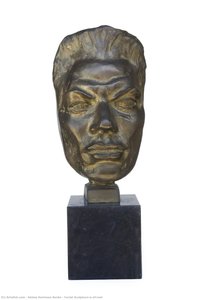
A Legacy Forged in Clay: The Life and Art of Selma Hortense Burke
Selma Hortense Burke, a name synonymous with grace, resilience, and the vibrant spirit of the Harlem Renaissance, stands as a pivotal figure in American sculpture. Born on December 31, 1900, in Mooresville, North Carolina, her journey was one of unwavering dedication to artistic expression, navigating societal barriers and leaving an indelible mark on the cultural landscape. From humble beginnings steeped in familial encouragement – her maternal grandmother nurtured her early artistic inclinations while her father, a minister and chef, brought back inspiring objects from his travels – Burke’s path wasn't simply about creating art; it was about giving form to the experiences and aspirations of a people. Initially steered towards the practicality of nursing by her mother, she graduated from St. Agnes Training School for Nurses in Raleigh in 1924, but the pull of artistic creation proved too strong to resist. A move to Harlem in the late 1920s marked a turning point, where she immersed herself in the burgeoning cultural movement and began formal studies at Sarah Lawrence College, supporting her education by working as an art model.Harlem Renaissance & The Shaping of a Sculptor
Burke’s involvement with the Harlem Renaissance was multifaceted. Her marriage to writer Claude McKay connected her to a network of influential artists and intellectuals, while her work at the Harlem Community Arts Center under the guidance of Augusta Savage provided invaluable mentorship and a platform for artistic growth. This period saw Burke honing her skills, exploring themes of identity, social justice, and the beauty inherent in Black life. Supported by the Works Progress Administration’s Federal Art Project, she created powerful works like a bust of Booker T. Washington, gifted to Frederick Douglass High School in Manhattan in 1936 – a testament to her commitment to celebrating African American achievement. However, Burke's ambition extended beyond national borders. Twice she journeyed to Europe, first on a Rosenwald Fellowship to study sculpture in Vienna (1933-34), and later in Paris with Aristide Maillol in 1936. These experiences broadened her artistic horizons, exposing her to classical techniques and modern sensibilities. In Paris, an encounter with Henri Matisse proved particularly significant; the renowned artist offered praise for her work, bolstering her confidence and validating her unique vision. It was during this time that she created “Frau Keller” (1937), a poignant portrait of a German-Jewish woman responding to the rising tide of Nazi persecution – a powerful statement against injustice and a demonstration of Burke’s social consciousness.From Roosevelt's Portrait to Enduring Recognition
Perhaps Selma Burke is most widely recognized for her bas relief portrait of President Franklin D. Roosevelt, created in 1944. The story surrounding this commission is compelling; dissatisfied with photographs, Burke requested a personal sitting with the president, sketching him over two days to capture his essence. This resulting sculpture became immensely popular and is believed by many to have served as the model for Roosevelt’s image on the dime – though official credit goes to U.S. Mint Chief Engraver John Sinnock, Burke's contribution remains a significant part of the narrative. Beyond this iconic work, Burke continued to produce a diverse body of sculptures exploring themes of peace, motherhood, and human emotion. Notable pieces include “Peace,” “Sadness,” and “Mother and Child”, all housed at the Spelman College Museum of Fine Art, Atlanta – works that showcase her mastery of form and her ability to convey profound emotional depth.A Teacher, An Advocate, A Lasting Influence
Selma Burke’s legacy extends far beyond her sculptures; she was a dedicated educator who believed in the transformative power of art. In 1940, she founded the Selma Burke School of Sculpture in New York City, providing opportunities for aspiring artists to develop their skills and explore their creativity. Later, in 1968, she established the Selma Burke Art Center in Pittsburgh, Pennsylvania, continuing her commitment to arts education within inner-city communities. Throughout her life, Burke received numerous accolades, culminating in the Women’s Caucus for Art Lifetime Achievement Award in 1979. Her work can be found in collections across the country and is readily accessible through platforms like WahooArt.com and WahooArt.com, ensuring that her artistic vision continues to inspire generations. Selma Burke passed away on August 29, 1995, leaving behind a rich legacy as a pioneering sculptor, a passionate educator, and a powerful voice for social change. Her commitment to representing the human experience with dignity and grace ensures her place among the most important American artists of the 20th century.Küsimused ja vastused
Kust saan näha Selma Hortense Burke teoseid kronoloogilises järjekorras?
Selma Hortense Burke teoste ajaline joonis on saadaval: kunstniku Teoseline ajaline joon lehel on teosed järjestatud loomisaegade järgi.
Kust leida Selma Hortense Burke teoseid väripaleti järgi grupeerituna?
Et leida Selma Hortense Burke teoseid konkreetse värvikombinatsiooniga, külastage artisti Väripalettide järgi lehte.
Kas kunstniku Selma Hortense Burke teoste 3D-virtuaaltuuri on saadaval?
Virtuaalne külastus on võimalik: Selma Hortense Burke lehekülg 3D-galeria tutvustab kunstniku teoseid kol dimensioonis galeriis.