Müü võimsalt oma kunsti
x
EelvaadeEelvaade AR-eelvaadeAR-eelvaade Lülita trükile Lülita trükileVaata pilti Vaata pilti SaadaSaada
Teave teose kohtaTeave teose kohta Lisa lemmikutesse Lisa lemmikutesse Laadi allaLaadi alla Sarnased teosedSarnased teosed RöntgenuuringRöntgenuuring SlaidietendusSlaidietendus

Moissoneuse

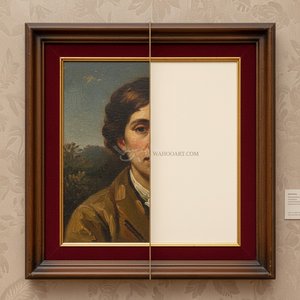
William-Adolphe Bouguereau’s 1868 masterpiece, Moissoneuse, captures a captivating scene of a woman in a red hat with a large jug, rendered in exquisite realism and romanticism – perfect for art lovers to discover or own.

William Bouguereau oli üks suurimatest akadeemilise realismuse meistrite kunstnikutest 1825–1905. Tema maailmakuulusateks töödele kuuluvad esimene õlimaal „La Danse“ ja „The Birth of Venus“, mis olid suurepäärased näited klassikalise ilu kujundamiseks ning täielikult tunnustatud kunstiloo ajaloo suurte meistrite kunstnikute seas.

Käsitsi valmistatud õlimaalireproduktsioon

Meie kunstnike poolt tellimusel valmistatud käsitsi maalitud õli-kainaste teos teie soovitud suuruses ja raamis. (Lülita trükile Lülita trükileVaata pilti Vaata pilti)

P118B $10
P118H $10
P118W $10
P438Z $10
P508JH $12
P508YH $12
P805H $10
P805Z $10
P919BZ $10
P919G $10
P919XJ $10
P959ZH $10
P968JZ $12
W106C $8
W218G $10
W218JH $8
W218Y $10
W307PJ $10
W316G $10
W316PJ $8
W316Y $10
W398PJ $8
W4111J $10
W500HY $15
W500JH $15
W692G $12
W849H $8
W940BG $15
W953PJ $8

Standard
custom
CM
INCH

Vali meie eelmääratud suurused, mis vastavad teose algupärastele proportsioonidele.

laius
kõrgus

Sa võite sisestada oma mõõtmed konkreetse raami või ruumi sobivuse tagamiseks. Kui teie valitud suurus ei vasta originaalpildi proportsioonidele, siis kärvime kunstiteost või laiendame maali täiendavate käsitsi maalitud elementidega. Enne tootmise algust saadetakse teile heakskiitmiseks digitaalne eelvaade.
Palun pidage meeles, et ekraanil kuvatav eelvaade ei kajasta tegelikku kärpimist või laiendamist. Ainult eelvaade näitab täpselt lõplikku kompositsiooni.
Kuigi on saadaval kohandatud suurused, soovitame originaalproportsioonide säilimiseks valida mõõdud eelmääratletud nimekirjast.

Näited muudetavatest elementidest: asenda nägu kliendi fotoga; lisa lemmikloom (nt asenda kass koeraga); lisa taustale peidetud sõnum; muuda tausta maastikku või elemente.
Pärast tellimust saadab WahooArt.com meeskond kliendile e-posti juhised ning esitab eelvaate kavandi.

Maailmline tarne 3–4 nädala jooksul tavalise 5 nädala asemel. (10 august). Kvaliteedis kompromisse ei tehta.

why_choose_icon
Tasuta ekspresssaatmine üle maailma
why_choose_icon
Kõrgekvaliteediline linakangas
why_choose_icon
Täielik transpordikindlustus
why_choose_icon
Tollimaksude tagastamise garantii
why_choose_icon
Värvitoime täpsuse garantii
why_choose_icon
60-päevane tagastusõig: ainult tootmisdefektide korral
why_choose_icon
100% raha tagasi garantii
why_choose_icon
Hulgusoodustus

Kogu summa

$ 272

reproduction

Moissoneuse

Reproduktsiooni tehnika

Reproduktsiooni suurus

-

Kogusumma

$ 272

Teave teose kohta

  • Artist: William-Adolphe Bouguereau
  • Location: Private Collection
  • Influences:
    • Raphael
    • Titian
  • Title: Moissoneuse
  • Year: 1868
  • Notable elements: Red hat, jug, water
  • Artistic style: Realism, Romanticism

Teose kirjeldus

William Adolphe Bouguereau’s *Moissoneuse*: A Window into 19th-Century French Idealism

The painting *Moissoneuse*, completed in 1868 by William Adolphe Bouguereau, is more than just a depiction of a woman with a red hat; it's a meticulously crafted window into the artistic sensibilities of mid-19th century France. Bouguereau, a master of Realism and Romanticism, achieved an almost unsettling level of detail and idealized beauty that continues to fascinate viewers today. This oil on canvas work captures a fleeting moment of social interaction – a woman in vibrant attire, holding a jug, engaging with companions beside a tranquil body of water – yet it speaks volumes about Bouguereau’s profound understanding of human form and his unwavering pursuit of aesthetic perfection.

Subject Matter and Composition

The subject matter itself is deceptively simple. A woman, clearly the focal point, stands with a gentle smile, her gaze directed towards the viewer – an invitation to share in her serene moment. The presence of several other figures adds depth and context, suggesting a lively social gathering. Bouguereau’s skill lies not just in rendering these individuals accurately but in arranging them within a carefully constructed composition that evokes a sense of harmony and balance. The inclusion of the water, reflecting light and adding to the overall atmosphere, further enhances the painting's visual appeal.

  • Central Figure: The woman’s pose and expression embody Bouguereau’s idealization of feminine beauty – graceful, poised, and subtly alluring.
  • Supporting Figures: Their interactions contribute to a narrative, hinting at conversations and shared experiences within this idyllic scene.
  • Water as Backdrop: The water serves not only as a visual element but also symbolizes tranquility, reflection, and the passage of time – themes frequently explored in Bouguereau’s work.

Technique and Style: A Masterclass in Detail

Bouguereau's technique is undeniably central to the painting’s impact. His meticulous attention to detail, a hallmark of his style, is evident in every brushstroke. The rendering of fabric – the folds of her dress, the texture of the hat – is remarkably realistic, yet simultaneously imbued with an almost luminous quality. He employed a glazing technique, layering thin washes of color over dried underpaintings, creating depth and richness that would have been revolutionary for its time. This approach allowed him to achieve the soft, velvety textures so characteristic of his paintings.

Historical Context and Symbolism

*Moissoneuse* was created during a period when academic art still held considerable sway in France. Bouguereau’s work reflects this influence, drawing upon classical ideals of beauty and portraying scenes of everyday life with a heightened sense of formality. The painting can be interpreted as an exploration of social customs and the role of women within 19th-century society – a world where leisure and refined interaction were highly valued. The red hat itself could symbolize status or perhaps simply a fashionable accessory, adding to the woman’s allure.

Emotional Impact and Legacy

Despite its seemingly tranquil subject matter, *Moissoneuse* possesses a subtle emotional resonance. Bouguereau's ability to capture fleeting expressions of emotion – the gentle smile, the direct gaze – invites viewers to connect with the scene on a personal level. This painting remains a testament to Bouguereau’s enduring legacy as one of the most celebrated artists of the 19th century, and its exquisite detail continues to captivate audiences today.


Kunstniku elulugu

William-Adolphe Bouguereau (1825-1905): The Master of Academic Realism

Born in 1825, amidst the vineyards and olive groves of La Rochelle, France, William-Adolphe Bouguereau’s life was destined to be a celebration of classical ideals and breathtaking realism. From an early age, his artistic inclinations were nurtured, leading him to Paris and the prestigious École des Beaux-Arts. There, under the guidance of François-Edouard Picquenot, he honed his skills, absorbing the lessons of the Old Masters – Raphael and Titian foremost among them. These influences weren’t mere imitation; they became the bedrock upon which Bouguereau built a unique artistic vision, one characterized by meticulous detail, luminous color palettes, and an unwavering commitment to portraying beauty in its most idealized form. He wasn't simply painting what he *saw*, but rather what he believed to be inherently beautiful, striving for a perfection that resonated with the aesthetic sensibilities of his time.

Early Life and Artistic Training

Bouguereau’s formative years were marked by an innate fascination with art and a prodigious talent for draughtsmanship. Demonstrating exceptional aptitude from a young age, he quickly excelled at the École des Beaux-Arts in Paris, where he immersed himself in the study of anatomy and perspective – disciplines championed by Raphael and Titian. These masters served as guiding lights, shaping Bouguereau’s artistic sensibilities and instilling within him an unwavering dedication to anatomical accuracy and compositional harmony. He meticulously dissected cadavers, painstakingly recreating human forms with unparalleled precision, a practice that would become synonymous with his distinctive style. This rigorous training ensured that he possessed the technical mastery necessary to translate his vision of beauty onto canvas.

The Style of Academic Realism

Bouguereau’s artistic style is undeniably academic realism—a term that encapsulates both its meticulous technique and its unwavering adherence to classical ideals. He achieved this remarkable feat through an unparalleled understanding of light, color, and form. His canvases are populated by figures rendered with astonishing detail – the delicate curve of a shoulder, the subtle flush of skin, the expressive depth of an eye. Yet, his work transcends mere technical skill; it’s infused with emotion and narrative power. He frequently depicted mythological scenes, transforming ancient tales into vibrant, emotionally resonant moments. *The Birth of Venus*, for example, isn't just a depiction of a goddess emerging from the sea; it’s a celebration of feminine grace and ethereal beauty—a testament to Bouguereau’s ability to capture idealized forms with breathtaking luminosity. Similarly, works like *Zenobia Found by Shepherds on the Banks of the Araxes* convey vulnerability and pathos with remarkable sensitivity. Beyond mythology, Bouguereau found inspiration in everyday life – shepherdesses tending their flocks, young girls at play—capturing these scenes with an exquisite attention to detail and atmosphere.

Major Achievements and Recognition

Throughout his illustrious career, Bouguereau achieved widespread acclaim and garnered numerous awards from the Salon—Paris’s premier art exhibition. His paintings were consistently lauded for their technical brilliance and artistic integrity, establishing him as a dominant figure in 19th-century French painting. He became particularly celebrated for his depictions of female figures—particularly nude women—which embodied Bouguereau's mastery of anatomy and his unwavering commitment to portraying beauty with idealized grace. His works graced the collections of prominent museums across Europe, cementing his legacy as one of the most influential artists of his era. Notable masterpieces include *The Nymphaeum*, *Bergère 1886*, *Child at Bath*, *Song of the Angels (1881)* and *Birth of Venus*. These paintings exemplify Bouguereau’s ability to evoke wonder and spiritual transcendence—a testament to his artistic vision.

A Lasting Influence

Despite facing criticism during his lifetime from avant-garde artists who championed abstraction, Bouguereau's influence endured beyond the initial shockwaves of modernism. His meticulous draftsmanship and anatomical precision continue to inspire contemporary figurative painters, demonstrating that Bouguereau’s artistic principles remain relevant in the 21st century. He fostered a spirit of intellectual rigor within the art world—a conviction that beauty could be achieved through careful observation and disciplined technique. Furthermore, Bouguereau championed the cause of women artists, actively advocating for their admission to prestigious academies during a period when opportunities for female painters were severely limited. Elizabeth Jane Gardner Bouguereau, his wife and fellow artist, stands as a poignant symbol of his unwavering belief in her talent—a testament to his enduring legacy as an innovator and humanist. His art continues to captivate audiences worldwide, securing its place among the most cherished treasures of European artistic heritage. He remains a pivotal figure in 19th-century French painting, representing the pinnacle of academic artistry and offering a timeless vision of beauty that resonates across generations.
William-Adolphe Bouguereau

William-Adolphe Bouguereau

1825 - 1905 , Prantsusmaa

Lühikesed faktid

  • Artistic Movement Or Style: Akadeemiline realism
  • Artists Who Influenced This Artist:
    • Raphael
    • Titian
  • Date Of Birth: 1825
  • Date Of Death: 1905
  • Full Name: William-Adolphe Bouguereau
  • Nationality: Prantsuse
  • Notable Artworks:
    • Tants
    • Bergère
    • Lapse vannimas
    • Ingelööni laul
    • Veenuse sünd
    • Faneuse
  • Place Of Birth: La Rochelle, France
Avastage teoseid, mis on koondatud teemade, stiilide ja omaduste kaupa.