Thomas Couture: Bridging Romanticism and Realism – A Legacy of Dramatic Narrative
Thomas Couture (1815-1879) stands as a singular figure in French art history, embodying the turbulent transition between Romantic idealism and burgeoning Realism. He wasn’t merely a painter; he was a rebel against academic constraints who nevertheless mastered their formal language—a testament to artistic conviction and disciplined execution.
- Early Life & Education: Couture's formative years were marked by relocation to Paris, where his initial studies at the École des Arts et Métiers foreshadowed his broader intellectual curiosity. However, his ambition was tempered by repeated failures in securing the Prix de Rome—a prestigious scholarship that would have propelled him into the Roman artistic milieu. These setbacks fueled a determination to forge his own path.
- The Atelier Revolution: Couture established an independent atelier, rejecting the rigid hierarchies of traditional art academies and fostering a space for experimentation and innovation. This decision signaled a profound shift away from accepted artistic dogma—a courageous assertion of individual vision.
Romans During the Decadence – A Monumental Vision
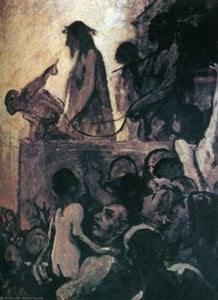
Couture’s magnum opus, “Romans During the Decadence,” exemplifies his Romantic sensibilities. Painted around 1848-1850, this monumental canvas depicts a dramatic tableau of Roman legionnaires confronting a formidable foe—a scene steeped in historical grandeur and imbued with palpable tension. Couture skillfully employed chiaroscuro – the interplay of light and shadow – to heighten emotional impact and create a sense of immediacy.
The composition is meticulously crafted, reflecting Couture’s mastery of academic technique while simultaneously prioritizing expressive narrative. He utilized rich pigments and textured brushstrokes to convey both physical realism and psychological depth—a hallmark of his artistic style.
Influences & Artistic Connections
Couture's artistic trajectory was profoundly shaped by the luminaries of his time. Antoine-Jean Gros, a pioneer of historical painting, instilled in Couture a commitment to capturing dramatic moments with unwavering accuracy. Similarly, Paul Delaroche championed theatrical staging and emotional intensity—principles that resonated deeply within Couture’s creative spirit.
Furthermore, Couture served as an influential teacher to artists who would become titans of the Impressionist movement, including Édouard Manet, Henri Fantin-Latour, and Pierre Puvis de Chavannes. His legacy extends far beyond his own paintings—he nurtured a new generation of artistic innovators.
Symbolism & Emotional Resonance
“Romans During the Decadence” transcends mere historical depiction; it speaks to universal themes of courage, duty, and resistance against oppression. Couture’s masterful use of color and form contributes to an overwhelming sense of drama—drawing viewers into the heart of the action.
The painting's grandeur underscores Couture’s ambition to elevate art beyond mere representation, aiming instead for a profound emotional connection with the audience. It remains a powerful reminder of Romantic idealism’s enduring influence on artistic expression and its capacity to inspire contemplation about human resilience.
Küsimused ja vastused
Kas teose "Me võime vastu pidada" autoriõigused on kaitse all?')
Teos "Me võime vastu pidada" kuulub tegijateõiguste osas lubaalahenduse alla: avalikus õiguses – selle autoriõigud onหมดunud.
Kas ma saan enne ostmist näha teost „Me võime vastu pidada“, autor Thomas Couture oma seinal?
Teose „Me võime vastu pidada“, autor Thomas Couture leht AR-eelvaade kasutab täiendatud reaalset, et näidata teost ühilduva seadme abil teie enda ruumis.
Millissele perioodile Thomas Couture karjäärist kuulub teos "Me võime vastu pidada"?
Teos "Me võime vastu pidada" kuulub Thomas Couture loomingulise karjääri perioodi Mature Period. See klassifikatsioon seostab teose kunstniku loovliku arenguga.



 Vaata sisu
 Telli käsitsi maalitud reproduktsioon
 Jaga teost
 Jaga
Jaga
 Detailid
 Õppekate juhend

 Laadi alla
 Sarnased teosed
 Röntgenuuring
 Slaidietendus
 Statistika

 Loe lähemalt






































 Klaasivalik on saadaval ainult kuni 110 cm suuruses teostes