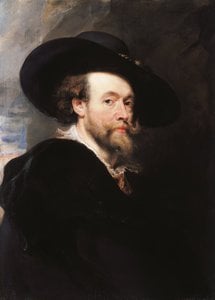
Kunstniku elulugu
Sir Peter Paul Rubens: A Baroque Master!
Peter Paul Rubens, a name synonymous with the exuberant grandeur of the Baroque era, stands as one of Flanders’s most celebrated artists and arguably Europe's foremost painter of his time. More than simply capturing visual beauty, Rubens sought to evoke emotion, convey moral lessons, and celebrate human potential—a mission that cemented his place in art history and continues to inspire admiration today. Born in Siegen, Germany, on June 28th, 1577, Rubens’s early life was marked by upheaval – a formative experience that subtly infused his artistic vision with an undercurrent of drama and resilience. His father, Jan Rubens, a lawyer fleeing religious persecution for Calvinist beliefs, relocated the family from Antwerp, then firmly under Spanish rule, initiating a period of displacement that would shape Peter Paul’s worldview. This initial exile instilled in him a profound appreciation for adaptability—a quality that served him exceptionally well throughout his multifaceted career as an artist, diplomat, and scholar. Following Jan Rubens' untimely death in 1587, the family returned to Antwerp, where young Peter Paul received a humanist education before embarking on his artistic training around 1590, apprenticing under Tobias Verhaecht and Adam van Noort—acquiring foundational skills in drawing and mastering the techniques of oil painting.
The Italian Awakening: Absorbing Renaissance Genius
A pivotal moment arrived in 1600 when Rubens undertook a transformative journey to Italy – a pilgrimage that irrevocably altered his artistic trajectory. For eight years, he immersed himself in the masterpieces crafted by Michelangelo, Raphael, and Titian—absorbing their mastery of form, color, and composition with unwavering dedication. The influence of these Renaissance titans is palpably present in Rubens’s early Italian works, characterized by classical themes and idealized figures – a deliberate effort to emulate the stylistic ideals of his predecessors. Yet, Rubens didn't merely imitate; he synthesized these influences with his innate talent—developing a distinctive style that transcended mere replication. He meticulously studied anatomy, achieving an unprecedented level of realism in depicting the human body—a hallmark of his Baroque aesthetic. This pursuit of anatomical accuracy wasn’t solely driven by artistic ambition; it reflected a broader humanist conviction that championed observation and understanding as pathways to knowledge and beauty. Rubens's meticulous approach extended beyond mere visual representation; he engaged deeply with philosophical concepts, fostering an intellectual curiosity that enriched his artistic endeavors.
A Painter of Epic Scale: Defining the Baroque Style
Rubens’s artistic output was astonishingly diverse—spanning history paintings, mythological scenes, portraits, landscapes, and religious commissions—demonstrating a remarkable versatility that defied categorization. He achieved unparalleled success in monumental canvases intended for churches and palaces—creating immersive experiences for viewers through masterful use of color, light, and dramatic composition. Consider The Descent from the Cross (c. 1616-1617), arguably Rubens’s most iconic work: The painting depicts Jesus Christ descending from the cross, surrounded by Mary Magdalene, Nicodemus, Joseph of Arimathea, and John Evangelist—a scene rendered with breathtaking realism and imbued with profound emotional resonance. Rubens skillfully employed chiaroscuro – dramatic contrasts between light and shadow – to heighten the sense of pathos and convey the spiritual significance of the event. Similarly, The Raising of the Cross (1610-1611) captures the fervor and energy of the biblical narrative—figures surging upwards in dynamic movement against a turbulent sky—a testament to Rubens’s ability to translate theological concepts into visual spectacle. His technique was equally remarkable – utilizing impasto—thickly applied paint—to create textural surfaces that seemed to pulsate with life, alongside delicate glazing techniques to achieve luminous effects—a masterful demonstration of artistic innovation.
Diplomacy and Patronage: Shaping European Culture
Beyond his prodigious artistic achievements, Rubens possessed considerable diplomatic acumen—serving as envoy for the Habsburg Netherlands during periods of intense political instability. He skillfully navigated complex negotiations, securing alliances and bolstering Habsburg prestige—a role that afforded him invaluable insight into the dynamics of European politics. His reputation as a cultured humanist extended beyond formal scholarship; he amassed an impressive collection of antiquities and artworks—demonstrating a passion for beauty and intellectual stimulation that mirrored his artistic sensibilities. Rubens’s patronage played a crucial role in fostering artistic innovation—supporting young artists and commissioning ambitious projects that elevated Antwerp to the forefront of European art culture. He established a large studio staffed by numerous assistants—producing an astounding volume of paintings that catered to the tastes of aristocratic patrons throughout Europe—a testament to his entrepreneurial spirit and unwavering dedication to his craft.
Legacy: An Enduring Influence on Art History
Rubens’s influence reverberates through subsequent generations of artists—inspiring painters like Anthony van Dyck, Jacob Jordaens, and Eugène Delacroix—who adopted his dynamic compositions, vibrant color palettes, and sensual depictions of the human form as hallmarks of their own artistic styles. His legacy extends beyond stylistic imitation; Rubens championed a humanist worldview that emphasized observation, reason, and empathy—values that continue to resonate with contemporary audiences. He remains, centuries later, an undisputed titan in the annals of art history—a symbol of Baroque grandeur, artistic innovation, and enduring cultural significance.



 Vaata sisu
 Lülita trükkitoodetele
 Jaga teost
 Jaga
Jaga
 Detailid
 Juhend

 Laadi alla
 Sarnased teosed
 Röntgenuuring
 Slaidietendus
 Statistika

 Loe lähemalt






































 Klaasivalik on saadaval ainult kuni 110 cm suuruses teostes