TASUTA KUNSTIKONSULTATSIOON

x
Tellimaks maali Tellimaks maaliOsta digipilt Osta digipilt SaadaSaada
DetailidDetailid Lisa lemmikutesse Lisa lemmikutesse Laadi allaLaadi alla Sarnased teosedSarnased teosed RöntgenuuringRöntgenuuring SlaidietendusSlaidietendus

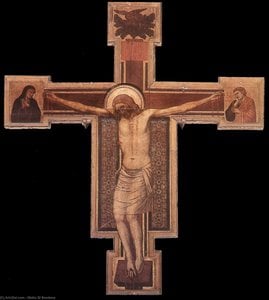
Crucifix

Simone Martini’s 1321 ‘Crucifix’ showcases the exquisite elegance of Sienese art with Jesus and Mary Magdalene before angels, a poignant depiction from the late medieval period – discover this masterpiece and bring it into your collection.

Simone Martini oli Siena suurmeister ning rahvusvaheliste gootika stiili üks juhtiv mõjendaja! Tema maailmakuulus maalid – nagu 'Maestà' – täidavad religiooni ja õhtu kultuuri elegantsiga ning tänu nende täiuslikule detailile.

Giclée / Kunstiprint

Muuseumikvaliteediga giclée- või kangasprint kiire tootmisega ja paindlikud viimistlusvõimalused.

P118B $10
P118H $10
P118W $10
P438Z $10
P508JH $12
P508YH $12
P805H $10
P805Z $10
P919BZ $10
P919G $10
P919XJ $10
P959ZH $10
P968JZ $12
W106C $8
W218G $10
W218JH $8
W218Y $10
W307PJ $10
W316G $10
W316PJ $8
W316Y $10
W398PJ $8
W4111J $10
W500HY $15
W500JH $15
W692G $12
W849H $8
W940BG $15
W953PJ $8

Standard
custom
CM
INCH

Vali meie eelmääratud suurused, mis vastavad teose algupärastele proportsioonidele.

laius
kõrgus

Saate sisestada oma mõõdud, et need sobiks konkreetse raami või ruumi sisse. Kui valitud suurus ei vasta originaalteose proportsioonidele, lõigame teose ära või laiendame pilti peegeldatud või ühtlase servaga. Enne tootmisprotsessi algust saadetakse Teie kinnitamiseks digitaalne näidis.
Palun märka, et ekraanil kuvatav eelvaade ei kajasta tegelikku lõigamist või laiendamist. Ainult näidis kujutab täpselt lõplikku kompositsiooni.
Kuigi erimõõdu on saadaval, soovitame originaaproportsioonide säilitamiseks valida mõõt ette määratud nimekirjast.

Ülemaailmne tarne () 2 nädala jooksul, tavalise 4/5 nädala asemel. (2 juuli)

why_choose_icon
Tasuta ekspresssaatmine üle maailma
why_choose_icon
Kõrgekvaliteediline linakangas
why_choose_icon
Täielik transpordikindlustus
why_choose_icon
Tollimaksude tagastamise garantii
why_choose_icon
Värvitoime täpsuse garantii
why_choose_icon
60-päevane tagastusõig: ainult tootmisdefektide korral
why_choose_icon
100% raha tagasi garantii
why_choose_icon
Hulgusoodustus

Kogu summa

-

reproduction

Crucifix

Giclée / Kunstiprint

Reproduktsiooni suurus

-

Kogusumma

-

Teave teose kohta

  • Notable elements: Angels, book, cup
  • Movement: International Gothic
  • Dimensions: 164 x 147 cm
  • Year: 1321
  • Subject or theme: Religious scene
  • Influences:
    • Giotto
    • Duccio
  • Title: Crucifix

Kogumuse kirjeldus

A Testament to Faith and Courtly Grace: Simone Martini’s “Crucifix” (1321)

This arresting depiction of the crucifixion, attributed to the masterful hand of Simone Martini, transcends mere religious iconography; it is a profound meditation on faith, suffering, and the enduring power of grace. Painted in 1321, during the apex of his career, this work exemplifies Martini’s signature style – a breathtaking synthesis of Sienese artistic tradition with an unparalleled sensitivity to color and form. Measuring 164 x 147 cm, the scale of the painting immediately draws the viewer into the heart of the scene, fostering a deeply personal connection with the figures depicted.

  • Subject Matter: The composition centers on Jesus Christ crucified, presented with an almost agonizing realism that was revolutionary for its time. His posture, rendered with meticulous detail, conveys both physical pain and spiritual anguish.
  • The Presence of Mary Magdalene: Standing beside the cross is Mary Magdalene, a figure often associated with repentance and devotion. Her presence underscores the themes of redemption and forgiveness central to Christian belief.
  • Angelic Intervention: Above the cross, three angels are depicted in various positions, adding an ethereal dimension to the scene and suggesting divine intervention – a common motif in medieval religious art.

Technique and Artistic Innovation

Simone Martini’s technical prowess is immediately apparent in every brushstroke. Executed in tempera on panel, a technique favored by Sienese artists of the period, the painting boasts an astonishing level of detail and luminosity. The use of vibrant colors – rich blues, reds, and golds – creates a visual feast that was considered groundbreaking for its time. Martini’s mastery of line is particularly noteworthy; each contour is precisely rendered, contributing to the overall sense of realism and emotional intensity. The influence of Giotto, though debated, is undeniable in his approach to depicting human form, albeit filtered through his own distinctive aesthetic.

  • Tempera on Panel: The use of tempera paint, known for its slow drying time and ability to build up layers of color, allowed Martini to achieve the remarkable detail and depth characteristic of his work.
  • Line as Form: Martini’s meticulous attention to line is a defining feature of his style, creating a sense of solidity and weight in the figures and architectural elements.

Symbolism and Historical Context

Created during a period of intense religious fervor and artistic innovation, “Crucifix” reflects the profound spiritual concerns of 14th-century Siena. The painting’s symbolism is layered and complex, drawing upon both biblical narratives and medieval theological beliefs. The inclusion of the book in the lower left corner likely represents the Gospels, while the cup may symbolize the Eucharist – a central element of Christian worship. Siena itself was a powerful city-state, deeply invested in religious patronage, and Martini’s work served as a testament to its faith and artistic prestige. This piece is considered one of the most important examples of Sienese Gothic art, bridging the gap between the late medieval and early Renaissance periods.

Emotional Impact and Artistic Legacy

More than just a religious depiction, “Cruifix” evokes a powerful emotional response in the viewer. The raw intensity of Jesus’s suffering, combined with the serene presence of Mary Magdalene and the ethereal quality of the angels, creates a scene of profound pathos. Simone Martini's "Crucifix" remains a testament to his artistic genius and a poignant reminder of humanity's enduring struggle with faith, mortality, and redemption. A hand-painted reproduction offers an unparalleled opportunity to experience the beauty and emotional depth of this iconic masterpiece in your own space.


Kunstniku elulugu

Simone Martini (c.1284–1344) – A Sienese Master of Elegance and Grace

Simone Martini, born around 1284 in Siena, Italy—though precise birthdates remain elusive—stands as a cornerstone figure in the transition from medieval to Renaissance art. He wasn’t merely a painter; he was an architect of elegance, a master of line and color who infused his works with a courtly refinement that distinguished him from contemporaries like Giotto di Bondone. Historical accounts regarding Martini’s formative years are fragmentary—scholarly debate centers on whether he apprenticed under Duccio di Buoninsegna, the dominant Sienese artist of his time, or if Florence and Giotto exerted a more profound influence—yet Martini undeniably forged an artistic path uniquely his own.

Origins and Education – The Seeds of Style

The exact circumstances surrounding Simone’s upbringing are shrouded in obscurity. Tradition suggests he was born in Siena’s Sant’Egidio district, possibly the son of Martino Senese, a craftsman specializing in preparing arriccio—the initial plaster layer applied to wall surfaces destined for fresco painting—though corroborating evidence remains scant. Regardless of his precise origins, Martini’s artistic training undoubtedly commenced within Duccio di Buoninsegna’s workshop, where he absorbed the stylistic precepts of Sienese Gothic.

The Siena Workshop – Collaboration and Patronage

Martini’s formative years were marked by close association with Memmo di Filippuccio, another artisan active in San Gimignano—a partnership that fostered not only professional growth but also exposure to the burgeoning artistic culture of Tuscany. Crucially, Martini secured his first major civic commission in 1311: the frescoing of the *Maestà* for Siena’s Palazzo Pubblico—a monumental undertaking that cemented Duccio’s legacy and established Martini as a rising talent.

The Maestà – A Synthesis of Tradition

The *Maestà*, completed in 1315, represents a pivotal moment in Martini’s artistic trajectory. It served as an homage to Duccio’s own masterpiece—a stylistic echo that underscored Martini’s commitment to established Sienese conventions. Yet, Martini transcended mere imitation; he innovated through meticulous attention to detail and the incorporation of groundbreaking techniques—particularly the use of metallic pigments and punching—resulting in a painting that embodies both grandeur and exquisite refinement.

International Gothic – Influence and Artistic Vision

Martini’s stylistic hallmark is undeniably International Gothic, a movement characterized by its delicate beauty, elongated figures, flowing drapery, and opulent ornamentation. This aesthetic was profoundly shaped by artistic currents originating from France—specifically the illuminated manuscripts and ivory carvings of Parisian ateliers—which Martini skillfully assimilated into his own distinctive vision.

Later Career – Avignon and Artistic Circles

Martini’s renown extended beyond Siena, attracting commissions from papal patrons in Avignon—a city at the epicenter of European power during the thirteenth century. His presence within Francesco Petrarca’s intellectual circle further enriched his artistic milieu—a connection underscored by Vasari’s account of Martini’s portrait of Laura de Noves—demonstrating Martini's ability to capture not only physical likeness but also the essence of beauty and inspiration.

Legacy – An Enduring Influence

Simone Martini’s contribution to European art history is undeniable. He championed International Gothic style, disseminating its aesthetic principles across the continent and shaping the artistic sensibilities of subsequent generations. His frescoes in San Francesco d’Assisi exemplify his mastery of large-scale decorative painting—a testament to Martini's unparalleled command of color, form, and compositional harmony. Martini died in Avignon in 1344, leaving behind a legacy that continues to inspire awe and admiration centuries later—a beacon of elegance and artistic innovation.

Simone Martini

Simone Martini

1284 - 1344 , Itaalia

Lühikesed faktid

  • Artistic Movement Or Style: International Gothic
  • Artists Who Influenced This Artist:
    • Duccio di Buoninsegna
    • Francesco Petrarca
  • Date Of Birth: c. 1284
  • Date Of Death: 1344
  • Full Name: Simone Martini
  • Nationality: Italian
  • Notable Artworks:
    • Saint Louis Crowning Robert
    • Annunciation (Uffizi)
    • Consecration of Chapel
  • Place Of Birth: Siena, Italy
Avastage teoseid, mis on koondatud teemade, stiilide ja omaduste kaupa.