A Baroque Triumph of Spiritual Radiance
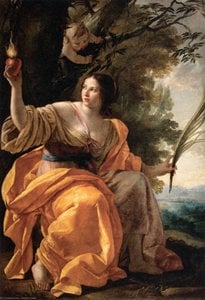
In the grand tapestry of the French Baroque, few works capture the intersection of divine fervor and painterly virtuosity as poignantly as Simon Vouet’s “La Foi et le Mépris des Richesses.” Completed between 1638 and 1640, this monumental piece serves as much more than a mere allegorical painting; it is a profound philosophical dialogue rendered in oil. At its heart, the composition presents a breathtaking vision of Faith, personified by a central female figure who rises within a stable, pyramidal structure. As the eye travels upward, it is met with the radiant glow of her countenance and the symbolic flame she holds aloft—a flaming heart that serves as a beacon of divine love and spiritual enlightenment amidst the shadows of the material world.
The emotional resonance of the work is deeply rooted in its masterful use of chiaroscuro. Vouet, heavily influenced by the dramatic lighting techniques of Caravaggio, employs sharp contrasts between light and dark to sculpt form and evoke drama. This interplay of shadow does not merely provide depth; it creates a sense of sacred mystery. To the side, an idealized male figure emerges subtly from the lush foliage, acting as a silent witness or a symbol of divine guidance, ensuring that the viewer feels part of this celestial encounter. For the collector or interior designer, such a piece offers a commanding presence, bringing a sense of timelessness and contemplative grace to any sophisticated space.
Mastery of Technique and Luminous Texture
To behold a reproduction of this masterpiece is to appreciate the meticulous technical prowess of Simon Vouet. The artist’s command over oil paint allows for a breathtaking variety of textures that invite tactile engagement through sight. One can almost feel the weight of the heavy, billowing drapery, the delicate smoothness of the skin, and the rugged, organic complexity of the surrounding landscape. Through the expert application of multiple glazes, Vouet achieves a luminous quality, where light seems to trapped within the very pigment, creating a glow that feels internal rather than merely reflected.
The color palette is a sophisticated arrangement of warmth and depth. Rich golds, oranges, and earthy browns dominate the foreground, grounding the allegorical subject in a sense of earthly reality, while the background recedes into soft blues and cool greens through the use of atmospheric perspective. This technique creates an expansive sense of depth, making the landscape feel as infinite as the spiritual truths the painting seeks to convey. The fluid, curved lines of the foliage and garments add a rhythmic dynamism to the canvas, preventing the classical composition from feeling static. It is this perfect balance of movement and stability that makes "La Foi" an enduring icon of the Baroque era, offering both intellectual depth and unparalleled aesthetic beauty.
Korduvad küsimused
Kas teost „LA FOI“, autor Simon Vouet hoiustatakse kunstniku kodumaal?
Ei – teos asub välismaal. Simon Vouet sündis riigis Prantsus ning teose "LA FOI" algorig on säilitatud muuseumis, mis asub riigis France.
Millises suunand ja millises ajastu kontekstis on „LA FOI“, autor Simon Vouet paikati?
Teos „LA FOI“, autor Simon Vouet kuulub Baroque Style suunasse ning on loodud autori Varajärgne modernne ajastu ajastul.
Kas saan teost "LA FOI" lähemalt uurida?
Teose „LA FOI“, autor Simon Vouet röntgenvaade on saadaval selle Röntgenuuring lehel: see on interaktiivne pildi uurimine läbi üheksateist optilise kihti.



 Eelvaade
 Lülita trükkitoodetele
 Saada
Saada Jaga
Jaga
 Teave teose kohta
 Juhend

 Laadi alla
 Sarnased teosed
 Röntgenuuring
 Slaidietendus
 Statistika


 Loe lähemalt






































 Klaasivalik on saadaval ainult kuni 110 cm suuruses teostes