Sellel lehel kuvatav kunstiteos on kaitstud autoriõigusega, mis tähendab, et meil ei ole seaduslikku õigust luua või müüa identset reproduktsiooni. Seda kaitset rakendatakse rahvusvaheliste kokkulepete alusel, nagu näiteks Berne konventsioon ning riiklike seadustega, sealhulgas nendega, mida on sätestatud USA autoriõiguse seadus – 17. peatükk.
Austasena ja seaduslikuna alternatiivina pakume originaalist inspireeritud, käsitsi maalitud isikupärastatud teoseid. Meie osutavad ja professionalsed kunstnikud uurivad hoolikalt originaali stiili, meelemoi ja kunstilist olemust, et luua uus, ainulaadne teos, mis tekitab sama tunnet – olles samal ajal omaette originaalne looming.
See meetod järgib täielikult autoriõiguse reegleid, kuna see ei põhine kaitstud kunstiteose kopeerimisel või dupliteerimisel. Selle asemel on tegu loova reinterpreetatsiooniga – uue maaldisega, mis on algteosest inspireeritud, kuid ei ole sellest identiline.

Meie kunstnike poolt tellimusel valmistatud käsitsi maalitud õli-kainaste teos teie soovitud suuruses ja raamis. ( Lülita trükkitoodetele
Ülemineku digitaalse pildi müügi kanalisse)
Vali meie eelmääratud suurused, mis vastavad teose algupärastele proportsioonidele.
Sisestage vajalik laius ja kõrgus, et teos sobiks teie raamile või seinale. Kuna tegu on käsipainatud teosega, siis erineva kujuga suuruse korral võib kunstnik jätta pildi ümber veidi rohkem marginaali või lõigata osa ära — valik on teie. Enne maali alustamist saadame teile kinnitamiseks digitaalse näidisprojektsiooni. Sellel lehel näidatud pilt ei kajasta tegelikku tulemust — seda näitab ainult näidisprojekttsioon.
Maailmline tarne 3–4 nädala jooksul tavalise 5 nädala asemel. (24 oktoober). Kvaliteedis kompromisse ei tehta.
The conqueror
Reproduktsiooni mõõtmed
René Magritte’s “The Conqueror,” painted in 1926, stands as a deceptively simple yet profoundly unsettling emblem of existential questioning. This artwork immediately grabs the viewer's attention with its striking visual paradox – a man dressed impeccably in formal attire, complete with bow tie and suit jacket, is obscured by a wooden box that covers his face.
Historical Context: Created during the height of Surrealist experimentation—a movement spearheaded by André Breton— “The Conqueror” reflects the broader intellectual currents of the era. Surrealists sought to liberate thought from rational constraints, exploring subconscious desires and anxieties through fantastical imagery. Magritte’s work aligns with this ethos, questioning accepted notions of perception and challenging viewers to confront hidden layers of meaning.
Symbolism & Interpretation: The wooden box covering the man's face is arguably the painting’s central symbol—representing concealment, repression, and perhaps the suppression of identity. It suggests that what we perceive as “reality” may be merely a façade concealing deeper truths. The mountainous landscape serves as a counterpoint to this confinement, symbolizing resilience, permanence, and the enduring power of nature. Magritte deliberately avoids providing definitive answers, inviting contemplation about the complexities of human experience.
Emotional Impact: "The Conqueror" evokes a palpable sense of unease and intrigue. Its quiet stillness belies its intellectual depth, prompting viewers to consider questions of selfhood and the limitations of conscious awareness. The artwork’s understated beauty underscores the unsettling nature of its message—a reminder that appearances can deceive and that true understanding requires venturing beyond the surface.
Teose "The conqueror" taga on René Magritte ja Surrealism suunad.
Surrealism suunangu raames on teos "The conqueror" üles seabetud Mysterious toonil.
Teoses „The conqueror“, autor René Magritte on nähtav Statement kontrast heellemiste ja tumedate alade vahel.
René Magritte, born René François Ghislain Magritte on November 21, 1898, in Lessines, Belgium, emerged from a childhood profoundly shaped by tragedy – the untimely death of his mother when he was merely thirteen. This formative experience instilled within him an unwavering fascination with mystery, loss, and the unsettling power of what remains unseen; it would subtly permeate his artistic vision throughout his prolific career.
Despite initial inclinations toward Impressionism, Magritte swiftly recognized its limitations in conveying the complexities he wished to explore. He enrolled at the Académie Royale des Beaux-Arts in Brussels, seeking a more rigorous training but ultimately rejecting its formal conventions. Recognizing the influence of Giorgio de Chirico’s *The Song of Love* (1922), Magritte discovered a new aesthetic path—one where familiar landscapes could transform into dreamlike realms and commonplace objects could provoke unsettling questions about reality.
Magritte's commitment to Surrealism solidified in 1926 with *Le Jockey Perdu*, marking his decisive departure from traditional artistic styles. Embracing the principles of automatism championed by André Breton, he sought to liberate creativity from conscious control, mirroring the broader intellectual currents of the era. His distinctive approach distinguished him from many fellow Surrealists; Magritte wasn’t interested in delving into subconscious anxieties through free association but rather in meticulously crafting visual paradoxes that disrupted viewers' perceptions.
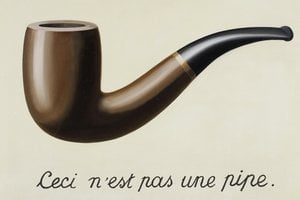
Magritte’s oeuvre is characterized by a masterful manipulation of illusion and representation. *The Treachery of Images (This is not a pipe)* (1929) exemplifies his genius—a deceptively simple depiction that compels us to reconsider the relationship between image and object, mirroring the core tenets of Surrealist thought. Similarly, *Les Amants* (1927-1928), featuring shrouded figures, echoes the trauma of his mother’s death while simultaneously exploring themes of concealment and intimacy. Masterpieces like *Time Transfixed* (1938) and *The Human Condition* (1933) further demonstrate Magritte's ability to unsettle viewers with unsettling juxtapositions and visual puzzles.
René Magritte’s artistic legacy extends far beyond the confines of Belgian art history. His pioneering exploration of Surrealism profoundly impacted subsequent generations of artists—from Pop Art luminaries like Andy Warhol to Minimalist sculptors such as Donald Judd—establishing him as a cornerstone of 20th-century visual culture. Today, his paintings reside in prestigious museum collections worldwide, including the Musées royaux des beaux-arts de Belgique and the Magritte Museum, ensuring that his visionary aesthetic continues to inspire awe and provoke contemplation for decades to come.
1898 - 1967 , Belgia