Vaata sisu Vaata AR-eelvaadet Telli käsitsi maalitud reproduktsioon Ülemineku digitaalse pildi müügi kanalisse Jaga teost
Detailid Juhend Lisa lemmikutesse Laadi alla Sarnased teosed Röntgenuuring Slaidietendus Statistika

The Acrobat's Exercises

René Magritte’s "The Acrobat's Exercises" presents a surreal scene of figures and objects within a strikingly composed tableau, reflecting the artist’s fascination with mystery and perception from his early work. Discover this iconic piece and bring its enigmatic beauty into your space.

René Magritte (1898–1967) – belgia sürrealist kunstnik, tuntud teostega nagu "The Lovers" ja "Ceci n’est pas une pipe". Tema pilkupüüdvad kompositsioonid sepitavad reaalsust ja kujutist, mõjutades pop-kunsti ja kontseptuaalset kunsti.

Giclée / Kunstiprint

Muuseumikvaliteediga giclée- või kangasprint kiire tootmisega ja paindlikud viimistlusvõimalused. ( Telli käsitsi maalitud reproduktsioon Ülemineku digitaalse pildi müügi kanalisse)

P118B $10
P118H $10
P118W $10
P438Z $10
P508JH $12
P508YH $12
P805H $10
P805Z $10
P919BZ $10
P919G $10
P919XJ $10
P959ZH $10
P968JZ $12
W106C $8
W218G $10
W218JH $8
W218Y $10
W307PJ $10
W316G $10
W316PJ $8
W316Y $10
W398PJ $8
W4111J $10
W500HY $15
W500JH $15
W692G $12
W849H $8
W940BG $15
W953PJ $8

Standardne suurus
kohandatud
CM
INCH

Vali meie eelmääratud suurused, mis vastavad teose algupärastele proportsioonidele.

laius
kõrgus

Saate sisestada oma mõõdud, et need sobiks konkreetse raami või ruumi sisse. Kui valitud suurus ei vasta originaalteose proportsioonidele, lõigame teose ära või laiendame pilti peegeldatud või ühtlase servaga. Enne tootmisprotsessi algust saadetakse Teie kinnitamiseks digitaalne näidis.
Palun märka, et ekraanil kuvatav eelvaade ei kajasta tegelikku lõigamist või laiendamist. Ainult näidis kujutab täpselt lõplikku kompositsiooni.
Kuigi erimõõdu on saadaval, soovitame originaaproportsioonide säilitamiseks valida mõõt ette määratud nimekirjast.

Ülemaailmne tarne () 2 nädala jooksul, tavalise 4/5 nädala asemel. (22 september)

why_choose_icon
Tasuta ekspresssaatmine üle maailma
why_choose_icon
Kõrgekvaliteediline lina-kangastest muld
why_choose_icon
Täielik transpordikindlustus
why_choose_icon
Tollimaksude tagastamise garantii
why_choose_icon
Värvitoime täpsuse garantii
why_choose_icon
100 päeva tagastusõigus (ainult defektide korral)
why_choose_icon
100% raha tagasi garantii
why_choose_icon
Hulgusoodustus

Kogu summa

$ 68

reproduction

The Acrobat's Exercises

Giclée / Kunstiprint

Reproduktsiooni mõõtmed

-

Lõppsumma

$ 68

Teave teose kohta

  • Notable elements: Veiled figures, mystery
  • Movement: Surrealism
  • Artist: René Magritte
  • Artistic style: Magrittean
  • Influences: Impressionism
  • Subject or theme: Acrobatics, illusion

The Acrobat's Exercises: A Study in Disquieting Observation

René Magritte’s “The Acrobat’s Exercises,” painted in 1928, is not merely a depiction of figures engaged in physical activity; it’s a meticulously constructed puzzle for the viewer, a quintessential example of the surrealist movement's fascination with challenging our assumptions about reality. The painting immediately arrests attention with its unsettling composition – a woman seated on the floor, her back turned to us, surrounded by other acrobats frozen mid-performance. This deliberate anonymity, coupled with the ambiguous setting, invites speculation and forces a confrontation with the nature of observation itself.

  • Subject Matter: The scene depicts a group of acrobats, likely engaged in training or performance, though their actions are rendered static, contributing to the overall sense of unease.
  • Composition: Magritte masterfully employs spatial ambiguity. The figures are arranged in a seemingly haphazard manner, yet there’s an underlying order that subtly directs the viewer's eye and creates a feeling of disorientation.

Technique and Style – A Masterclass in Illusion

Executed with Magritte’s signature meticulous detail and precise brushwork, “The Acrobat’s Exercises” exemplifies his technical prowess. The palette is restrained, dominated by muted tones of grey, brown, and black, further enhancing the painting's somber mood. Magritte’s technique relies heavily on illusionistic perspective and a careful rendering of light and shadow to create a convincing, yet ultimately deceptive, representation of space. He employs a smooth, almost enamel-like finish, characteristic of his later work, which adds to the painting’s unsettling stillness. The figures themselves are rendered with a remarkable degree of realism, further amplifying the disconcerting effect when juxtaposed against the surreal context.

Symbolism and Historical Context – Echoes of Trauma

Painted in 1928, during a period of intense artistic experimentation following World War I, “The Acrobat’s Exercises” reflects the broader anxieties and disillusionment of the era. Surrealism, emerging as a reaction against rationalism and traditional modes of representation, sought to tap into the subconscious mind and explore the irrational aspects of human experience. The image of the woman with her back turned is profoundly significant; it echoes Magritte's own childhood trauma – the suicide of his mother, whose obscured face became a recurring motif in his work. This personal history infuses the painting with a sense of melancholy and loss, suggesting that appearances can be deceptive and that hidden realities lie beneath the surface.

Emotional Impact and Artistic Legacy

"The Acrobat’s Exercises" resonates deeply with viewers due to its ability to evoke feelings of unease, mystery, and contemplation. It's a painting that demands engagement, prompting us to question our perceptions and consider the limitations of representation. Magritte’s work continues to influence artists and designers today, demonstrating his enduring legacy as one of the 20th century’s most innovative and enigmatic figures. A hand-painted reproduction offers an unparalleled opportunity to experience the full impact of this seminal artwork, bringing its unsettling beauty into your home or studio.


Kunstniku elulugu

René Magritte (1898–1967): Exploring the Surrealist Landscape

René Magritte, born René François Ghislain Magritte on November 21, 1898, in Lessines, Belgium, emerged from a childhood profoundly shaped by tragedy – the untimely death of his mother when he was merely thirteen. This formative experience instilled within him an unwavering fascination with mystery, loss, and the unsettling power of what remains unseen; it would subtly permeate his artistic vision throughout his prolific career.

Early Artistic Explorations: Impressionism and Beyond

Despite initial inclinations toward Impressionism, Magritte swiftly recognized its limitations in conveying the complexities he wished to explore. He enrolled at the Académie Royale des Beaux-Arts in Brussels, seeking a more rigorous training but ultimately rejecting its formal conventions. Recognizing the influence of Giorgio de Chirico’s *The Song of Love* (1922), Magritte discovered a new aesthetic path—one where familiar landscapes could transform into dreamlike realms and commonplace objects could provoke unsettling questions about reality.

The Surrealist Breakthrough: Challenging Perception

Magritte's commitment to Surrealism solidified in 1926 with *Le Jockey Perdu*, marking his decisive departure from traditional artistic styles. Embracing the principles of automatism championed by André Breton, he sought to liberate creativity from conscious control, mirroring the broader intellectual currents of the era. His distinctive approach distinguished him from many fellow Surrealists; Magritte wasn’t interested in delving into subconscious anxieties through free association but rather in meticulously crafting visual paradoxes that disrupted viewers' perceptions.

Iconic Works and Recurring Themes: Paradoxical Imagery

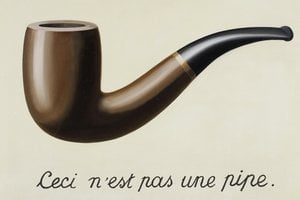
Magritte’s oeuvre is characterized by a masterful manipulation of illusion and representation. *The Treachery of Images (This is not a pipe)* (1929) exemplifies his genius—a deceptively simple depiction that compels us to reconsider the relationship between image and object, mirroring the core tenets of Surrealist thought. Similarly, *Les Amants* (1927-1928), featuring shrouded figures, echoes the trauma of his mother’s death while simultaneously exploring themes of concealment and intimacy. Masterpieces like *Time Transfixed* (1938) and *The Human Condition* (1933) further demonstrate Magritte's ability to unsettle viewers with unsettling juxtapositions and visual puzzles.

Legacy and Influence: A Surrealist Pioneer

René Magritte’s artistic legacy extends far beyond the confines of Belgian art history. His pioneering exploration of Surrealism profoundly impacted subsequent generations of artists—from Pop Art luminaries like Andy Warhol to Minimalist sculptors such as Donald Judd—establishing him as a cornerstone of 20th-century visual culture. Today, his paintings reside in prestigious museum collections worldwide, including the Musées royaux des beaux-arts de Belgique and the Magritte Museum, ensuring that his visionary aesthetic continues to inspire awe and provoke contemplation for decades to come.

René Magritte

René Magritte

1898 - 1967 , Belgia

Lühikest infot

  • Artistic Movement Or Style: Surrealism
  • Artists Who Influenced This Artist: ['Giorgio de Chirico']
  • Date Of Birth: November 21, 1898
  • Date Of Death: August 15, 1967
  • Full Name: René François Ghislain Magritte
  • Nationality: Belgian
  • Notable Artworks:
    • Les Amants
    • The Treachery of Images
    • Time Transfixed
  • Place Of Birth: Lessines, Belgium
Avastage teoseid, mis on koondatud teemade, stiilide ja omaduste kaupa.