Vaata sisu Vaata AR-eelvaadet Telli käsitsi maalitud reproduktsioon Ülemineku digitaalse pildi müügi kanalisse Jaga teost
Detailid Õppekate juhend Lisa lemmikutesse Laadi alla Sarnased teosed Röntgenuuring Slaidietendus Statistika

La Modéle rouge

René Magritte’s ‘La Modèle Rouge’ presents a striking surrealist composition of two feet in black boots against a green wall, embodying the artist's exploration of perception and hidden realities. Discover this iconic piece and bring its enigmatic beauty into your collection.

René Magritte (1898–1967) – belgia sürrealist kunstnik, tuntud teostega nagu "The Lovers" ja "Ceci n’est pas une pipe". Tema pilkupüüdvad kompositsioonid sepitavad reaalsust ja kujutist, mõjutades pop-kunsti ja kontseptuaalset kunsti.

Sellel lehel kuvatav kunstiteos on kaitstud autoriõigusega, mis tähendab, et meil ei ole seaduslikku õigust luua või müüa identset reproduktsiooni. Seda kaitset rakendatakse rahvusvaheliste kokkulepete alusel, nagu näiteks Berne konventsioon ning riiklike seadustega, sealhulgas nendega, mida on sätestatud USA autoriõiguse seadus – 17. peatükk.

See meetod järgib täielikult autoriõiguse reegleid, kuna see ei põhine kaitstud kunstiteose kopeerimisel või dupliteerimisel. Selle asemel on tegu loova reinterpreetatsiooniga – uue maaldisega, mis on algteosest inspireeritud, kuid ei ole sellest identiline.

Giclée / Kunstiprint

Muuseumikvaliteediga giclée- või kangasprint kiire tootmisega ja paindlikud viimistlusvõimalused. ( Telli käsitsi maalitud reproduktsioon Ülemineku digitaalse pildi müügi kanalisse)

Corner sample of the P118B picture frame: vormitud polüstüreen, 5 cm wide and 3 cm thick
P118B €10
Corner sample of the P118H picture frame: vormitud polüstüreen, 5 cm wide and 3 cm thick
P118H €10
Corner sample of the P118W picture frame: vormitud polüstüreen, 5 cm wide and 3 cm thick
P118W €10
Corner sample of the P438Z picture frame: vormitud polüstüreen, 5.5 cm wide and 3.5 cm thick
P438Z €10
Corner sample of the P508JH picture frame: vormitud polüstüreen, 7 cm wide and 3.5 cm thick
P508JH €12
Corner sample of the P508YH picture frame: vormitud polüstüreen, 7 cm wide and 3.5 cm thick
P508YH €12
Corner sample of the P805H picture frame: vormitud polüstüreen, 5 cm wide and 3.5 cm thick
P805H €10
Corner sample of the P805Z picture frame: vormitud polüstüreen, 5 cm wide and 3.5 cm thick
P805Z €10
Corner sample of the P919BZ picture frame: vormitud polüstüreen, 7 cm wide and 3.5 cm thick
P919BZ €10
Corner sample of the P919G picture frame: vormitud polüstüreen, 7 cm wide and 3.5 cm thick
P919G €10
Corner sample of the P919XJ picture frame: vormitud polüstüreen, 7 cm wide and 3.5 cm thick
P919XJ €10
Corner sample of the P959ZH picture frame: vormitud polüstüreen, 5 cm wide and 3 cm thick
P959ZH €10
Corner sample of the P968JZ picture frame: vormitud polüstüreen, 6 cm wide and 4 cm thick
P968JZ €12
Corner sample of the W106C picture frame: tammepuu või massivpuit, 5 cm wide and 3 cm thick
W106C €8
Corner sample of the W218G picture frame: tammepuu või massivpuit, 5 cm wide and 3 cm thick
W218G €10
Corner sample of the W218JH picture frame: tammepuu või massivpuit, 5 cm wide and 3 cm thick
W218JH €8
Corner sample of the W218Y picture frame: tammepuu või massivpuit, 5 cm wide and 3 cm thick
W218Y €10
Corner sample of the W307PJ picture frame: tammepuu või massivpuit, 6 cm wide and 3 cm thick
W307PJ €10
Corner sample of the W316G picture frame: tammepuu või massivpuit, 6 cm wide and 3 cm thick
W316G €10
Corner sample of the W316PJ picture frame: tammepuu või massivpuit, 6 cm wide and 3 cm thick
W316PJ €8
Corner sample of the W316Y picture frame: tammepuu või massivpuit, 6 cm wide and 3 cm thick
W316Y €10
Corner sample of the W398PJ picture frame: tammepuu või massivpuit, 5 cm wide and 3 cm thick
W398PJ €8
Corner sample of the W4111J picture frame: tammepuu või massivpuit, 6.5 cm wide and 3.5 cm thick
W4111J €10
Corner sample of the W500HY picture frame: tammepuu või massivpuit, 7 cm wide and 5 cm thick
W500HY €15
Corner sample of the W500JH picture frame: tammepuu või massivpuit, 7 cm wide and 5 cm thick
W500JH €15
Corner sample of the W692G picture frame: tammepuu või massivpuit, 8 cm wide and 4 cm thick
W692G €12
Corner sample of the W849H picture frame: tammepuu või massivpuit, 5 cm wide and 3 cm thick
W849H €8
Corner sample of the W940BG picture frame: tammepuu või massivpuit, 7.5 cm wide and 4.5 cm thick
W940BG €15
Corner sample of the W953PJ picture frame: tammepuu või massivpuit, 6 cm wide and 3.5 cm thick
W953PJ €8

Standardne suurus
kohandatud
CM
INCH

Vali meie eelmääratud suurused, mis vastavad teose algupärastele proportsioonidele.

laius
kõrgus

Sisestage vajalik laius ja kõrgus, et see sobiks teie raamile või seinale. Trükki saab ainult lõigata, seda ei saa kunagi pildist suuremaks teha, seega ka differentse vormiga suurus kaotab osa pildist. Enne trükkimist saadame teile kinnitamiseks digitaalse näidisprojektsiooni. Sellel lehel näidatud pilt ei kujuta reaalset lõiget — seda näitab ainult näidisprojekttsioon.

Ülemaailmne tarne () 2 nädala jooksul, tavalise 4/5 nädala asemel. (27 oktoober)

Tasuta ekspresssaatmine üle maailma
Kõrgekvaliteediline lina-kangastest muld
Täielik transpordikindlustus
Tollimaksude tagastamise garantii
Värvitoime täpsuse garantii
100 päeva tagastusõigus (ainult defektide korral)
100% raha tagasi garantii
Hulgusoodustus

Kogu summa

€ 60

La Modéle rouge

Giclée / Kunstiprint

Reproduktsiooni mõõtmed

-

Lõppsumma

€ 60

Teave teose kohta

  • Movement: Surrealism
  • Title: La Modéle rouge
  • Artistic style: Magrittean
  • Year: 1967
  • Influences: Impressionism

A Study in Absence: Deconstructing Reality with René Magritte’s *La Modéle rouge*

René Magritte's La Modèle Rouge, a deceptively simple depiction of two feet clad in black boots against a verdant wall, is far more than a mere still life. It’s a potent meditation on perception, representation, and the unsettling nature of reality – hallmarks of the artist’s signature Surrealist style. Painted by Magritte around 1937, this work exemplifies his deliberate rejection of traditional artistic conventions, opting instead to challenge the viewer's assumptions about what they are seeing.

  • Subject Matter: The painting focuses on the lower half of a female figure’s body, specifically her feet and boots. This deliberate reduction in detail – stripping away recognizable human form – is central to Magritte’s strategy.
  • Color Palette: The stark contrast between the black boots and the vibrant green background immediately draws attention, creating a visual tension that mirrors the underlying thematic concerns. The red hue of the model's skin adds a subtle yet significant element, hinting at both passion and vulnerability.

The Surrealist Project: Challenging Visual Norms

Magritte was deeply influenced by the burgeoning Surrealist movement, which sought to liberate art from the constraints of rational thought and conscious control. He embraced the idea of juxtaposing incongruous elements – as seen here – to provoke a subconscious response in the viewer. His work aligns with the broader Surrealist project of disrupting established visual norms, questioning the relationship between image and reality. This approach was partly inspired by his early life experiences, particularly the trauma of his mother's death, which fueled his preoccupation with hidden meanings and obscured identities.

The painting’s composition echoes the work of masters like Vermeer, but Magritte subverts this classical influence through his deliberate ambiguity. The boots could be interpreted as symbols of protection, concealment, or even a veiled representation of the female form itself – echoing themes explored in his earlier works where the faces of women are often obscured.

Technique and Materiality: A Deliberate Simplicity

Magritte’s technique is characterized by meticulous detail within a limited scope. He employed oil paints with a smooth, almost enamel-like finish, creating a sense of stillness and precision. The rendering of the boots is particularly noteworthy – each crease, shadow, and reflection is rendered with painstaking accuracy. This technical mastery serves to heighten the painting’s unsettling effect; the realism of the boots contrasts sharply with their reduced context, amplifying the feeling of disorientation.

The green background, likely applied in multiple layers, contributes to the overall sense of depth and atmosphere. It's a color often associated with nature and fertility, yet here it feels strangely detached and artificial, further contributing to the painting’s dreamlike quality.

Symbolic Resonance: Loss, Identity, and the Unseen

La Modèle Rouge is laden with symbolic potential. The obscured feet can be seen as a representation of lost identity or the difficulty in grasping the complete truth. The red skin tone, reminiscent of his mother’s death scene, subtly alludes to themes of grief, memory, and the enduring power of trauma. Magritte's work consistently explores the idea that reality is often constructed through our perceptions, and that what we see may not be what truly exists. This painting invites us to confront the unsettling possibility that appearances can be deceiving, and that beneath the surface lies a world of hidden meanings.

Küsimused ja vastused

Kust saan osta teose „La Modéle rouge“, autor René Magritte käsitsi maalatud reproduktsiooni?

Teose „La Modéle rouge“, autor René Magritte käsitsi maalatud koopiaid müüakse saidil see veebileht: käsitsi maalatud õlireproduktsioon linaelapale, neid saab tellida sellelt lehelt Käsitsi maalatud reproduktsioon.

Kuhu kohta on teose "La Modéle rouge" Portrait formaat soovitatav paigutada?

Teose „La Modéle rouge“, autor René Magritte Portrait formaat on soovitatav kasutada ruumis Reception. Formaat ja ruum aitavad koos otsustada reproduktsiooni paigutamise kohta.

Millist emotsionaalset toonikut saadab kaasata teose "La Modéle rouge" Surrealist Object stiil?

Surrealist Object suunangu raames on teos "La Modéle rouge" üles seabetud Mysterious toonil.


Kunstniku elulugu

René Magritte (1898–1967): Exploring the Surrealist Landscape

René Magritte, born René François Ghislain Magritte on November 21, 1898, in Lessines, Belgium, emerged from a childhood profoundly shaped by tragedy – the untimely death of his mother when he was merely thirteen. This formative experience instilled within him an unwavering fascination with mystery, loss, and the unsettling power of what remains unseen; it would subtly permeate his artistic vision throughout his prolific career.

Early Artistic Explorations: Impressionism and Beyond

Despite initial inclinations toward Impressionism, Magritte swiftly recognized its limitations in conveying the complexities he wished to explore. He enrolled at the Académie Royale des Beaux-Arts in Brussels, seeking a more rigorous training but ultimately rejecting its formal conventions. Recognizing the influence of Giorgio de Chirico’s *The Song of Love* (1922), Magritte discovered a new aesthetic path—one where familiar landscapes could transform into dreamlike realms and commonplace objects could provoke unsettling questions about reality.

The Surrealist Breakthrough: Challenging Perception

Magritte's commitment to Surrealism solidified in 1926 with *Le Jockey Perdu*, marking his decisive departure from traditional artistic styles. Embracing the principles of automatism championed by André Breton, he sought to liberate creativity from conscious control, mirroring the broader intellectual currents of the era. His distinctive approach distinguished him from many fellow Surrealists; Magritte wasn’t interested in delving into subconscious anxieties through free association but rather in meticulously crafting visual paradoxes that disrupted viewers' perceptions.

Iconic Works and Recurring Themes: Paradoxical Imagery

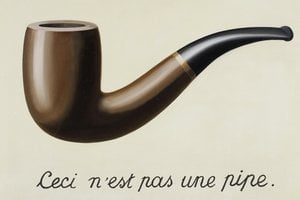
Magritte’s oeuvre is characterized by a masterful manipulation of illusion and representation. *The Treachery of Images (This is not a pipe)* (1929) exemplifies his genius—a deceptively simple depiction that compels us to reconsider the relationship between image and object, mirroring the core tenets of Surrealist thought. Similarly, *Les Amants* (1927-1928), featuring shrouded figures, echoes the trauma of his mother’s death while simultaneously exploring themes of concealment and intimacy. Masterpieces like *Time Transfixed* (1938) and *The Human Condition* (1933) further demonstrate Magritte's ability to unsettle viewers with unsettling juxtapositions and visual puzzles.

Legacy and Influence: A Surrealist Pioneer

René Magritte’s artistic legacy extends far beyond the confines of Belgian art history. His pioneering exploration of Surrealism profoundly impacted subsequent generations of artists—from Pop Art luminaries like Andy Warhol to Minimalist sculptors such as Donald Judd—establishing him as a cornerstone of 20th-century visual culture. Today, his paintings reside in prestigious museum collections worldwide, including the Musées royaux des beaux-arts de Belgique and the Magritte Museum, ensuring that his visionary aesthetic continues to inspire awe and provoke contemplation for decades to come.

René Magritte

René Magritte

1898 - 1967 , Belgia

Lühikest infot

  • Artistic Movement Or Style: Surrealism
  • Artists Who Influenced This Artist: ['Giorgio de Chirico']
  • Date Of Birth: November 21, 1898
  • Date Of Death: August 15, 1967
  • Full Name: René François Ghislain Magritte
  • Nationality: Belgian
  • Notable Artworks:
    • Les Amants
    • The Treachery of Images
    • Time Transfixed
  • Place Of Birth: Lessines, Belgium
Avastage teoseid, mis on koondatud teemade, stiilide ja omaduste kaupa.