Meie kunstnike poolt tellimusel valmistatud käsitsi maalitud õli-kainaste teos teie soovitud suuruses ja raamis. ( Lülita trükkitoodetele
Ülemineku digitaalse pildi müügi kanalisse)
Vali meie eelmääratud suurused, mis vastavad teose algupärastele proportsioonidele.
Sa võite sisestada oma mõõtmed konkreetse raami või ruumi sobivuse tagamiseks. Kui teie valitud suurus ei vasta originaalpildi proportsioonidele, siis kärvime kunstiteost või laiendame maali täiendavate käsitsi maalitud elementidega. Enne tootmise algust saadetakse teile heakskiitmiseks digitaalne eelvaade.
Palun pidage meeles, et ekraanil kuvatav eelvaade ei kajasta tegelikku kärpimist või laiendamist. Ainult eelvaade näitab täpselt lõplikku kompositsiooni.
Kuigi on saadaval kohandatud suurused, soovitame originaalproportsioonide säilimiseks valida mõõdud eelmääratletud nimekirjast.
Maailmline tarne 3–4 nädala jooksul tavalise 5 nädala asemel. (26 september). Kvaliteedis kompromisse ei tehta.
L'Art de la conversation
Reproduktsiooni mõõtmed
René Magritte, a Belgian surrealist artist, is renowned for his thought-provoking and visually striking works that challenge our perceptions. One such masterpiece is L’Art de la conversation, a painting that embodies the essence of surrealism and invites viewers to ponder the relationship between words and images. Its enigmatic composition—two men suspended in flight with crossed legs, holding ties—immediately captivates attention and prompts contemplation about communication itself.
Executed in 1963, L’Art de la conversation is part of Magritte's exploration into the realm where reality and fantasy blend. The painting features two men in suits flying through the sky with their legs crossed, holding ties as they soar above a landscape dotted with mountains and trees. A tie lies on the ground near the bottom of the composition, adding an element of mystery. This piece emerged during Magritte’s engagement with the influential Surrealist Group “Section d'Or,” alongside artists like Albert Gleizes and Jean Metzinger—a collective dedicated to pushing artistic boundaries and experimenting with dreamlike imagery. The painting reflects a broader fascination with questioning established conventions and exploring subconscious thought processes, hallmarks of the surrealist movement.
The title L’Art de la conversation translates to “The Art of Conversation,” which might seem ironic given that the subjects are not engaged in any form of dialogue. However, this paradox is a hallmark of Magritte's style, where he often used titles to mislead or provoke thought. Consider the men’s formal attire—a deliberate contrast against their effortless flight—representing societal expectations juxtaposed with liberation from constraints. The ties themselves symbolize professionalism and formality but are presented as objects on the ground, hinting at detachment and perhaps suggesting that communication is ultimately superficial. Magritte skillfully utilizes visual cues to convey deeper meanings beyond the surface appearance of the scene.
Magritte’s work is characterized by its surrealist elements, where he challenges the viewer to question what is real and what is not. This style draws inspiration from artists like Giorgio Morandi and Yves Tanguy, who similarly employed muted palettes and simplified forms to create unsettling yet beautiful landscapes. The painting's technique—oil on canvas—allows for rich textural detail while maintaining a sense of ethereal stillness. Magritte’s meticulous attention to composition and color contributes to the overall impact of the artwork, reinforcing its dreamlike quality. His influence extends far beyond the Surrealist movement, inspiring contemporary artists who continue to explore themes of perception and illusion.
Rene Magritte: L'Art de la conversation continues to inspire contemporary artists and art enthusiasts alike. Its themes of challenging perceptions and the relationship between words and images are timeless and thought-provoking, resonating with audiences interested in exploring philosophical questions about reality and representation. Furthermore, René Magritte's legacy persists in fostering artistic experimentation and encouraging viewers to engage actively with art’s ability to provoke contemplation. For those seeking a stunning reproduction of this iconic piece—or delving deeper into the broader oeuvre of René Magritte—Rene Magritte: L'Art de la conversation and René Magritte on Wikipedia offer invaluable resources for furthering your artistic understanding.
René Magritte, born René François Ghislain Magritte on November 21, 1898, in Lessines, Belgium, emerged from a childhood profoundly shaped by tragedy – the untimely death of his mother when he was merely thirteen. This formative experience instilled within him an unwavering fascination with mystery, loss, and the unsettling power of what remains unseen; it would subtly permeate his artistic vision throughout his prolific career.
Despite initial inclinations toward Impressionism, Magritte swiftly recognized its limitations in conveying the complexities he wished to explore. He enrolled at the Académie Royale des Beaux-Arts in Brussels, seeking a more rigorous training but ultimately rejecting its formal conventions. Recognizing the influence of Giorgio de Chirico’s *The Song of Love* (1922), Magritte discovered a new aesthetic path—one where familiar landscapes could transform into dreamlike realms and commonplace objects could provoke unsettling questions about reality.
Magritte's commitment to Surrealism solidified in 1926 with *Le Jockey Perdu*, marking his decisive departure from traditional artistic styles. Embracing the principles of automatism championed by André Breton, he sought to liberate creativity from conscious control, mirroring the broader intellectual currents of the era. His distinctive approach distinguished him from many fellow Surrealists; Magritte wasn’t interested in delving into subconscious anxieties through free association but rather in meticulously crafting visual paradoxes that disrupted viewers' perceptions.
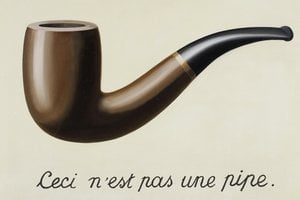
Magritte’s oeuvre is characterized by a masterful manipulation of illusion and representation. *The Treachery of Images (This is not a pipe)* (1929) exemplifies his genius—a deceptively simple depiction that compels us to reconsider the relationship between image and object, mirroring the core tenets of Surrealist thought. Similarly, *Les Amants* (1927-1928), featuring shrouded figures, echoes the trauma of his mother’s death while simultaneously exploring themes of concealment and intimacy. Masterpieces like *Time Transfixed* (1938) and *The Human Condition* (1933) further demonstrate Magritte's ability to unsettle viewers with unsettling juxtapositions and visual puzzles.
René Magritte’s artistic legacy extends far beyond the confines of Belgian art history. His pioneering exploration of Surrealism profoundly impacted subsequent generations of artists—from Pop Art luminaries like Andy Warhol to Minimalist sculptors such as Donald Judd—establishing him as a cornerstone of 20th-century visual culture. Today, his paintings reside in prestigious museum collections worldwide, including the Musées royaux des beaux-arts de Belgique and the Magritte Museum, ensuring that his visionary aesthetic continues to inspire awe and provoke contemplation for decades to come.

1898 - 1967 , Belgia