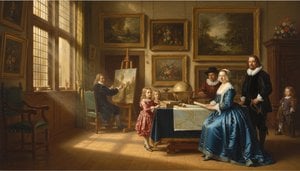
Kunstniku elulugu
Rembrandti Elu ja Pärand: Valguse ja Varju Meister
Rembrandt Harmenszoon van Rijn, kelle nimega on seostatud Hollandi kuldaeg ja valguse ning varju võluva osavusega maalimine, sündis 1606. aastal Leidenis, madalmaa riigis. Tema saabumine maailma kolis kokku ajaga, mil noor vabariik elas läbi enneolematu õitsengu nii majanduslikult kui ka kunstiliselt – keskkond, mis kujundas sügavalt tema elu ja loomingut. Milleri poeg, Harmen Gerritszoon van Rijn ja pagaripere esindaja Neeltgen Willemsdochter van Zuytbrouck lapsena sai Rembrandt hariduse Leideni ladina koolis, andes talle klassikalise teadmiste aluse, mis peegeldus hiljem tema kunstilistes narratiivides. Varajased kalduvused viisid ta õpipoisiks Jacob van Swanenburgile Leidenis ja seejärel kuueks kuuks Pieter Lastmanile Amsterdamisse. Just Lastmani valguse ja varju dramaatiline kasutamine, dünaamilised kompositsioonid täis ajaloolisi ja piibellikuid teemasid, sütas noores Rembrandtis loova vaimu, mis suunas teda kunstilise innovatsiooni teele. Leidenisse naasmisel asutas ta Jan Lievensiga stuudio, mis tähistas erakordse karjääri algust.
Leidenist Amsterdamini: Kuulsuse Saavutamine
Rembrandt võitis kiiresti tunnustust oma kodulinnas ajalooliste maalide ja portretega, näidates varajast andekust nii füüsikalise sarnasuse kui ka psühholoogilise sügavusega. Oluline hetk tuli 1629. aastal, kui ta sai poeedi ja diplomaadi Constantijn Huygensi kaitse alla Hague’i hertsogiriigi juures. See side kindlustas tellimusi, mis tõstsid Rembrandt profiili ning avas ukse laiemale publikule. 1631. aastal tegi ta otsustava otsuse kolida Amsterdamisse – rahvale ja kultuurile elavasse keskuses. Siin olid tema portreteerimisoskused kohe nõudmises, tõmmates ligi jõukaid kliente, kes soovisid oma sarnasuste jäädvustamist kasvava tähena. 1634. aasta oli veel üks oluline verstapost, kui ta abiellus Saskia van Uylenburghiga, silmapaistva juristi ja linnapea tütrega. See liit ei toonud mitte ainult isiklikku õnne, vaid ka sotsiaalset mõjuvõimu ja esialgset finantsstabiilsust, võimaldades talle oma stuudiot laiendada ja võtta ette ambitsioonikamad projektid.
Meistri Evolutsioon: Stiil ja Tehnika
Rembrandti kunstiline tee oli pidev katse-eksperimentide sari ning sügav muutus. Ta hoidus eelistatud idealiseeritud vormidest, asendades need realismiga ja emotsionaalse väljendusrikkusega oma kujutustes. Tema varajane periood, umbes 1625–1635, iseloomustas täpne detail ja selge Lastmani dramaatilise stiili mõju. Kuid just tema küpse perioodil, mis kestis 1630-ndatest kuni 1650-ni, sai Rembrandtist tõeline meister. Sel ajal arenes suurepäraselt *kiaroskuro* – valguse ja varju dramaatiline koosmäng –, mis sai tema töö määravaks jooneks. Ta ei kujutanud lihtsalt valgust; ta kasutas seda vormi skulptureerimiseks, atmosfääri loomiseks ning oma tegelaste sisemaailma paljastamiseks. Tema pintslitehnika läks ka läbi muutuse, saades lahtisema ja väljendusrikkama, edastades tekstuuri, emotsiooni ja vahetu tunnetust. Hilisemad aastad, alates 1650-ndatest kuni surmani 1669. aastal, viisid tagasipöördumise pehmema palettini ning keskendusid intiimsetele portreedele ja piibellikatele stseenidele, mis kajastasid isiklikke võitlusi ja vaimulikku kaalumist. Need tööd on täidetud sügavalt sisepoolega ja valmis silmaga vaatama inimhinge keerukust.
Silmapaistvad Loomingud ja Püsiv Pärand
Rembrandti loomingus on teoseid, mis jätkuvalt sajandeid publikut lumma. Anatoomia Tund Dr. Nicolaes Tulpi (1632) ei näidanud mitte ainult tema tehnilist oskust, vaid ka innovatiivset lähenemist inimkeha anatoomiat ja isiksust kujutamisel. Belšassari pidu (1635) on tunnistus tema valguse, varju ja kompositsiooni meistriks, tuues piibellikud sündmused elule dramaatilise intensiivsusega. Ilmselt tuntuma tööna, Öövahi (1642) – ametlikult *Kapten Frans Banninck Cocqi juhtimisel II ringkonna militsakompanii* – muutis grupportree žanri dünaamilise kompositsiooni ja innovatiivse valgustusega. Lisaks nendele suurtes mõõdutes olevatele töödele pakuvad Rembrandti umbes 40 eneseportreed unikaalset visuaalset dokumenti tema vananemisprotsessist ja kunstilisest nägemusest, pakkudes võrratut pilgu sisse geniaalse mehe vaimu. Ta muutis ka graveerimist peeneks kunstiks, tõstes esile oma joonte ja toonide suurepärase valitsuse. Tema mõju ulatub kaugemale tema ajast, mõjutades põlveid kunstnikke oma innovatiivsete tehnikate ja sügavate psühholoogiliste nägemustega. Vaatamata isiklikele tragödiatele – Saskia kaotusele ja 1656. aastal finantsraskustele, mis viisid pankrotti – Rembrandti maine püsis. Ta jääb Hollandi kunsti nurgakiviks ning universaalseks kunstilise geniaalsuse sümboliks, kelle teosed jätkavad publiku sügavalt emotsionaalset mõjutamist.
Kuldaeg Peeglis
Rembrandti töö on lahutamatult seotud Hollandi kuldaja vaimuga – ajastu, mida iseloomustas majanduslik õitseng, intellektuaalne areng ja ennenemata kunstiline innovatsioon. Ta tabas selle perioodi olemuse oma kodanikest portreede, dramaatiliste piibellikate stseenide kaudu, mis kõnetasid sügavalt religioosset publikut, ning universaalsete inimemotsioonide uurimise läbi. Tema elulugu – veendav narratiiv edust, vastupidisest ja vankumatu pühendumisest oma kutsele – on muutnud temast köitva figuuri kunstiajaloo seas. Ta ei dokumentinud lihtsalt ümbrust; ta tõlgendas seda enda kogemuste ja nägemuste läbi. Rembrandti mõju järgnevatele kunstnike põlvedele on mõõdetamatu, inspireerides lugematuid maalijaid, graveerijaid ja joondajaid valguse, varju ja psühholoogilise realismi jõuga uurima. Tema pärand elab jätkuvalt edasi muuseumides ja erakollektsioonides üle maailma, tagades, et tema meistriteosed jätkavad sajandeiks publiku inspireerimist ja liigutamist.



 Vaata sisu
 Telli käsitsi maalitud reproduktsioon
 Jaga teost
 Jaga
Jaga
 Detailid
 Õppekate juhend

 Laadi alla
 Sarnased teosed
 Röntgenuuring
 Slaidietendus
 Statistika

 Loe lähemalt






































 Klaasivalik on saadaval ainult kuni 110 cm suuruses teostes