Vaata sisu Vaata AR-eelvaadet Telli käsitsi maalitud reproduktsioon Ülemineku digitaalse pildi müügi kanalisse Jaga teost
Detailid Õppekate juhend Lisa lemmikutesse Laadi alla Sarnased teosed Röntgenuuring Slaidietendus Statistika

The Blessing Christ

Marvel at Raphael's 'The Blessing Christ,' a captivating High Renaissance oil painting depicting Jesus offering grace and divine love. Explore its beauty & symbolism – available as a stunning reproduction.

Raffaello (1483-1520) oli renessansiaegne meister, tuntud oma kaunite Maarjadega, arhitektuuri geniaalusega ja ikooniliste teostega nagu 'Ateenes Akadeemia'. Avasta tema algus Urbinos ja kunstiline pärand!

Giclée / Kunstiprint

Muuseumikvaliteediga giclée- või kangasprint kiire tootmisega ja paindlikud viimistlusvõimalused. ( Telli käsitsi maalitud reproduktsioon Ülemineku digitaalse pildi müügi kanalisse)

Corner sample of the P118B picture frame: moulded polystyrene, 5 cm wide and 3 cm thick
P118B €10
Corner sample of the P118H picture frame: moulded polystyrene, 5 cm wide and 3 cm thick
P118H €10
Corner sample of the P118W picture frame: moulded polystyrene, 5 cm wide and 3 cm thick
P118W €10
Corner sample of the P438Z picture frame: moulded polystyrene, 5.5 cm wide and 3.5 cm thick
P438Z €10
Corner sample of the P508JH picture frame: moulded polystyrene, 7 cm wide and 3.5 cm thick
P508JH €12
Corner sample of the P508YH picture frame: moulded polystyrene, 7 cm wide and 3.5 cm thick
P508YH €12
Corner sample of the P805H picture frame: moulded polystyrene, 5 cm wide and 3.5 cm thick
P805H €10
Corner sample of the P805Z picture frame: moulded polystyrene, 5 cm wide and 3.5 cm thick
P805Z €10
Corner sample of the P919BZ picture frame: moulded polystyrene, 7 cm wide and 3.5 cm thick
P919BZ €10
Corner sample of the P919G picture frame: moulded polystyrene, 7 cm wide and 3.5 cm thick
P919G €10
Corner sample of the P919XJ picture frame: moulded polystyrene, 7 cm wide and 3.5 cm thick
P919XJ €10
Corner sample of the P959ZH picture frame: moulded polystyrene, 5 cm wide and 3 cm thick
P959ZH €10
Corner sample of the P968JZ picture frame: moulded polystyrene, 6 cm wide and 4 cm thick
P968JZ €12
Corner sample of the W106C picture frame: solid wood, 5 cm wide and 3 cm thick
W106C €8
Corner sample of the W218G picture frame: solid wood, 5 cm wide and 3 cm thick
W218G €10
Corner sample of the W218JH picture frame: solid wood, 5 cm wide and 3 cm thick
W218JH €8
Corner sample of the W218Y picture frame: solid wood, 5 cm wide and 3 cm thick
W218Y €10
Corner sample of the W307PJ picture frame: solid wood, 6 cm wide and 3 cm thick
W307PJ €10
Corner sample of the W316G picture frame: solid wood, 6 cm wide and 3 cm thick
W316G €10
Corner sample of the W316PJ picture frame: solid wood, 6 cm wide and 3 cm thick
W316PJ €8
Corner sample of the W316Y picture frame: solid wood, 6 cm wide and 3 cm thick
W316Y €10
Corner sample of the W398PJ picture frame: solid wood, 5 cm wide and 3 cm thick
W398PJ €8
Corner sample of the W4111J picture frame: solid wood, 6.5 cm wide and 3.5 cm thick
W4111J €10
Corner sample of the W500HY picture frame: solid wood, 7 cm wide and 5 cm thick
W500HY €15
Corner sample of the W500JH picture frame: solid wood, 7 cm wide and 5 cm thick
W500JH €15
Corner sample of the W692G picture frame: solid wood, 8 cm wide and 4 cm thick
W692G €12
Corner sample of the W849H picture frame: solid wood, 5 cm wide and 3 cm thick
W849H €8
Corner sample of the W940BG picture frame: solid wood, 7.5 cm wide and 4.5 cm thick
W940BG €15
Corner sample of the W953PJ picture frame: solid wood, 6 cm wide and 3.5 cm thick
W953PJ €8

Standardne suurus
kohandatud
CM
INCH

Vali meie eelmääratud suurused, mis vastavad teose algupärastele proportsioonidele.

laius
kõrgus

Saate sisestada oma mõõdud, et need sobiks konkreetse raami või ruumi sisse. Kui valitud suurus ei vasta originaalteose proportsioonidele, lõigame teose ära või laiendame pilti peegeldatud või ühtlase servaga. Enne tootmisprotsessi algust saadetakse Teie kinnitamiseks digitaalne näidis.
Palun märka, et ekraanil kuvatav eelvaade ei kajasta tegelikku lõigamist või laiendamist. Ainult näidis kujutab täpselt lõplikku kompositsiooni.
Kuigi erimõõdu on saadaval, soovitame originaaproportsioonide säilitamiseks valida mõõt ette määratud nimekirjast.

Ülemaailmne tarne () 2 nädala jooksul, tavalise 4/5 nädala asemel. (11 oktoober)

Tasuta ekspresssaatmine üle maailma
Kõrgekvaliteediline lina-kangastest muld
Täielik transpordikindlustus
Tollimaksude tagastamise garantii
Värvitoime täpsuse garantii
100 päeva tagastusõigus (ainult defektide korral)
100% raha tagasi garantii
Hulgusoodustus

Kogu summa

€ 59

The Blessing Christ

Giclée / Kunstiprint

Reproduktsiooni mõõtmed

-

Lõppsumma

€ 59

Teave teose kohta

  • Title: The Blessing Christ
  • Medium: Oil on wood
  • Artistic style: Chiaroscuro, Harmony
  • Dimensions: 30 x 25 cm
  • Location: Pinacoteca Tosio Martinengo
  • Movement: High Renaissance
  • Subject or theme: Religious scene, Christ

Kunstiteaduse kvartett

Iga küsimuse kohta on ainult üks õige vastus.

Küsimus 1:
What is the primary subject depicted in Raphael’s ‘The Blessing Christ’?
Küsimus 2:
Which artistic technique is prominently featured in ‘The Blessing Christ’ to create depth and volume?
Küsimus 3:
In what historical period was ‘The Blessing Christ’ created?
Küsimus 4:
Where is ‘The Blessing Christ’ currently housed?
Küsimus 5:
The image description highlights a specific element of the painting’s composition. What is this element?

Raphael’s “The Blessing Christ”: A Renaissance Masterpiece of Grace

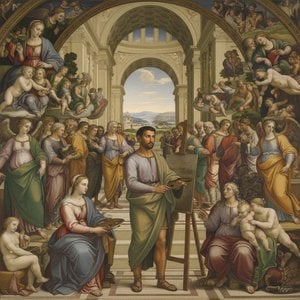
Raphael’s “The Blessing Christ,” painted in 1505, is more than just a beautiful depiction of a biblical scene; it's a profound meditation on divine love and human connection. This oil painting, now residing within the Pinacoteca Tosio Martinengo in Brescia, Italy, stands as a testament to Raphael’s mastery of composition, color, and his deep understanding of High Renaissance ideals – a period defined by its revival of classical forms and a renewed focus on humanism. The work immediately draws the viewer into a serene tableau: Jesus Christ, youthful and radiant, extends his hand in blessing, while two figures—believed to be angels or perhaps devoted disciples—stand attentively on either side. The scene unfolds against a subtly rendered mountainous backdrop, adding depth and a sense of timelessness to the composition.

At the heart of “The Blessing Christ” lies Raphael’s masterful use of chiaroscuro – the dramatic interplay of light and dark – a technique borrowed from Leonardo da Vinci. This skillful manipulation creates an astonishingly realistic volume, imbuing each figure with palpable presence. The warm glow illuminating Jesus’ face and outstretched hand contrasts sharply with the shadowed areas, drawing our attention to the central act of grace. The color palette is equally harmonious; Raphael employs a carefully chosen range of reds, blues, and golds that evoke a sense of tranquility and spiritual reverence. Notice how the rich crimson robe emphasizes Christ's divinity, while the softer hues surrounding him contribute to the painting’s overall atmosphere of peace.

Historical Context: The Dawn of a New Era

“The Blessing Christ” is inextricably linked to the Italian Renaissance, a transformative period in European history. Emerging from the shadows of the Middle Ages, this era witnessed a fervent return to classical Greek and Roman art and philosophy. Artists like Raphael sought inspiration from these ancient sources, integrating humanist ideals – emphasizing human potential and achievement – into their work. The painting reflects this shift by portraying Christ not as a distant deity but as a relatable figure offering compassion and guidance. The Renaissance’s embrace of perspective and anatomical accuracy is subtly present here, contributing to the illusion of depth and realism.

Raphael's creation emerged during a time when the Papal States were consolidating power in Rome, and the Vatican was undergoing significant architectural and artistic renovations. The commission for “The Blessing Christ” likely stemmed from this atmosphere of patronage and artistic innovation. It’s fascinating to consider how this painting fits within the broader context of Raphael's career – a period marked by rapid growth and prolific output, culminating in his relocation to Rome where he would become one of the most celebrated artists of all time.

Symbolism and Spiritual Resonance

Beyond its technical brilliance, “The Blessing Christ” is rich in symbolic meaning. The outstretched hand represents divine grace and benediction – a tangible offering of love and forgiveness. The pointing finger directs our gaze towards Jesus’ wound, a potent reminder of his sacrifice on the cross. This detail underscores the central theme of redemption and salvation, core tenets of Christian belief. The two figures flanking Christ are often interpreted as angels or disciples, symbolizing faith and devotion – witnesses to this profound moment of grace.

The painting's emotional impact is undeniable. It evokes a sense of serenity, reverence, and hope. Viewers are invited to contemplate the nature of faith, compassion, and the enduring power of divine love. This resonance has ensured that “The Blessing Christ” remains an iconic work of art for centuries, continuing to inspire awe and contemplation in audiences around the world.

Artistic Style & Influences: A Synthesis of Tradition

Raphael’s style in "The Blessing Christ" is a masterful synthesis of influences. He skillfully blended elements of his early Umbrian training with the innovations he encountered during his time in Florence and Rome. The painting demonstrates a clear understanding of perspective, anatomical accuracy, and color theory – hallmarks of Renaissance art. However, it also retains a certain lyrical quality reminiscent of his earlier work, creating a harmonious balance between tradition and innovation.

Notably, Raphael’s use of light and shadow echoes the techniques employed by Leonardo da Vinci, while the composition draws inspiration from classical depictions of religious figures. Further enriching this artistic tapestry are works by artists like Giulio Romano, whose frescoes in Mantua showcased similar dramatic lighting effects and a focus on human emotion, and Sandro Botticelli, known for his graceful figures and elegant compositions. Studying these related artworks provides valuable insight into Raphael’s creative process and the broader artistic landscape of the High Renaissance.

To experience the full impact of “The Blessing Christ,” consider exploring reproductions available at WahooArt.com – a remarkable opportunity to bring this timeless masterpiece into your home or office, allowing its beauty and symbolism to inspire you daily.

Küsimused ja vastused

Kuidas saan hankida teose „The Blessing Christ“, autor Raphael digitaalse faili?

Teose „The Blessing Christ“, autor Raphael digitaalse faili hankimiseks tellige kõrge resolutsiooniga digitaalse pildi allalaadimine leheküljel see leht.

Kuidas leida teoseid, mis on sarnased teosele „The Blessing Christ“, autor Raphael?

Teosed, mis sarnanevad teosega "The Blessing Christ", on loetletud teose Sarnased teosed lehel.

Kes müüb teose "„The Blessing Christ“, autor Raphael" käsitsi maaldatud koopiaid?

Teos "The Blessing Christ" on saadaval kujundis käsitsi maalatud õlireproduktsioon linaelapale. Tellimust saab esitada lehel see leht, kus on võimalik valida erinevad suurused.

Kust saan osta teose „The Blessing Christ“, autor Raphael trükki?

Teose „The Blessing Christ“, autor Raphael trüket saab tellida otse lehelt see leht: kunstiprint puuvillalõikel}}^{\text{canvas}}$ või arhiveeritaval kangaspaberil.

Kes on teose "The Blessing Christ" autor ja millises suunast see on?

Teose "The Blessing Christ" on loonud Raphael High Renaissance stiilis. Kunstnik ja suunamine määratlevad teose traditsiooni.

Millissele kunstisuunale kuulub teos „The Blessing Christ“, autor Raphael?

Teosest „The Blessing Christ“, autor Raphael tuntud kunstisuuna kuulub High Renaissance stiili. See klassifikatsioon aitab teost paikutada sarnaste kunstnike ja teoste hulka.

Millisele kunstnikule on teos "The Blessing Christ" atribuutseeritud?

Teose "The Blessing Christ" autoriks on mõeldud Raphael.


Kunstniku elulugu

Urbino Renessanssi Sünd: Rafaeli Varase Elu ja Moodustumine

Raffaello Sanzio da Urbino, maailmale tuntud kui Raphael, tekkis märkimisväärselt viljakas kultuurikeskkonnas. 1483. aastal sündinud Urbino müüride sees, keskijääma Itaalias asuva väikese, kuid intellektuaalselt elava linna-riigi seinte vahel, olid tema varased aastad läbi imbunud atmosfäärist, mis väärtustas nii kunstilisi oskusi kui humanistlikku õpetust. Tema isa, Giovanni Santi, ei olnud pelgalt Duke Federico da Montefeltro poolt teenitud maalija – ta oli mees, kes osales sügavalt renessanssiaegsete mõttevoolude seas, luuletaja, kes kroonikas hertsogi elu ja püüdis aktiivselt leida uuenduslikke kunstilisi ideid kogu Itaaliast ja mujalt. See sündimine uhkes õukonnas, mis väärtustas peenust ja intellektuaalset arutlust, kujundas sügavalt noore Rafaeli tundmusi. Tema isa surma pärast üheteistkümnendal aastal lasus tema õlgadele vastutus, kuid see andis ka võimaluse oma oskusi arendada pere töökojas, omandades tehnikuid ja traditsioone kohalike kunstnike juhendamisel. Juba varajastes teostes hakkasid ilmuma pehme graatsia ja tähelepanelik detailile – tema küpse stiili tuntumad jooned.

Umbriast Firenzasse: Uute Mõjude Omandamine

Rafaeli kunstiline tee oli pideva arengu teekond, mida märgistavad intensiivse õppimise ja assimileerimise perioodid. Perugia all Pietro Perugino juures saadud algne koolitus pani kindla aluse umbri stiilile – mis iseloomustab seda pehme modelleerimisega, harmooniumsetest kompositsioonidest ja rahulikest religioossetest stseenidest. Kuid Raphaelil oli kustamatu uudishimu, mis ajas teda otsima uusi väljakutseid ja laiendama oma kunstilisi horisonte. 1504. aastal sõitis ta Firenzasse, linna, kus pulsis tollal kunstilise innovatsiooni energia. Siin kohtus ta Leonardo da Vinci ja Michelangelo meistriteoste – kunstnike, kes ajasid maalimispiire senikuulmatu viisil. Ta õppis hoolikalt nende tehnikaid – Leonardo sfumato, tema peenete valguse ja varju gradiatsioonide ning Michelangelo võimsa anatoomilise täpsuse ja dramaatiliste kompositsioonidega. See Firenze periood oli Rafaeli jaoks sulatuskolde, sundides teda silmaringi avardama uusi kunstilisi võimalikkusi ja sünteesima need oma ainulaadseks visiooniks. Mõju on näha tema teostest selle aja suurenenud dünaamilisuses ja psühholoogilisemas sügavuses, eriti tema Madonna seerias.

Rooma Triumpf: Tellimused ja Meisterteosed

1508. aastal sai Raphael kutse, mis muutis tema karjääri – kutsed Paavst Julius II poolt Rooma. See tähistas tema kõige produktiivsema ja kuulsama perioodi algust. Igavese linn pakkus talle võrratu võimaluse näidata oma andeid hiiglaslikul skaalal, kaunistades Vatikani paavstiapartmendid vapustavate freskodega. The School of Athens, võib-olla tema kuulsaim teos, on tunnistuseks tema kompositsiooni, perspektiivi ja filosoofilise alegoria meistriõiguse kohta. Selle majesteetlilises ruumis tõi Raphael kokku klassikalise antiikkultuuri figuurid – Platoni, Aristotelese, Pythagorase, Euclidi – luues elava vaatepildi, mis tähistas inimliku mõistuse ja teadmiste otsingut. Ta jätkas tööd hiljem ka järgnevate paavstide jaoks, Leo X seas, võttes ette monumentaalseid projekte, nagu Stanze della Segnatura ja Stanza d'Eliodoro dekoreerimine. Need ruumid on freskod mitte ainult dekoratiivsed; need on sügavuti avaldusi paavsti võimu, religioosse uskumuse ja renessansi ideaalide kohta.

Graatsia ja Suursugusus Süntees: Rafaeli Kunstistiil

Rafaeli kunstistiili kirjeldatakse sageli graatsia, selguse ja idealiseeritud ilu harmoonilise seguna. Tal oli erandusuus oskus sünteesida erinevaid mõjutusi – umbri traditsiooni, Firenze uuendusi, klassikalist antiikkultuuri – ainulaadseks tasakaalukaks esteetikaks. Tema kompositsioonid on hoolikalt planeeritud, näidates korra ja proportsiooni tunde, mis peegeldab tema sügavat arusaamist renessansi põhimõtetest. Tema figuurid kiirgavad rahulikku väärikust ja emotsionaalset väljendusrikkust, kehastades humanistliku inimese täiuslikkuse ideaali. Ta oli ka meister kolorist, kasutades rikkalikke, sädelevaid toone, et luua teoseid, mis on nii visuaalselt köitva kui ka intellektuaalselt stimuleerivad. Eranditult Michelangelo sageli dramaatilise ja turbulentse stiili võrreldes kiirgab Rafaeli töö rahu ja harmooniat – kvaliteeti, mis on sajandeid publikut vaimustanud.

Pärand ja Püsiv Mõjutus

Rafaeli enneaegne surm 1520. aastal vaid kolmkümmend seitsme aasta vanusena lõpetas karjääri, mis oli täis potentsiaali. Siiski tema pärand jääb üheks olulisimaks kujuks lääne kunstiajaloos. Tema töö sai renessansi kõrgaegse esteetika nurgakiviks, teenides eeskujuks põlvedele kunstnikke. Kuigi Michelangelo mõju valitses hiljem kunstilist arutlust, Rafaeli rõhutamine selgusel, harmoonial ja idealiseeritud ilul koges uuesti tõusu neoklassitsismi perioodil, mille pooldajad olid nagu Johann Joachim Winckelmann. Tänapäeval jätkavad tema maalijad vaimustavat imetlust ja tunnustamist, köitma vaatajaid oma tehnilise briljansiga, emotsionaalse sügavusega ja püsiva võluga. Tema mõju on näha arvukates hiljem loodud kunstiteostes, mis kinnistavad tema koha tõelise renessansimeistrina – maalijana, kes suutis jäädvustada mitte ainult oma subjektide füüsiliku sarnase, vaid ka inimliku graatsia ja väärikuse olemuse.

Raphael

Raphael

1483 - 1520 , Itaalia

Lühikest infot

  • Artistic Movement Or Style: Ülem-Renessanss
  • Artists Or Movements Influenced By This Artist: ['Neoklassitsism']
  • Artists Who Influenced This Artist:
    • Leonardo da Vinci
    • Michelangelo
  • Date Of Birth: 1483
  • Date Of Death: 1520
  • Full Name: Rafael (Raffaello Sanzio)
  • Nationality: Itaalia
  • Notable Artworks:
    • Ateeni Akadeemia
    • Sistine Madonna
    • Transfiguratsioon
  • Place Of Birth: Urbino, Itaalia
Avastage teoseid, mis on koondatud teemade, stiilide ja omaduste kaupa.