Paolo Porpora: The Neapolitan Master of Floral Still Life
Paolo Porpora (1617-1673) stands as a pivotal figure in the late Baroque art scene of Naples, renowned for his exquisite and meticulously rendered floral still lifes. His work offers a captivating glimpse into the vibrant artistic landscape of 17th-century Italy, blending Italian tradition with subtle influences from Northern Europe – particularly the Dutch masters of flower painting. Porpora’s legacy lies not just in the beauty of his compositions but also in his role as an influential teacher, shaping the style of subsequent generations of Neapolitan artists.
Born in Naples in 1617, Porpora's artistic journey began under the tutelage of Giacomo Recco, a prominent figure in the city’s painting scene. Recco, known for his dramatic and theatrical compositions, instilled in Porpora a foundational understanding of perspective and form. Crucially, Porpora followed Recco into specializing in still life – a genre that was gaining increasing prominence during this period. He further honed his skills under Aniello Falcone, a workshop master who provided him with practical experience and exposure to the techniques of the time. This early training laid the groundwork for Porpora’s distinctive style.
In 1656, Porpora joined the prestigious Roman Accademia di San Luca, a renowned artistic institution that attracted leading artists from across Italy and beyond. This move proved transformative, exposing him to the innovative techniques and stylistic trends of Northern Europe, specifically those practiced by Netherlandish flower painters like Otto Marseus van Schrieck and Mathias Withoos. These artists, who had established studios in Rome during the mid-17th century, were masters of capturing the delicate details of flowers and fruits with remarkable precision and scientific observation. Porpora absorbed these influences, incorporating them into his own work to create a unique synthesis of Italian and Northern European styles.
The Influence of Netherlandish Art
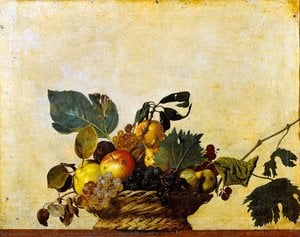
Porpora’s engagement with Dutch still life painting is evident in several key aspects of his oeuvre. Unlike the predominantly dark and dramatic backgrounds favored by some of his contemporaries, Porpora often employed lighter, more luminous palettes, reflecting the Northern European emphasis on capturing natural light and color. His compositions are characterized by a meticulous attention to detail – he painstakingly rendered every petal, leaf, and stem with astonishing accuracy. Furthermore, the inclusion of elements like insects (butterflies, beetles) and small objects (crystals, goblets) within his still lifes demonstrates a fascination with the intricacies of nature, mirroring a trend that was gaining popularity in Dutch flower painting.
However, it’s important to note that Porpora didn't simply imitate Northern European styles. He skillfully integrated these influences into a distinctly Neapolitan aesthetic, retaining a sense of drama and theatricality characteristic of Italian Baroque art. His works often feature rich textures, vibrant colors, and a dynamic arrangement of objects – creating visually arresting compositions that command attention.
Notable Works and Pupils
Among Porpora’s most celebrated paintings are several large-scale floral still lifes depicting arrangements of fruit, flowers, and other natural elements. These works showcase his technical mastery and artistic vision. The “Woodland Scene with Flamingo” (Louvre Museum), for example, exemplifies his ability to combine meticulous detail with a sense of atmospheric depth and drama. His paintings are often found in the collections of the Capodimonte Museum in Naples and the Banco di Napoli.
Porpora’s influence extended beyond his own artistic practice. He served as a teacher to several promising young painters, including Giovan Battista Ruoppolo – another significant Neapolitan still-life master – and Onofrio Loth. Through his instruction, Porpora helped to disseminate the techniques and stylistic principles of Northern European flower painting within the Neapolitan art community, ensuring its continued development and evolution.
Historical Significance and Legacy
Paolo Porpora’s contribution to the history of Italian Baroque art is considerable. He represents a crucial link between the traditional styles of Naples and the innovative trends emerging from Northern Europe. His meticulous attention to detail, his skillful integration of diverse influences, and his role as an influential teacher cemented his place as one of the most important painters of his time.
Today, Porpora’s works are treasured for their beauty, technical skill, and historical significance. They offer a valuable insight into the artistic landscape of 17th-century Naples and serve as a testament to the enduring appeal of floral still life painting. His legacy continues to inspire artists and art lovers alike, reminding us of the power of observation, technique, and creative vision.



 Vaata sisu
 Lülita trükkitoodetele
 Jaga teost
 Jaga
Jaga
 Detailid
 Juhend

 Laadi alla
 Sarnased teosed
 Röntgenuuring
 Slaidietendus
 Statistika
 Loe lähemalt