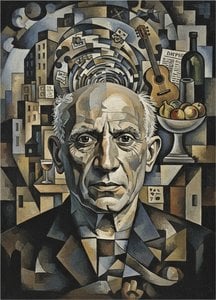
Kunstniku elulugu
Pablo Picasso: Kunstirevolutsiooni Pärand
Pablo Ruiz y Picasso, nimi mis on muutunud sünonüümiks kunstilisele revolutsioonile, sündis 25. oktoobril 1881. aastal Málagas, Hispaanias. Tema elu paistis juba algusest peale olevat otsustatud loova väljendusega; legendi kohaselt olid tema esimesed sõnad “piz, piz,” katse öelda ‘pencil’. See varane kalduvus toitus tema isa José Ruiz y Blasco poolt, kes oli maalija ja kunstipädeja ning andis noorele Pablosele põhialaseid oskusi. Kuid õpilane ületas peagi õpetaja, demonstreerides märkimisväärset andekust loodusliku kujutise osas, mis viitas sisemisele hiiglaslikule talentile. Pere järgmised kolimisõud – esmalt A Coruñasse ja seejärel Barcelonasse – olid täidetud isiklike tragödiatega, eriti õe Concepcióni kaotusega, kogemused, mis oleksid hiljem peenselt sisse põiminud tema töösse melankoolia ja suremuse teemasid. Isegi Barcelona Kunstiakadeemias ja Madridi Kuninglikus San Fernando Akadeemias lühikesed õpinguperioodid ei suutnud Picasso piirata akadeemiliste reeglitega; ta eelistaski end ümbritsema meistrite, nagu Velázquez ja Goya, töödega, vormindades oma teed kunstilise innovatsiooni poole.
Sinimelanhoolia Ajast Roosa Hõngudeni
20. sajandi algusaastad olid tunnistajaks Picasso loomingus kahest erilisest perioodist: Sinimelanhoolia ajast (u 1901–1904) ja Roosiajast (1904–1906). Sinimelanhoolia aega, mis sündis isiklikust leinast ja ühiskondliku kannatuse teadlikkusest, iseloomustavad maalitud tööd, mis on täidetud kurva sinise ja sinist-rohelise värvusega. Need tööd on täis marginaliseeritud figuure – vaeseid, pimedaid, prostituutide – kes on kujutatud hirmutava sümpoatia abil, rääkides eraldumisest ja meelehõngast. La Vie (1903) ja Vana Kitarrimängija (1903–1904) seisavad kui vaimulikud näited sellest emotsionaalselt laetud perioodist. Isikliku elu muutused, koos Pariisi kolimisega, kuulutasid Roosiaja saabumist. Palett soojenes märkimisväärselt, hõlbudes roosasid, oranže ja punaseid värve, mis peegeldavad optimistlikumat vaadet. Sel perioodil oli täheldatav fookus tsirkuseartistidele – harlekvinidele, akrobaatidele ja perekondade truppidele – figuurid, mis kehastasid nii haprust kui ka vastupidavust. Saltimbanque’ide Sugukonna (1905) kujutab kaunilt seda üleminekuaega, vihjates ees ootavatele stilistilistele uurimistöötle.
Perspektiivi Purustamine: Kubism ja Edasi
Aasta 1907 tähistas pöördelist hetke kunstiajaloos Les Demoiselles d'Avignon loomisega. Iberian skulptuuride ja Aafrika maskide mõjul see murranguline maal purukas traditsioonilised perspektiivi ja kujutamise arusaamad. See oli radikaalne lahkumine, teadlik rejektatsioon sajanditevanustest konventsioonidest, mis rajasid tee kubismile. Georges Braquega lähedases koostöös Picasso kaasasutas revolutsioonilise liikumise, mis muutis fundamentaalselt seda, kuidas kunstnikud maailma tajusid ja kujutasid. Analüütiline Kubism (1909–1912) hõlmas objektide fragmentimist geomeetrilisteks kujutisteks, mis on esitatud vaoshoitlikes värvitoonides, kui oleks tegemist vormi lahti võtmisega. See arenes sünteetiliseks Kubismiks (1912–1919), mis sisaldas kollaažielemente – ajalehe väljalõikeid, kangatükke – lisades tekstuuri ja uusi visuaalseid kihte. Picasso ei tahtnud lihtsalt maailma kujutada; ta püüdis seda dekonstrueerida ja oma tingimustel rekonstrudeerida.
Püsiv Katsetaja: Neo-klassitsism, Surrealism ja Sõda
1920ndad nägid Picassot lühikeselt neo-klassistiliste stiilide uurimistööd, luues monumentaalseid figuure, mis kajastasid klassikalisi vorme, säilitades samas eristuva modernse tundlikkuse. Samal ajal suhtus ta kasvavasse sürrealismi liikumisse, kuigi ei seadnud end kunagi selle põhimõtetega täielikult ühte. Tema töö sel perioodil segas varasemaid stilistilisi mõjutusi sürreaalsete kujundite ja moonduvate perspektiividega, demonstreerides tema pidevat katsetamist. Hispaania kodusõja õudused mõjutasid sügavalt Picasso, kulmineerudes Guernica (1937) loomisega – viskeraalne ja emotsionaalselt hävitav reaktsioon Guernica pommitamisele. See monumentaalne teos sai kuju sõja julmuste püüsiva sümbolina, kinnistades Picasso rolli mitte ainult kunstnikuna, vaid ka võimsana rahu ja sotsiaalse õigluse eest seisva häälega. 1950ndatel ja 60ndatel jätkas ta piiride nihutamist, uurides keraamikat, skulptuuri ja trükikunsti vankumatu uudishimu ja oskusega. Abielu Jacqueline Roque’iga aastal 1961 tõi uue dimensiooni tema isiklikku elu ja kunstilisse väljendusse.
Mõõdetamatu Mõju
Pablo Picasso suri 8. aprillil 1973 Mouginsis, Prantsusmaal, jättes maha hämmastava hulga töid – hinnanguliselt üle 50 000 teose – mis jätkuvad fassaaditööd ja inspireerivad. Tema kunstiline areng kujunes mitmesuguste mõjutajate poolt, Hispaania meistritest nagu Velázquez ja Goya kuni Iberian skulptuuride, Aafrika kunsti ja Henri Matisse’i elava värvipalettini. Tema mõju 20. sajandi kunstile on mõõdetamatu. Ta kaasasutas Kubismi, pioniiriks kollaaži ja konstruktiivse skulptuuri ning esitas pidevalt kunstilisi konventsioone väljakutseteks. Picasso pidev katsetamine määras uuesti tänapäeva kunsti, jättes kustumatu jälje põlvkondadele kunstnikele ja kinnistades tema positsiooni ajaloo ühe olulisema ja mõjukama figuurina. Tema pärand ulatub kaugemale lõuendini, resonantsides arvukates kaasaegse kultuuri aspektides ja tuletades meile meelde kunstilise visiooni muutvat jõudu.



 Vaata sisu
 Lülita trükkitoodetele
 Jaga teost
 Jaga
Jaga
 Detailid
 Juhend

 Laadi alla
 Sarnased teosed
 Röntgenuuring
 Slaidietendus
 Statistika

 Loe lähemalt






































 Klaasivalik on saadaval ainult kuni 110 cm suuruses teostes