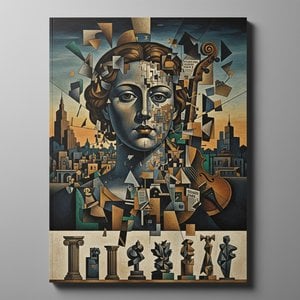
A Study in Solitude: The Soul of Picasso’s Seated Man
In the vast, transformative canon of Pablo Picasso, few works capture the quietude of the human spirit as poignantly as “Seated Man.” Painted around 1946, this masterpiece serves as a profound window into the artist's psyche during a period of immense global and personal transition. While many recognize Picasso for the explosive, fractured energy of his Cubist revolution, “Seated Man” offers a different kind of power—a heavy, contemplative stillness. The painting depicts a solitary figure lost in thought, his hands pressed firmly against his face in a gesture that feels both protective and deeply vulnerable. It is an image that transcends mere portraiture, inviting the viewer to step into a shared space of introspection and quiet mourning.
The technical execution of the piece is a masterclass in the use of form and restraint. Utilizing a muted, almost monochromatic palette, Picasso employs shades of grey and earth tones to strip away any superficial distractions. This deliberate lack of vibrant color forces the eye to focus on the structural integrity of the subject. Through his signature manipulation of geometric planes, the artist fractures the human anatomy, creating a rhythmic interplay of light and shadow that gives the figure a sculptural presence. The way the hands intersect with the face creates a complex topography of emotion, where every line and edge contributes to the overall sense of psychological weight.
The Echoes of History and Symbolism
To understand the emotional gravity of “Seated Man,” one must look toward the historical landscape of the mid-1940s. Emerging from the devastation of World War II, the world was grappling with unprecedented grief and existential uncertainty. Picasso himself was navigating a sea of personal upheaval, including the profound loss of his son, André. This atmosphere of collective and individual trauma is etched into the very texture of the canvas. The gesture of covering one's face becomes a powerful symbol; it is at once an act of concealment from a harsh reality and a manifestation of internal distress. There is a palpable sense of shame, sorrow, or perhaps a desperate need for sanctuary within the figure’s posture.
For the discerning collector or interior designer, this artwork offers more than just aesthetic beauty; it provides a focal point of profound intellectual and emotional depth. The ambiguity of the object held in the man's hand adds a layer of mystery that keeps the viewer engaged, sparking endless interpretations. Whether viewed as a reflection of post-war anxiety or a timeless meditation on loneliness, the painting possesses an enduring magnetism. It is a piece that does not merely decorate a room but commands it, demanding a moment of pause and reflection from all who encounter it.
Integrating a high-quality reproduction of this work into a curated space allows for the introduction of a sophisticated, somber elegance. Its ability to anchor a room with its heavy, thoughtful presence makes it an ideal choice for galleries, libraries, or modern living spaces where art is intended to provoke thought and inspire a sense of peace amidst the chaos of contemporary life.
Küsimused ja vastused
Milline on teose „Seated man“, autor Pablo Picasso värvitoit?
Teose "Seated man" värvipalett on koonuse方面 Clear Color Presence.
Kas „Seated man“, autor Pablo Picasso on tuntud teos?
Teose „Seated man“, autor Pablo Picasso populaarsusaste on Iconic. See klassifikatsioon peegeldab teose tuntust ja tunnustust.
Millised teemad teoses „Seated man“, autor Pablo Picasso esile tõelve?
Teemad, mis teoses „Seated man“, autor Pablo Picasso esinevad, hõlmavad human figure, emotional expression, facial gestures, yellow background, hand placement, contemplation, quiet moment. Koos need kokkuvõtavad teose sisu.



 Vaata sisu
 Lülita trükkitoodetele
 Jaga teost
 Jaga
Jaga
 Detailid
 Õppekate juhend

 Laadi alla
 Sarnased teosed
 Röntgenuuring
 Slaidietendus
 Statistika

 Loe lähemalt






































 Klaasivalik on saadaval ainult kuni 110 cm suuruses teostes