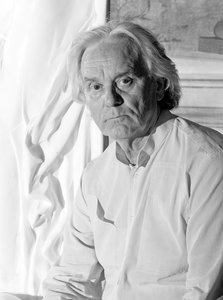
Mark Gertler: A Life Painted in Bold Color and Social Commentary
Born in London’s East End in 1891 to Polish-Jewish immigrant parents, Mark Gertler's life was a testament to resilience and artistic vision. Growing up amidst poverty and speaking only Yiddish until the age of eight profoundly shaped his perspective, imbuing his work with an earthy honesty and a deep connection to the working class—a theme that would become increasingly central to his art. His early education at the Slade School of Fine Art provided him with technical skills, but it was his exposure to Eastern European folk traditions and the turbulent social landscape of post-war Britain that truly ignited his artistic fire.
Gertler’s artistic journey began within the vibrant currents of Post-Impressionism, absorbing influences from artists like Van Gogh and Gauguin. However, he quickly forged a distinctive style characterized by intense color palettes—often dominated by fiery reds, oranges, and yellows—and a bold, almost frantic brushstroke. This approach wasn't merely decorative; it served as a visual language to convey emotion and social commentary. His early works, such as Merry-Go-Round (1916), already hinted at his subversive tendencies, depicting figures trapped in a dizzying, cyclical motion that can be interpreted as a critique of militarism and the anxieties of the era.
The Shadow of War and Social Engagement
The years leading up to World War II were particularly formative for Gertler. The war’s looming threat cast a long shadow over British society, and Gertler's art increasingly reflected this sense of unease and impending doom. His paintings became more overtly political, grappling with themes of social injustice, poverty, and the dehumanizing effects of conflict. He was deeply affected by the plight of Jewish communities facing persecution, and his work often explored the complexities of identity and belonging.
His 1938 painting, *The London Crowd*, exemplifies this shift. It’s a chaotic, almost overwhelming depiction of a bustling London street scene, filled with figures rendered in jarring colors and distorted perspectives. The painting isn't simply a record of urban life; it’s a visceral portrayal of the anxieties and uncertainties that gripped Britain as war approached. It reflects a growing sense of alienation and social fragmentation – themes he would continue to explore throughout his career.
A Unique Artistic Voice: Portraits and Still Lifes
Despite his engagement with broader social issues, Gertler remained committed to painting traditional subjects—portraits and still lifes—but always imbued them with a distinctly personal and often unsettling quality. His portraits weren’t idealized representations of beauty; they were raw, unflinching studies of character, capturing the weariness, resilience, and vulnerability of his sitters. His use of color and brushstroke intensified these emotional readings.
Similarly, his still lifes—often featuring everyday objects like fruit or flowers—were rendered with a heightened sense of drama and symbolism. He frequently employed unsettling juxtapositions and distorted perspectives to challenge conventional notions of beauty and representation. His 1922 painting, *Queen of Sheba*, is a prime example – the regal figure is depicted in a vibrant, almost hallucinatory manner, suggesting both power and vulnerability.
Legacy and Historical Significance
Mark Gertler’s tragically short life—he died prematurely at the age of 47 due to illness—left behind a relatively small but remarkably potent body of work. His paintings are not easily categorized; they defy simple labels, blending elements of Post-Impressionism, folk art, and social realism. His bold use of color, expressive brushwork, and unflinching engagement with difficult subjects have cemented his place as one of the most important British artists of the early 20th century.
Today, Gertler’s work is celebrated for its emotional intensity, its social commentary, and its unique artistic vision. He remains a vital voice in British art history, reminding us of the power of art to reflect and challenge the realities of its time. His legacy continues to inspire artists today with his willingness to confront difficult subjects and express them with uncompromising honesty.



 Vaata sisu
 Lülita trükkitoodetele
 Jaga teost
 Jaga
Jaga
 Detailid
 Guide
Guide

 Laadi alla
 Sarnased teosed
 Röntgenuuring
 Slaidietendus
 Statistika


 Loe lähemalt