The Continence of Scipio: A Roman Virtue Rendered in Oil
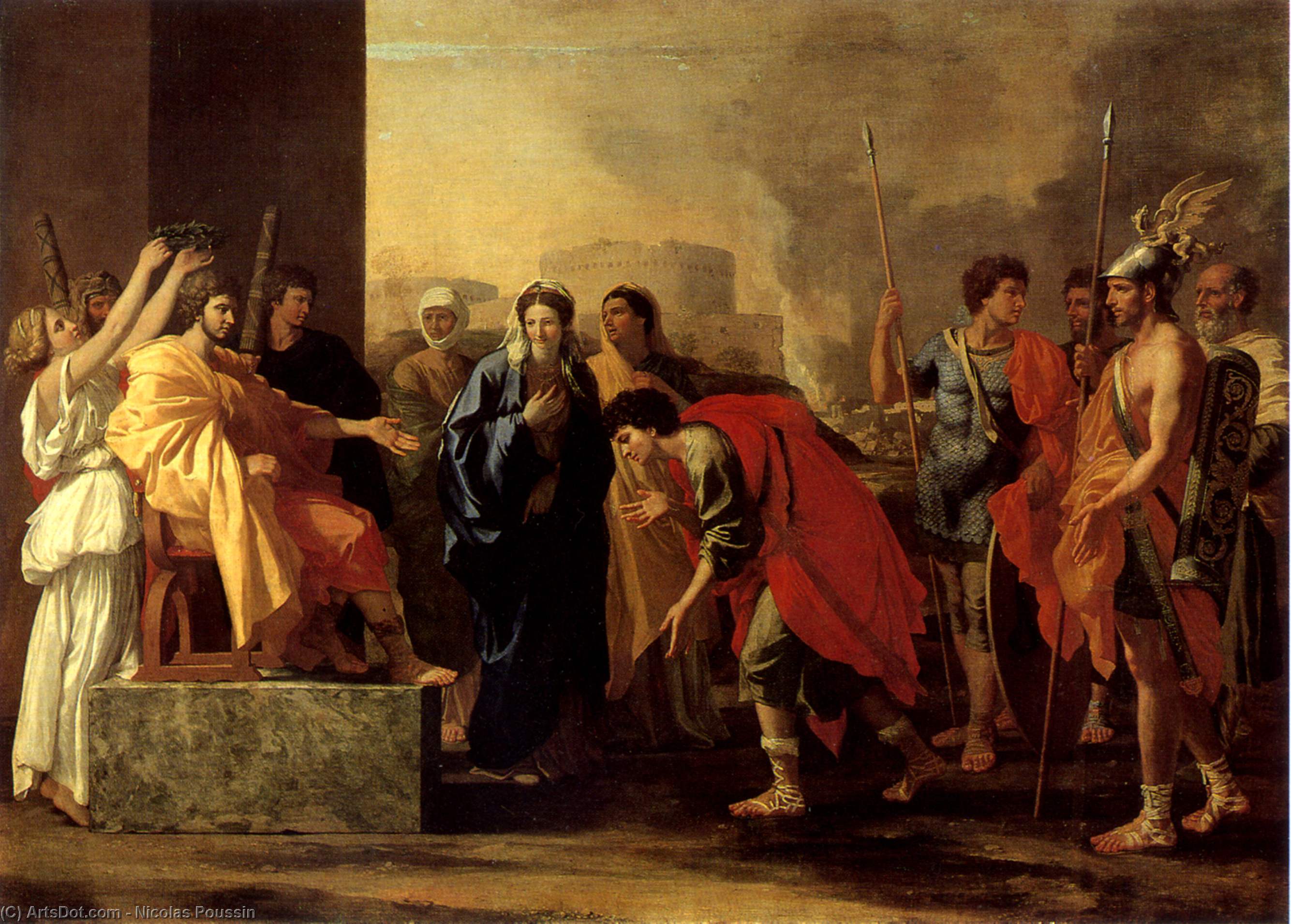
Nicolas Poussin’s “The Continence of Scipio” isn't merely a painting; it’s a carefully constructed tableau vivant, a distillation of classical ideals into a moment of profound moral reflection. Completed in 1640, this oil on canvas transports the viewer to a sun-drenched Roman courtyard, where the legendary general Scipio Africanus stands poised between restraint and generosity. Measuring 114 x 163 cm, the work possesses an intimate scale that draws us close, inviting contemplation of its intricate details and layered symbolism.
At first glance, the scene appears deceptively simple: a group of men gathered around Scipio, kneeling before him as he offers a beautiful captive woman back to her fiancé. However, Poussin’s genius lies in his ability to imbue this historical episode with universal significance. The painting isn't simply about returning a captured woman; it’s an allegory for self-control, virtue, and the triumph of reason over passion – values deeply rooted in Roman philosophy and admired throughout antiquity. The composition is meticulously balanced, reflecting Poussin’s mastery of classical principles of harmony and proportion. Notice how the figures are arranged to create a sense of depth and perspective, guiding our eye through the scene with subtle yet powerful gestures.
A Classical Narrative Illuminated
The story behind “The Continence of Scipio” is equally compelling. It’s based on an anecdote from Roman history detailing Scipio Africanus's act of returning a captive woman to her fiancé, demonstrating his moral integrity and self-discipline after years of warfare. This episode resonated powerfully with the Romans, who valued civic virtue and restraint above all else. Poussin expertly captures this spirit, portraying Scipio not as a conquering hero but as a man of profound wisdom and compassion. The inclusion of details like the helmeted soldier and the shield – remnants of past battles – subtly remind us of the context of Scipio’s actions, highlighting the sacrifices he made in pursuit of virtue.
The painting's setting is equally significant. The courtyard, bathed in warm sunlight, evokes a sense of tranquility and serenity. The presence of various objects—a chair, a bench, a dining table, and a bowl—adds to the realism of the scene, grounding it in everyday life while simultaneously elevating it to a symbolic level. The careful placement of these elements creates a dynamic interplay between the figures and their surroundings, inviting us to consider the relationships between them.
Technique and Artistic Flourish
Poussin’s technical skill is evident throughout “The Continence of Scipio.” His use of oil on canvas allows for incredible depth and richness of color, capturing the subtle nuances of light and shadow. The figures are rendered with remarkable detail, their faces conveying a range of emotions—from stoic restraint to gentle gratitude. Observe how Poussin masterfully employs *chiaroscuro*, using contrasting light and dark values to create a dramatic effect and draw attention to key elements within the composition. This technique not only adds depth but also contributes to the painting’s overall sense of realism and emotional intensity.
Furthermore, Poussin's meticulous attention to detail extends to the rendering of drapery—a hallmark of his style. The folds and textures of the clothing are depicted with astonishing accuracy, creating a sense of movement and volume. The subtle variations in color and light further enhance the realism of these figures, making them appear almost tangible.
Legacy and Inspiration
"The Continence of Scipio" stands as a cornerstone of Classicism, embodying the ideals of order, balance, and moral integrity that defined this artistic movement. It’s a testament to Poussin's ability to seamlessly blend classical themes with contemporary techniques, creating works that are both visually stunning and intellectually stimulating. Its influence can be seen in the work of countless artists who followed in his footsteps, including Jacques-Louis David and Paul Cézanne.
Today, reproductions of “The Continence of Scipio” continue to inspire art enthusiasts and historians alike. WahooArt offers meticulously crafted hand-painted reproductions that capture the essence of this masterpiece, allowing you to bring its timeless beauty into your home or office. Explore our collection today and experience the enduring power of Poussin’s vision.



 Tellimaks maali
 Saada
Saada Jaga
Jaga
 Detailid

 Laadi alla
 Sarnased teosed
 Röntgenuuring
 Slaidietendus


 Loe lähemalt






































 Klaasivalik on saadaval ainult suuruses kuni 110 cm