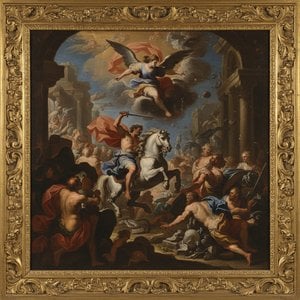
Nicolas Poussini Elu Klassikalise Vaimustuse Tõuses
Nicolas Poussin, kelle nimega seostub prantsuse barokkmaali hiilgus, oli hingelt sügavalt juurdunud Itaalia muldades. 1594. aasta juunis Normandias, Le Havre' lähedal Villersi külas sündinud kunstniku varased aastad on ümbritsetud saladusõlgustega, kuid need kujundasid kindlasti karjääri, mis sai oluliseks klassikalise traditsiooni vormijaks prantsuse kunstis. Kuigi ta õppis lühikest aega Pariisis 1610ndate alguses, omandades seal mõjutusi vähema nimega artistidelt, oli tema reisi Roomasse aastal 1624 see, mis tõepoolest sütas tema kunstilise saatuse. See ei olnud pelgalt geograafiline muutus; see oli sukeldumine antiikkultuuri südamesse, palverännak inspiratsiooni allikatele, mis defineerisid tema esteetilist visiooni. Poussini varased tööd olid märgitud venetsia päritolu meistrite nagu Titiani sensuaalsusega, kuid isegi neis varajastes teostes hakkas ilmuma kasvav korrapärasuse ja intellektuaalse jõu tunne – ettekujatus sellest stiilist, mida ta hiljem nii suurepäraselt täiendas.
Rooma Aastad: Klassikalise Ideali Valmistamine
Rooma osutus Poussini jaoks rohkem kui pelgalt stuudioks; see sai tema intellektuaalseks katlaks. Ta leidis end ümbritsetuna elava ringkonnaga teadlasi, arheolooge ja kunstnikke, eriti Cassiano dal Pozzo, kelle klassikalise antiikkultuuri sügav mõistmine mõjutas oluliselt Poussini lähenemist. Dal Pozzo pühendumus muinasjäänuste täpsele dokumenteerimisele sündis Poussinis sügava austuse ajalise täpsuse vastu ja soovi sisendada oma maalidele ajatu tunnet. Sel perioodil hülgas Poussin mõne kaasaja ülevat peegeldust, eelistades stiili, mida iseloomustas selgus, tasakaal ja ranget rõhutamist lineaarsele kompositsioonile. Ta õppis hoolikalt Raffaeli töid, omandades nende harmoonilised paigutused ja graatsilised vormid ning ammendab samal ajal inspiratsiooni muinasvaskidest ja kirjanduslikest allikatest nagu Ovidi *Muutuslood*. Tema maalidel hakkas ilmuma tegelasi klassikalisest ajaloost ja müütoloogiast, esitletuna mitte pelgalt dekoratiivsetena, vaid moraalse vooruse ja filosoofiliste ideaalide kehastusena.
Ajaloo, Müüdi ja Pühaduse Teemad
Poussini kunstiline toodang oli märkimisväärselt mitmekesine, kuid ühtlustatud tema pühendumisega nendele põhiprintsiipidele. Ta kujutas sageli stseene klassikalisest ajaloost – näiteks Germanicuse tragöölikust saatusest – millega kaasnes vankumatu välimus ja moraalse kaalu tunne. Tema müütilised maalijad ei olnud pelgalt tuttavate lugude ümbersõnad, vaid inimloomuse uurimisi, sageli koormatud allegorilise tähendusega. *Arcadia* sari, eriti ikooniline *Et in Arcadia ego*, sai tema filosoofilise sügavuse sümboliks, kutsuvalt kaasa mõtisklemist surematuse ja mälule jääva võimu üle. Peale ajaloo ja müüdi pöördus Poussin ka religioossete teemade poole, eriti *Seitse Sakramenti* sarjas – monumentaalne ettevõtmine, mis näitas nii tema teoloogilist arusaamist kui ka kompositsioonioskust. Isegi nende pühade stseenide puhul säilitas ta klassikalise enesehoiaku, vältides liigset emotsionaalsust ja eelistades pigem rahulikku ja vääriliku esitlust. Hiljem oma karjääri jooksul said laialdased maastikud üha olulisemaks, segades realismi idealiseeritud vormidega, et luua vaateid, mis ärgutasid harmooniat ja rahu.
Püsiv Pärand: Prantsuse Kunsti Kujundamine
Vaatamata sellele, et ta veetis suurema osa oma karjäärist väljaspool riiki, oli Nicolas Poussini mõju prantsuse kunstile tohutu. Ta pöördus lühikeseks ajaks Pariisi aastal 1640 kardinal Richelieu palvel, nimetatuna kuningas esikunstnikuks, kuid leidis end peagi ärahoitud kohtuelu nõudmistest ja intriigidest. Ta naasis pea kohe Rooma, kus jätkas maalimist kuni oma surmani aastal 1665. Tema pühendumus klassikalistele põhimõtetele aitas luua standardi kunstniku hariduse ja praktikate jaoks Prantsusmaal, mõjutades põlveid järgijaid. Ta sai oluliseks tegelaseks Académie Royale de Peinture et de Sculpture'is, kinnitades oma positsiooni prantsuse klassitsismi nurgakivina. Sellised kunstnikud nagu Jacques-Louis David ja Paul Cézanne tunnistasid avalikult oma võlgi Poussini rangest lähenemisviisist ja intellektuaalsest sügavusest. Tema pärand ulatub kaugemale pelgupa stiliseerimisest; see esindab pühendumust korrale, selgususele ja klassikaliste ideaalide püsivale jõule – tunnistus kunstnikust, kes püüdis mitte ainult maailma kujutada, vaid tõsta seda üles mõistuse ja ilu läbi.
- Tuntud teosed: *Germanicuse surm*, *Seitse Sakramenti sari*, *Rooma tee*, *Orion pimestatud päikese otsingul*, *Aastaajad*.
- Peamised tunnused: Klassikaline kompositsioon, lineaarne joonitus, ajaloolised ja müütilised teemad, rahulikud maastikud.



 Vaata sisu
 Telli käsitsi maalitud reproduktsioon
 Jaga teost
 Jaga
Jaga
 Detailid
 Õppekate juhend

 Laadi alla
 Sarnased teosed
 Röntgenuuring
 Slaidietendus
 Statistika


 Loe lähemalt






































 Klaasivalik on saadaval ainult kuni 110 cm suuruses teostes