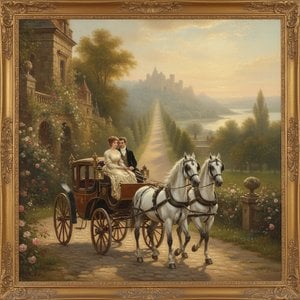
Marcelo Grassmann de Oliveira’s ‘Cavalos’: A Symphony of Movement and Symbol
Marcelo Grassmann de Oliveira’s “Cavalos” (1944) stands as a testament to Brazilian Expressionism, capturing not merely an image of a horse in motion but a visceral embodiment of energy, struggle, and primal instinct. Executed in monochrome ink or charcoal on paper—a deliberate choice that amplifies the artwork's textural qualities—the drawing immediately draws the viewer into its turbulent landscape.
Influences and Artistic Vision
Oliveira’s artistic trajectory was profoundly shaped by figures like Alfred Kubin, an Austrian Expressionist known for his unsettling dreamscapes, and prominent Brazilian engravers Oswaldo Goeldi and Livio Abramo. These influences instilled in him a fascination with symbolic imagery and recurring motifs—knights battling demons, maidens facing peril, death itself—often depicted as a formidable adversary. This preoccupation with archetypal themes speaks to Oliveira’s desire to explore the depths of human experience through visual storytelling.
Technique and Style: Embracing Raw Emotion
The artist's technique is characterized by loose, expressive lines that convey an immediacy rarely found in academic art. Smudging and layering contribute significantly to the artwork’s surface texture, mirroring the dynamism of the subject matter—a horse galloping with ferocious determination. Oliveira eschews meticulous detail, prioritizing emotional impact over photographic realism; instead, he employs gestural marks to capture the essence of movement and convey a palpable sense of urgency.
Symbolism Within the Image
"Cavalos" transcends its depiction of a horse and rider, functioning as a powerful symbol of power, speed, and perhaps even defiance. The swirling lines suggest a confrontation with an unseen force—a battle for survival—reflecting anxieties prevalent in the post-war era. Oliveira’s masterful use of monochrome enhances the artwork's dramatic effect, stripping away superfluous color to focus solely on form and texture, thereby intensifying its emotional resonance.
Concluding Impression: A Legacy of Expression
Oliveira’s “Cavalos” remains a captivating example of Brazilian Expressionism. Its raw energy, evocative symbolism, and masterful technique continue to inspire admiration among art connoisseurs and collectors alike. The drawing's enduring appeal lies in its ability to communicate profound emotions—fear, courage, and the relentless pursuit of vitality—a timeless achievement that cements Oliveira’s place as a pivotal figure in Brazilian artistic history.
Küsimused ja vastused
Milline suurus on soovituslik teosele "Cavalos" ruumis Living Room?
Soovitatav kombinatsioon teosele „Cavalos“, autor Marcelo Grassmann De Oliveira: Large trükis Living Room-s.
Kas on õpilaste jaoks olemas infoleht teose „Cavalos“, autor Marcelo Grassmann De Oliveira kohta?
Juhend teose "Cavalos" kohta on selle Juhend leht – trükkiv infoleht, mis näitab teost koos selle pealkirja, autori ja allika ning identifiekatsioonitabeliga (kunstnik, kuupäevad, tehnika, algne suurus, kollektsioon).
Millises tehnikas on teos „Cavalos“, autor Marcelo Grassmann De Oliveira valmistatud?
Marcelo Grassmann De Oliveira kasutas teose "Cavalos" loomisel Acrylic On Canvas tehnikat. See tehnika määrab originaalteose materjalilise olemuse.



 Vaata sisu
 Telli käsitsi maalitud reproduktsioon
 Jaga teost
 Jaga
Jaga
 Detailid
 Õppekate juhend

 Laadi alla
 Sarnased teosed
 Röntgenuuring
 Slaidietendus
 Statistika


 Loe lähemalt






































 Klaasivalik on saadaval ainult kuni 110 cm suuruses teostes