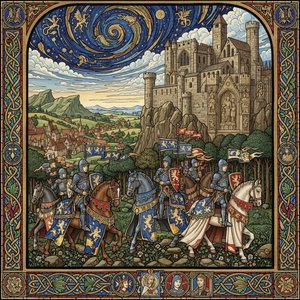
Vaata sisu Vaata AR-eelvaadet Telli käsitsi maalitud reproduktsioon Ülemineku digitaalse pildi müügi kanalisse Jaga teost
Detailid Õppekate juhend Lisa lemmikutesse Laadi alla Sarnased teosed Röntgenuuring Slaidietendus Statistika

Seal matrix

Ancient seal matrix from Prussia (1600). Intricate Latin text & design in worn wax impression. A unique historical artifact – explore medieval artistry!

Local Workshop, Prussia: German ceramicist specializing in medieval tiles & vessels. Explore intricate designs – coats of arms, rosettes, concentric circles – showcasing Warmian artistry.

Sellel lehel kuvatav kunstiteos on kaitstud autoriõigusega, mis tähendab, et meil ei ole seaduslikku õigust luua või müüa identset reproduktsiooni. Seda kaitset rakendatakse rahvusvaheliste kokkulepete alusel, nagu näiteks Berne konventsioon ning riiklike seadustega, sealhulgas nendega, mida on sätestatud USA autoriõiguse seadus – 17. peatükk.

See meetod järgib täielikult autoriõiguse reegleid, kuna see ei põhine kaitstud kunstiteose kopeerimisel või dupliteerimisel. Selle asemel on tegu loova reinterpreetatsiooniga – uue maaldisega, mis on algteosest inspireeritud, kuid ei ole sellest identiline.

Giclée / Kunstiprint

Muuseumikvaliteediga giclée- või kangasprint kiire tootmisega ja paindlikud viimistlusvõimalused. ( Telli käsitsi maalitud reproduktsioon Ülemineku digitaalse pildi müügi kanalisse)

Corner sample of the P118B picture frame: vormitud polüstüreen, 5 cm wide and 3 cm thick
P118B €10
Corner sample of the P118H picture frame: vormitud polüstüreen, 5 cm wide and 3 cm thick
P118H €10
Corner sample of the P118W picture frame: vormitud polüstüreen, 5 cm wide and 3 cm thick
P118W €10
Corner sample of the P438Z picture frame: vormitud polüstüreen, 5.5 cm wide and 3.5 cm thick
P438Z €10
Corner sample of the P508JH picture frame: vormitud polüstüreen, 7 cm wide and 3.5 cm thick
P508JH €12
Corner sample of the P508YH picture frame: vormitud polüstüreen, 7 cm wide and 3.5 cm thick
P508YH €12
Corner sample of the P805H picture frame: vormitud polüstüreen, 5 cm wide and 3.5 cm thick
P805H €10
Corner sample of the P805Z picture frame: vormitud polüstüreen, 5 cm wide and 3.5 cm thick
P805Z €10
Corner sample of the P919BZ picture frame: vormitud polüstüreen, 7 cm wide and 3.5 cm thick
P919BZ €10
Corner sample of the P919G picture frame: vormitud polüstüreen, 7 cm wide and 3.5 cm thick
P919G €10
Corner sample of the P919XJ picture frame: vormitud polüstüreen, 7 cm wide and 3.5 cm thick
P919XJ €10
Corner sample of the P959ZH picture frame: vormitud polüstüreen, 5 cm wide and 3 cm thick
P959ZH €10
Corner sample of the P968JZ picture frame: vormitud polüstüreen, 6 cm wide and 4 cm thick
P968JZ €12
Corner sample of the W106C picture frame: tammepuu või massivpuit, 5 cm wide and 3 cm thick
W106C €8
Corner sample of the W218G picture frame: tammepuu või massivpuit, 5 cm wide and 3 cm thick
W218G €10
Corner sample of the W218JH picture frame: tammepuu või massivpuit, 5 cm wide and 3 cm thick
W218JH €8
Corner sample of the W218Y picture frame: tammepuu või massivpuit, 5 cm wide and 3 cm thick
W218Y €10
Corner sample of the W307PJ picture frame: tammepuu või massivpuit, 6 cm wide and 3 cm thick
W307PJ €10
Corner sample of the W316G picture frame: tammepuu või massivpuit, 6 cm wide and 3 cm thick
W316G €10
Corner sample of the W316PJ picture frame: tammepuu või massivpuit, 6 cm wide and 3 cm thick
W316PJ €8
Corner sample of the W316Y picture frame: tammepuu või massivpuit, 6 cm wide and 3 cm thick
W316Y €10
Corner sample of the W398PJ picture frame: tammepuu või massivpuit, 5 cm wide and 3 cm thick
W398PJ €8
Corner sample of the W4111J picture frame: tammepuu või massivpuit, 6.5 cm wide and 3.5 cm thick
W4111J €10
Corner sample of the W500HY picture frame: tammepuu või massivpuit, 7 cm wide and 5 cm thick
W500HY €15
Corner sample of the W500JH picture frame: tammepuu või massivpuit, 7 cm wide and 5 cm thick
W500JH €15
Corner sample of the W692G picture frame: tammepuu või massivpuit, 8 cm wide and 4 cm thick
W692G €12
Corner sample of the W849H picture frame: tammepuu või massivpuit, 5 cm wide and 3 cm thick
W849H €8
Corner sample of the W940BG picture frame: tammepuu või massivpuit, 7.5 cm wide and 4.5 cm thick
W940BG €15
Corner sample of the W953PJ picture frame: tammepuu või massivpuit, 6 cm wide and 3.5 cm thick
W953PJ €8

Standardne suurus
kohandatud
CM
INCH

Vali meie eelmääratud suurused, mis vastavad teose algupärastele proportsioonidele.

laius
kõrgus

Sisestage vajalik laius ja kõrgus, et see sobiks teie raamile või seinale. Trükki saab ainult lõigata, seda ei saa kunagi pildist suuremaks teha, seega ka differentse vormiga suurus kaotab osa pildist. Enne trükkimist saadame teile kinnitamiseks digitaalse näidisprojektsiooni. Sellel lehel näidatud pilt ei kujuta reaalset lõiget — seda näitab ainult näidisprojekttsioon.

Ülemaailmne tarne () 2 nädala jooksul, tavalise 4/5 nädala asemel. (24 oktoober)

Tasuta ekspresssaatmine üle maailma
Kõrgekvaliteediline lina-kangastest muld
Täielik transpordikindlustus
Tollimaksude tagastamise garantii
Värvitoime täpsuse garantii
100 päeva tagastusõigus (ainult defektide korral)
100% raha tagasi garantii
Hulgusoodustus

Kogu summa

€ 60

Seal matrix

Giclée / Kunstiprint

Reproduktsiooni mõõtmed

-

Lõppsumma

€ 60


Kunstniku elulugu

A Legacy of Medieval Craftsmanship: The Soul of Prussian Ceramics

To wander through the annals of fourteenth-century artistry is to encounter the silent, enduring echoes of the Local Workshop, Prussia. This era of craftsmanship, rooted in the fertile cultural landscapes of Brandenburg and Silesia, represents a profound moment in the history of medieval ceramic art. While the biographical identity of the individual artisan remains shrouded in the mists of time—documented only through the tactile reality of surviving vessels—their presence is felt in every meticulously fired edge and glazed surface. This workshop was not merely a site of production but a crucible of cultural heritage, where the emerging traditions of Warmian pottery began to coalesce into a distinct visual language that would define the region for generations.

The origins of this artistic lineage are deeply intertwined with the socio-political shifts of the 1360s. Born likely within the artisanal heartlands of Brandenburg under the burgeoning influence of the Hohenzollern rule, the creator of these works was a product of an era defined by both movement and stability. It is easy to imagine a formative life spent amidst the rhythmic sounds of the potter's wheel and the intense heat of the kiln, learning the delicate alchemy of glaze formulation through generations of inherited wisdom. The aesthetic vision of this period was heavily informed by the soaring lines of Gothic architecture and the intricate, symbolic narratives found in illuminated manuscripts, all of which infused the ceramic medium with a sense of sacred geometry and structural grandeur.

The Language of Heraldry and Geometric Precision

The true brilliance of the Prussian workshop lies in its ability to transform utilitarian objects into powerful instruments of social communication. The artist’s technique was characterized by an unwavering commitment to geometric precision, a skill that allowed for the seamless integration of complex heraldic emblems onto the curved surfaces of jugs and bowls. These were not merely decorative flourishes; they were the visual shorthand of a hierarchical society. Through the masterful application of coats of arms, rosettes, and concentric circles, the ceramicist captured the very essence of noble lineage and territorial allegiance.

Every vessel served as a canvas for identity, where:

  • Heraldic Emblems functioned as permanent markers of political and familial pride.
  • Rosette Motifs provided a rhythmic, organic counterpoint to the rigid lines of heraldry.
  • Concentric Circles offered a sense of cosmic order and mathematical harmony.
This sophisticated interplay between pattern and symbol ensured that even the most humble clay pot could carry the weight of historical significance, making the workshop's output an essential component of the medieval Prussian landscape.

Historical Significance and the Endurance of Form

The impact of this local workshop extends far beyond the boundaries of the fourteenth century. By mastering the technical challenges of kiln firing and the chemical complexities of glazes, these artisans laid the groundwork for a tradition of German ceramic excellence that would persist through the centuries. The works produced—ranging from foundation offering clay pots to intricately decorated vessel tiles—stand as archaeological witnesses to a time when art was inseparable from daily life and political structure. Even as the borders of Prussia shifted and the medieval world transitioned into the Renaissance, the fundamental motifs established by this workshop remained embedded in the cultural DNA of the region.

Today, we look upon these fragments of the past not just as relics, but as a testament to the human desire to leave a permanent mark upon the earth. The Local Workshop, Prussia reminds us that true artistry lies in the ability to marry technical mastery with profound symbolic meaning, creating objects that are at once functional and eternal. Through the preservation of these ceramic treasures, the spirit of the medieval artisan continues to speak, offering a window into a world where every curve of a bowl and every stroke of a glaze told a story of belonging, power, and enduring beauty.

Lühikest infot

  • Full Name: Local Workshop
  • Nationality: German
  • Place Of Birth: Germany
  • Notable Artworks:
    • Coat of Arms Tile
    • Rosette Motif Tile
  • Artistic Movement Or Style: Medieval Ceramics
  • Artists Who Influenced This Artist: Adolf von Menzel
  • Artists Or Movements Influenced By This Artist: Santa's workshop