Vaata sisu Vaata AR-eelvaadet Telli käsitsi maalitud reproduktsioon Ülemineku digitaalse pildi müügi kanalisse Jaga teost
Detailid Õppekate juhend Lisa lemmikutesse Laadi alla Sarnased teosed Röntgenuuring Slaidietendus Statistika

En Barque

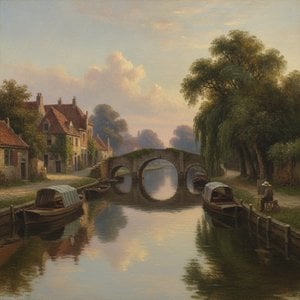
A serene Post-Impressionist scene of a mother and child in a boat by Henri Lebasque captures the tranquil beauty of 1897 everyday life, inviting you to bring this intimate moment of light into your home.

Henri Lebasque oli vaikne ja õnnelik Postimpressionistlik kunstnik, kes jälgis Pariisi ööelu ja boheemliku kultuuri. Tema värvilised maalid, nagu 'La Cigarette' ja 'Una joven en el bosque', on maailmas tuntud!

Giclée / Kunstiprint

Muuseumikvaliteediga giclée- või kangasprint kiire tootmisega ja paindlikud viimistlusvõimalused. ( Telli käsitsi maalitud reproduktsioon Ülemineku digitaalse pildi müügi kanalisse)

Corner sample of the P118B picture frame: vormitud polüstüreen, 5 cm wide and 3 cm thick
P118B €10
Corner sample of the P118H picture frame: vormitud polüstüreen, 5 cm wide and 3 cm thick
P118H €10
Corner sample of the P118W picture frame: vormitud polüstüreen, 5 cm wide and 3 cm thick
P118W €10
Corner sample of the P438Z picture frame: vormitud polüstüreen, 5.5 cm wide and 3.5 cm thick
P438Z €10
Corner sample of the P508JH picture frame: vormitud polüstüreen, 7 cm wide and 3.5 cm thick
P508JH €12
Corner sample of the P508YH picture frame: vormitud polüstüreen, 7 cm wide and 3.5 cm thick
P508YH €12
Corner sample of the P805H picture frame: vormitud polüstüreen, 5 cm wide and 3.5 cm thick
P805H €10
Corner sample of the P805Z picture frame: vormitud polüstüreen, 5 cm wide and 3.5 cm thick
P805Z €10
Corner sample of the P919BZ picture frame: vormitud polüstüreen, 7 cm wide and 3.5 cm thick
P919BZ €10
Corner sample of the P919G picture frame: vormitud polüstüreen, 7 cm wide and 3.5 cm thick
P919G €10
Corner sample of the P919XJ picture frame: vormitud polüstüreen, 7 cm wide and 3.5 cm thick
P919XJ €10
Corner sample of the P959ZH picture frame: vormitud polüstüreen, 5 cm wide and 3 cm thick
P959ZH €10
Corner sample of the P968JZ picture frame: vormitud polüstüreen, 6 cm wide and 4 cm thick
P968JZ €12
Corner sample of the W106C picture frame: tammepuu või massivpuit, 5 cm wide and 3 cm thick
W106C €8
Corner sample of the W218G picture frame: tammepuu või massivpuit, 5 cm wide and 3 cm thick
W218G €10
Corner sample of the W218JH picture frame: tammepuu või massivpuit, 5 cm wide and 3 cm thick
W218JH €8
Corner sample of the W218Y picture frame: tammepuu või massivpuit, 5 cm wide and 3 cm thick
W218Y €10
Corner sample of the W307PJ picture frame: tammepuu või massivpuit, 6 cm wide and 3 cm thick
W307PJ €10
Corner sample of the W316G picture frame: tammepuu või massivpuit, 6 cm wide and 3 cm thick
W316G €10
Corner sample of the W316PJ picture frame: tammepuu või massivpuit, 6 cm wide and 3 cm thick
W316PJ €8
Corner sample of the W316Y picture frame: tammepuu või massivpuit, 6 cm wide and 3 cm thick
W316Y €10
Corner sample of the W398PJ picture frame: tammepuu või massivpuit, 5 cm wide and 3 cm thick
W398PJ €8
Corner sample of the W4111J picture frame: tammepuu või massivpuit, 6.5 cm wide and 3.5 cm thick
W4111J €10
Corner sample of the W500HY picture frame: tammepuu või massivpuit, 7 cm wide and 5 cm thick
W500HY €15
Corner sample of the W500JH picture frame: tammepuu või massivpuit, 7 cm wide and 5 cm thick
W500JH €15
Corner sample of the W692G picture frame: tammepuu või massivpuit, 8 cm wide and 4 cm thick
W692G €12
Corner sample of the W849H picture frame: tammepuu või massivpuit, 5 cm wide and 3 cm thick
W849H €8
Corner sample of the W940BG picture frame: tammepuu või massivpuit, 7.5 cm wide and 4.5 cm thick
W940BG €15
Corner sample of the W953PJ picture frame: tammepuu või massivpuit, 6 cm wide and 3.5 cm thick
W953PJ €8

Standardne suurus
kohandatud
CM
INCH

Vali meie eelmääratud suurused, mis vastavad teose algupärastele proportsioonidele.

laius
kõrgus

Sisestage vajalik laius ja kõrgus, et see sobiks teie raamile või seinale. Trükki saab ainult lõigata, seda ei saa kunagi pildist suuremaks teha, seega ka differentse vormiga suurus kaotab osa pildist. Enne trükkimist saadame teile kinnitamiseks digitaalse näidisprojektsiooni. Sellel lehel näidatud pilt ei kujuta reaalset lõiget — seda näitab ainult näidisprojekttsioon.

Ülemaailmne tarne () 2 nädala jooksul, tavalise 4/5 nädala asemel. (24 oktoober)

Tasuta ekspresssaatmine üle maailma
Kõrgekvaliteediline lina-kangastest muld
Täielik transpordikindlustus
Tollimaksude tagastamise garantii
Värvitoime täpsuse garantii
100 päeva tagastusõigus (ainult defektide korral)
100% raha tagasi garantii
Hulgusoodustus

Kogu summa

€ 60

En Barque

Giclée / Kunstiprint

Reproduktsiooni mõõtmed

-

Lõppsumma

€ 60

Teave teose kohta

  • Title: En Barque
  • Artist: Henri Lebasque
  • Dimensions: 20 x 18 cm
  • Medium: Oil on panel
  • Influences: Post-Impressionism Art Movement

A Serene Voyage Through Light and Tenderness

In the delicate dance of light and water, Henri Lebasque’s 1897 masterpiece, En Barque, offers a profound window into the quiet joys of human connection. This intimate oil on panel captures a fleeting, sun-drenched moment where time seems to suspend itself upon the gentle ripples of a river or lake. At the heart of the composition, a woman cradles her child within the modest confines of a boat, her presence anchored by a charming hat that lends an air of leisurely elegance to the scene. The painting does more than merely depict a landscape; it invites the viewer into a sanctuary of maternal peace, where the soft movement of the vessel mirrors the rhythmic breathing of a sleeping infant.

The technical mastery of Lebasque is evident in his ability to manipulate the medium to evoke atmosphere. As a practitioner deeply influenced by the Post-Impressionist movement, Lebasque moves beyond the purely naturalistic observations of his predecessors. Instead, he employs a palette that celebrates the luminosity of the French countryside, using subtle transitions of color to suggest the shimmering reflection of light on the water's surface. The brushwork, while controlled, possesses a vitality that breathes life into the figures, ensuring that the mother and child are not merely subjects, but the emotional pulse of the entire work. This delicate balance between form and feeling makes the piece an exquisite example of how color can be used to communicate warmth and security.

The Poetic Resonance of Post-Impressionist Intimacy

To understand En Barque is to understand the spirit of late 19th-century France, a period where artists sought to capture the emotional essence of everyday life. While contemporaries like Vincent van Gogh or Pablo Picasso were exploring more radical distortions of form, Lebasque found his strength in the "painter of joy" tradition, focusing on the sublime beauty found in domestic tranquility. The presence of a solitary figure in the background, detached from the central embrace, serves as a brilliant compositional device; it provides depth to the environment and emphasizes the private, sacred bubble inhabited by the mother and child. This layering of space creates a sense of voyeuristic tenderness, as if we are witnessing a precious, unrepeatable moment of grace.

For the discerning collector or interior designer, this artwork serves as a sophisticated focal point that radiates tranquility. Its small-scale intimacy—measuring just 20 x 18 cm—belies its immense emotional weight, making it an ideal selection for curated collections or as a soulful accent in a serene living space. A high-quality reproduction of this piece brings not just the aesthetic of the Belle Époque into a home, but a lasting sense of calm. It is a work that rewards prolonged contemplation, offering a rhythmic escape into a world where the only movement is the gentle sway of a boat and the only sound is the soft whisper of the water against the wood.

Küsimused ja vastused

Kust saan osta teose „En Barque“, autor Henri Lebasque trükki?

Teose „En Barque“, autor Henri Lebasque trüket saab tellida otse selle Kõlblik kunstutrüki kvaliteetne trükis lehelt: kunstiprint puuvillalõikel}}^{\text{canvas}}$ või arhiveeritaval kangaspaberil.

Kust koht sellest teosest "En Barque" on Henri Lebasque laupikus?

"En Barque" kuulub Henri Lebasque Post-Impressionism perioodi teosetele, mille tuntud teemad hõlmavad post-impressionism influence, everyday life scenes, capturing joy and light, intimate human connection.

Millises koduse ruumis sobib reproduktsioon teosest "En Barque" hästi kohale?

Teose "En Barque" reproduktsiooni sobivad hästi Bedroom-i.


Kunstniku elulugu

A Painter of Joy and Light: The Life and Art of Henri Lebasque

Henri Lebasque, a name perhaps less immediately recognized than some of his Post-Impressionist contemporaries, nevertheless occupies a significant place in the artistic landscape of early 20th-century France. Born in Champigné, Maine-et-Loire, in 1865, Lebasque’s journey toward becoming a celebrated painter was one marked by diligent study, evolving influences, and an unwavering commitment to capturing beauty in everyday life. His early education at the École régionale des beaux-arts d'Angers provided a foundational grounding, but it was his move to Paris in 1886 that truly ignited his artistic development. There, under the tutelage of Léon Bonnat and through assisting Ferdinand Humbert with decorative murals at the Panthéon, he honed his technical skills while immersing himself in the vibrant Parisian art scene. This period proved crucial, bringing him into contact with pivotal figures like Camille Pissarro and Auguste Renoir, whose emphasis on light and color would profoundly shape his aesthetic sensibilities.

Embracing Intimacy: Influences and Artistic Development

Lebasque’s artistic trajectory wasn't solely defined by the established masters; it was equally influenced by a younger generation of artists pushing the boundaries of painting. His association with Les Nabis, particularly Édouard Vuillard and Pierre Bonnard, proved transformative. These Intimist painters prioritized domestic scenes and intimate moments, fostering in Lebasque a similar inclination toward capturing the quiet poetry of everyday existence. The Nabis’ emphasis on flattened forms, decorative patterns, and subtle color harmonies resonated deeply with his own artistic inclinations. Simultaneously, exposure to the theories of Georges Seurat and Paul Signac introduced him to the principles of Chromoluminarism – the scientific application of complementary colors to create luminous effects. This knowledge became a cornerstone of his technique, allowing him to imbue his canvases with an extraordinary vibrancy and sense of light. He wasn’t merely replicating what he saw; he was interpreting it through a lens of color and emotion, creating scenes that felt both familiar and dreamlike. Lebasque's artistic vision centered around portraying the serene beauty of domestic life and landscapes bathed in sunlight—themes that mirrored the sensibilities of Les Nabis and resonated with his own profound appreciation for visual harmony. His meticulous technique involved layering thin, translucent paint to achieve a luminous quality characteristic of Post-Impressionism, skillfully utilizing complementary color pairings to heighten visual impact while maintaining an overall sense of balance. Works like *Rest on the Banks of the Yaudet* exemplify this mastery, capturing the tranquility of nature with delicate brushstrokes and subtle tonal variations.

A Palette of Serenity: Themes and Techniques

The hallmark of Lebasque's work lies in its tranquil atmosphere and harmonious palette—a deliberate departure from the dramatic narratives favored by earlier artistic movements. He sought inspiration in simple pleasures—family portraits, leisurely moments spent outdoors—translating these experiences onto canvas with remarkable sensitivity. His paintings eschewed grand historical pronouncements or theatrical displays of emotion; instead, they offered glimpses into intimate domesticity and the understated splendor of the natural world. Madame Lebasque and Her Daughters stands as a testament to his ability to convey tenderness and grace through masterful composition and luminous color—a hallmark of Lebasque’s distinctive style. His technique involved building up layers of thin, translucent paint – a method that allowed for subtle tonal shifts and maximized the impact of complementary color pairings. This approach resulted in canvases imbued with an ethereal glow, reflecting Lebasque's unwavering dedication to capturing light and color with unparalleled precision. He skillfully employed techniques honed during his formative years at the École régionale des beaux-arts d’Angers and further refined through collaborations with prominent artists like Camille Pissarro and Auguste Renoir—artists who championed a similar aesthetic philosophy centered on observation and emotional resonance.

Legacy and Recognition: A Lasting Impression

Throughout his prolific career, Lebasque achieved considerable acclaim, participating in prestigious exhibitions such as the Salon d’Automne – which he helped establish alongside Henri Matisse – and the Salon des Indépendants. These venues provided a platform for showcasing his innovative approach to painting and solidified his reputation as a visionary artist ahead of his time. Furthermore, commissions from influential patrons—including decorative projects undertaken at the Champs-Élysées theatre and on transatlantic liners—demonstrated Lebasque’s versatility and cemented his place within the cultural landscape of Belle Époque Paris. His enduring artistic legacy is evidenced by the presence of numerous masterpieces in prominent museum collections across Europe – including the Musée d’Orsay in Paris, the Petit Palais in Geneva, and museums in Lille and Nantes – guaranteeing that Henri Lebasque's vision continues to inspire generations of artists and viewers alike.
Henri Lebasque

Henri Lebasque

1865 - 1937 , Prantsuse

Lühikest infot

  • Artistic Movement Or Style: Post-Impressionism
  • Artists Who Influenced This Artist:
    • Camille Pissarro
    • Auguste Renoir
  • Date Of Birth: September 25, 1865
  • Date Of Death: August 7, 1937
  • Full Name: Henri Lebasque
  • Nationality: French
  • Notable Artworks:
    • La cigarette
    • Una joven en el bosque
  • Place Of Birth: Champigné, France
Avastage teoseid, mis on koondatud teemade, stiilide ja omaduste kaupa.