Vaata sisu Vaata AR-eelvaadet Lülita trükkitoodetele Telli käsitsi maalitud reproduktsioon Jaga teost
Detailid Juhend Lisa lemmikutesse Laadi alla Sarnased teosed Röntgenuuring Slaidietendus Statistika

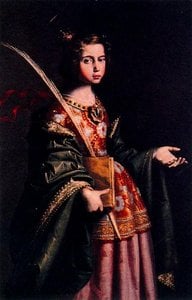
Santa Isabel de Turingia

Dramatic chiaroscuro and regal piety define Francisco de Zurbarán’s Spanish Baroque portrait of Santa Isabel de Turingia, a profound masterpiece inviting you to discover its spiritual beauty for your collection.

Francisco de Zurbarán oli hispaania barokkmaalikunstnik, kes tunnetaan erityisesti rukoilijoiden ja pyhimysten maalauksista sekä vaikuttavasta varjoisalla valolla koristellusta tyylistä – "Hispaania Caravaggio"!

Ostke kõrglahutusel ja täiustatud digitaalne pilt, mis on oluliselt parem kui veebilehel näidatud eelvaade.

Iga fail on meie spetsialistide poolt hoolikalt ette valmistatud, kasutades kaasaegseid tööriistu ja professionaalset käsitsi retušeerimist. Tagame, et igal pildil on erakordne selgus, täpne värvitäpsus ja peen detail.

Lõplik fail saadetakse e-posti teel 72 tunni jooksul ning on optimeeritud koheseks kasutamiseks professionaalsetes, toimetuslikes ja trüki keskkondades. See on sama kvaliteet, mida usaldavad tipptasemel disainistuudiod, kirjastused ja galeriid.

Digitaalne pilt

Laadi alla kõrge resolutsiooniga fail isiklikuks vaatamiseks, trükkimiseks ja loomingulisteks projektideks. ( Lülita trükkitoodetele Telli käsitsi maalitud reproduktsioon)

Kogu summa

$ 24,90

Sisse kuulub iga digitaalse pildi tellimusega

Professionaalne digitaalne kohaletoimetamine, garanteeritud

Valides WahooArt.com, ei saa sa lihtsalt pilti – saad professionaalselt parandatud digitaalse teose, mida on valmistatud täpsusega ja mis on toetatud rahuldamatusgarantiiga. Siin on kõik, mis sinu tellimusega automaatselt kaasneb:

shipping_icon
Kiire e-posti edastus

Teie kõrge resolutsiooniga digitaalne pildifail saadetakse teile e-posti 72 tunni jooksul pärast tellimist – kohe kasutamiseks valmis.

canvas_icon
Tehisintellektiga täiustatud digitaalne fail

Teie teos on professionaalselt optimeeritud arenenud tehisintellekti tööriistade ja käsitsi redigeerimise abil, tagades maksimaalse detailitaseme, selguse ja värvitäpsuse.

insurance_icon
Tasuta eluaegne uuesti saatmine

Kas kustutasid faili kogukalu unustamisel või kustutamisel? Puudub mure – saad selle uuesti igal ajal ilma lisatasuta.

tax_icon
Puuduvad importimaksud – alati

Nautige oma teoseid koheselt ilma tolli-, maksude või tarnimaskuludeta – digiletchargused on alati maksuvabadud.

color_icon
Värvitäpsuse garantii

Me tagame, et teie digitaalne pilt kajastaks originaali värve professionaalsete tööriistade ja värvihalduse abil võimalikult täpselt.

return_icon
100 päeva rahuldamatuse garantii

Kui te ei ole oma digitaalse pildi eest rahul, siis me parandame seda või tagastame 100% summast 100 päeva jooksul – küsimusteta.

guarantee_icon
100% raha tagastamise garantii

Ei ole rahul? Saate täielise tagastaja 100 päeva jooksul pärast digitaalse faili kättesaamist – ilma küsimusteta.

discount_icon
Suurema tellimuse soodustused

Osta 3 pilti, säästa 10% - Osta 5, säästa 15% - Osta 10+, säästa 20%. Sobib suurepäraselt loomingulisteks projektideks, galeriideks ja agentuurideks.

Teave teose kohta

  • Artistic style: Religious painting
  • Title: Santa Isabel de Turingia
  • Location: Cathedral Treasury of Zagreb, Croatia
  • Influences: Alonso de Najera
  • Movement: Baroque
  • Artist: Francisco de Zurbarán

Kunstiteaduse kvartett

Iga küsimuse kohta on ainult üks õige vastus.

Küsimus 1:
What artistic movement is Santa Isabel de Turingia primarily associated with?
Küsimus 2:
Francisco Zurbarán's style is characterized by:
Küsimus 3:
The painting depicts a woman wearing a distinctive dress. What color is the dress?
Küsimus 4:
What prominent Baroque artist influenced Zurbarán's style?
Küsimus 5:
Where can you find Santa Isabel de Turingia displayed?

A Vision of Sacred Majesty


In the quietude of a darkened space, a figure emerges from the shadows, not merely as a subject of paint and canvas, but as a profound testament to spiritual devotion. Santa Isabel de Turingia, a masterpiece executed by the Spanish Baroque virtuoso Francisco de Zurbarán around 1645, invites the viewer into a moment of intense, silent prayer. The portrait captures the saint in a state of regal grace, her presence commanding yet deeply humble. Adorned with a crown that speaks to her noble lineage, she is draped in a rich green gown, accented by delicate gold trim that catches the light with a soft, ethereal glow. As she gazes slightly away from the viewer, there is an unmistakable sense of transcendence, as if her eyes are fixed upon a divine reality far beyond our earthly perception. This is not merely a portrait of a woman; it is an encounter with the sublime.

The Alchemy of Light and Shadow


To behold this work is to witness the masterful application of chiaroscuro, the dramatic technique that earned Zurbarán the moniker "the Spanish Caravaggio." The artist employs a brilliant interplay of light and darkness to sculpt the figure from the void. A deep, impenetrable background serves as the perfect stage for the luminous textures of the saint’s attire and skin. Every brushstroke is an exercise in precision; one can almost feel the heavy weight of the fabric and the intricate, delicate folds of the drapery that cascade around her. The pyramidal composition provides a sense of structural stability and eternal permanence, drawing the eye upward toward the crown and the serene expression on her face. This meticulous attention to detail—the subtle sheen on the gold embroidery and the soft, realistic rendering of flesh tones—creates a tactile reality that bridges the gap between the historical past and the present moment.

A Timeless Presence for the Discerning Collector


For the art lover or the interior designer, Santa Isabel de Turingia offers more than just aesthetic beauty; it offers an atmosphere. In a contemporary setting, such a piece acts as a profound anchor, bringing a sense of historical weight and contemplative stillness to any room. The rich, vibrant palette of emerald greens and warm golds provides a sophisticated splash of color that complements both classical and modern decor. Whether placed in a sunlit gallery or a moody, library-inspired study, the painting’s ability to evoke emotion remains unparalleled. It is an investment in a legacy of Spanish Baroque excellence, a piece that continues to whisper stories of faith, resilience, and the enduring power of the human spirit through the transformative lens of light.

Kunstniku biograafia

Francisco de Zurbarán (1598-1664): The Spanish Caravaggio

Francisco de Zurbarán stands as one of Spain’s most compelling Baroque masters, a painter whose austere vision and dramatic use of light transformed religious subjects into profound meditations on faith and devotion. Baptized on November 7, 1598, in Fuente de Cantos, Extremadura, and passing on August 27, 1664, in Madrid, Zurbarán earned the nickname “Spanish Caravaggio” for his masterful command of chiaroscuro—a technique borrowed from Michelangelo Caravaggio that employed dramatic contrasts between light and shadow to create a sense of drama and emphasize the emotional intensity of his subjects. His paintings of monks, nuns, martyrs, and saints, and for his striking still lifes, capture the spiritual fervor of Spain’s Golden Age with an immediacy that continues to resonate with collectors today.

Early Life and Artistic Formation

Born in Fuente de Cantos, Extremadura, to Luis de Zurbarán, a haberdasher, and Isabel Márquez, young Francisco showed artistic inclination from childhood, imitating objects with charcoal. Recognizing his son’s talent, his father sent him to Seville in 1614 to apprentice for three years with Pedro Díaz de Villanueva, an artist of whom very little is known today.

The Seville Period: Establishing a Singular Style

By 1614, Zurbarán had established himself in Seville, a vibrant cultural hub and the gateway to Spain’s vast American colonies. He quickly rose to prominence, establishing a successful workshop and attracting numerous commissions, primarily for religious paintings intended for churches, monasteries, and private devotional use. This period witnessed the full flowering of his signature style—a compelling blend of stark realism and intense spirituality. His early works already showcased a masterful command of *tenebrism*, employing dramatic contrasts between light and shadow to create a sense of drama and emphasize the emotional intensity of his subjects. The influence of Juan Sánchez Cotán, known for his austere still lifes and precise realism, is also evident in Zurbarán’s formative years—a testament to the artistic traditions prevalent in Seville at the time.

Master of Tenebrism and Religious Devotion

Zurbarán's artistic prowess lay in his ability to transform religious narratives into powerfully moving visual experiences. He became renowned for his depictions of monks, nuns, martyrs, and saints—figures often portrayed in moments of profound contemplation or suffering. His *Immaculate Conception* (c. 1635), housed in the Museo de Bellas Artes in Bilbao, exemplifies this mastery; the Virgin Mary is depicted with serene dignity, bathed in ethereal light against a dark background, conveying both purity and divine grace. Similarly, his *Agnus Dei* (c. 1640), now part of the Metropolitan Museum of Art collection, presents a poignant image of Christ as the sacrificial lamb, radiating an aura of solemnity and sacrifice. The *Sudarium of St Veronica*, with its haunting depiction of the veil bearing the imprint of Christ’s face, showcases his exceptional control over tenebrism and emotional depth.

Royal Patronage and Lasting Legacy

Around 1630, Zurbarán achieved a significant milestone in his career when he became a court painter to Philip IV. This appointment brought him increased recognition and access to royal commissions, further solidifying his reputation as one of Spain’s leading artists. However, despite this success, his popularity waned somewhat in later years with the rise of different artistic tastes. The economic hardships facing Spain during the mid-17th century also impacted his ability to secure large-scale projects. Nevertheless, Zurbarán continued to work diligently, adapting his style and exploring new themes. His influence on Spanish Baroque art is undeniable; his dramatic use of chiaroscuro and his focus on religious subjects inspired generations of artists. A circle of followers, known as the “Zurbaranistas,” emerged, continuing to push the boundaries of tenebrism and explore the expressive possibilities of light and shadow. Though he passed away in 1664, Francisco de Zurbarán left behind a rich artistic legacy that continues to be celebrated today—a master of religious art whose works continue to resonate with viewers centuries later.

Francisco De Zurbarán

Francisco De Zurbarán

1598 - 1664 , Hispaania

Kiired faktid

  • Artistic Movement Or Style: Baroque, Tenebrism
  • Artists Or Movements Influenced By This Artist: ['Caravaggio']
  • Artists Who Influenced This Artist: ['Juan Sánchez Cotán']
  • Date Of Birth: November 7, 1598
  • Date Of Death: August 27, 1664
  • Full Name: Francisco de Zurbarán
  • Nationality: Spanish
  • Notable Artworks:
    • Immaculate Conception
    • Agnus Dei
    • St Francis Receiving Stigmata
  • Place Of Birth: Fuente de Cantos, Spain