Kunstniku elulugu
Egon Schiele: Austrian Expressionist Painter
Egon Schiele’s artistic journey began in Tulln an der Donau, Austria, where he was born on June 12, 1890 – a town steeped in Habsburg history and renowned for its baroque architecture. His early life was marked by profound sorrow; his father, Adolf Eugen Schiele, succumbed to syphilis when Egon was just fourteen, leaving him orphaned and grappling with the devastating impact of familial illness. Raised initially by his mother, Marie Schiele Soukup, and subsequently under the guardianship of his uncle Leopold Czihaczek—a man who exerted considerable influence over Schiele’s upbringing—his childhood lacked the stability typical of Viennese bourgeois families. Yet amidst these hardships, Schiele cultivated an unwavering spirit of independence and a fervent fascination with trains – a motif that would subtly permeate his later paintings, symbolizing movement, escape, and perhaps even the relentless march toward mortality.
From a young age, Schiele demonstrated exceptional artistic talent, sketching diligently from the railway station of Tulln and capturing the essence of passing locomotives with remarkable precision. Recognizing this innate ability, Ludwig Karl Strauch—Schiele’s teacher at secondary school—encouraged him to pursue his passion for drawing, recognizing it as a vital counterbalance to the pressures of academic conformity. This formative experience instilled within Schiele a sensitivity and emotional depth that would become defining characteristics of his artistic expression – a constant confrontation with themes of life, death, and the human condition.
Schiele’s formal artistic training commenced at the Kunstgewerbeschule in Vienna, where he initially encountered resistance from instructors who adhered to traditional stylistic conventions. Dissatisfied with this rigid academic approach, he swiftly transferred to the Akademie der bildenden Künste (Academy of Fine Arts), only to find himself disillusioned by its uncompromising dogma. Driven by a desire for artistic freedom and fueled by his conviction that true creativity demanded rejection of established norms, Schiele abandoned formal training altogether—a bold decision that underscored his unwavering commitment to pursuing his own vision.
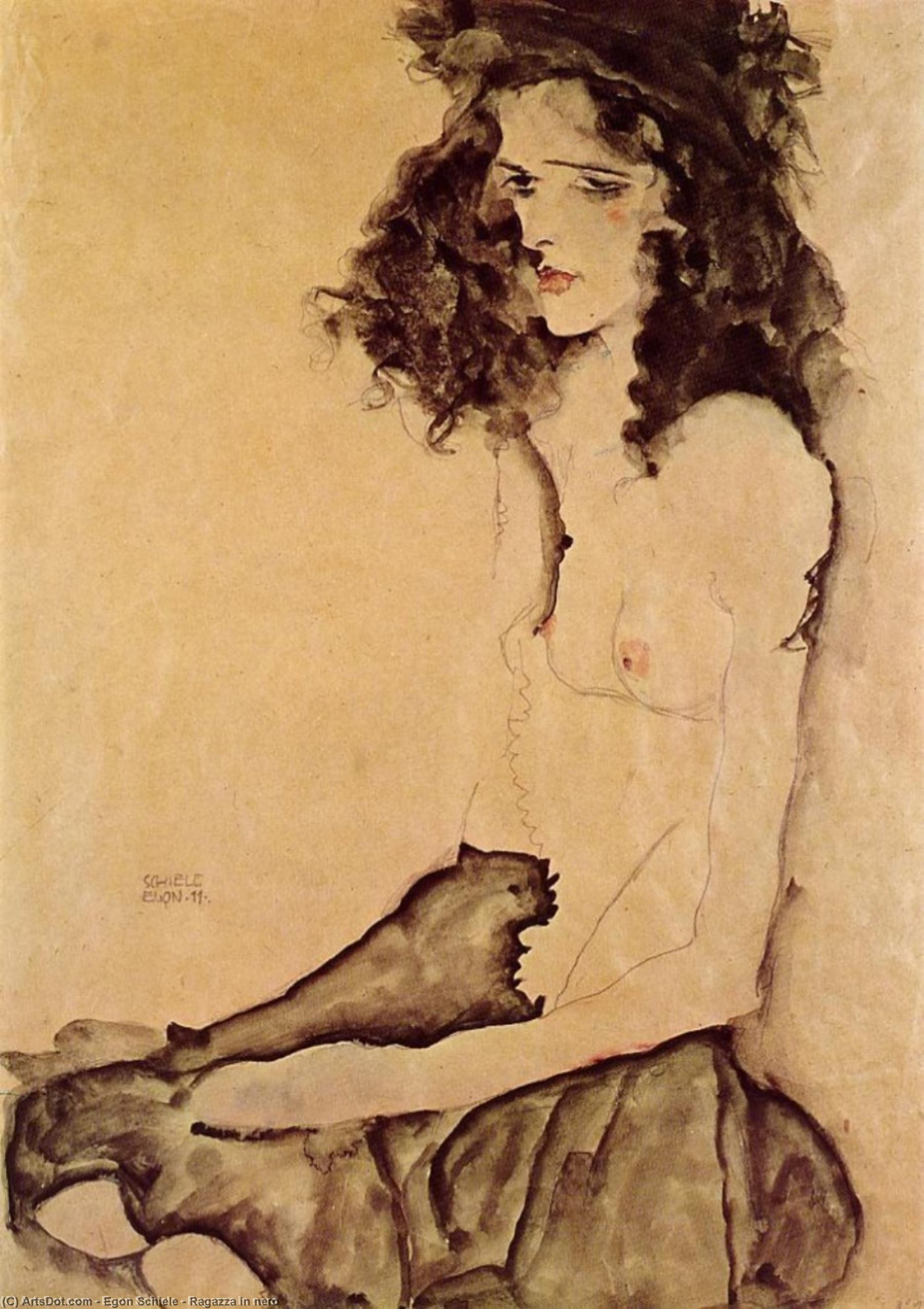
A pivotal influence on Schiele’s formative years was Gustav Klimt – whose opulent decorative style captivated young Schiele's imagination. Admiring Klimt’s masterful use of symbolism and exploration of aesthetic beauty, Schiele benefited from Klimt’s mentorship, absorbing stylistic cues that would shape his artistic development. However, Schiele soon diverged from Klimt’s path, forging a distinctive Expressionist style characterized by its stark honesty and psychological intensity—a style marked by elongated figures, contorted poses, and expressive lines that conveyed profound emotional turmoil. This divergence solidified Schiele's reputation as one of the most daring artists of his time – challenging societal expectations and confronting taboo subjects with unflinching courage.
Schiele’s artistic breakthrough occurred during his enrollment at the Akademie der bildenden Künste in Vienna—where he clashed vehemently with Professor Christian Griepenkerl over stylistic disagreements. Recognizing Schiele's refusal to conform to academic conventions, Griepenkerl dismissed him as an unsuitable student—a decision that fueled Schiele’s determination to pursue artistic autonomy and reject restrictive pedagogical practices. Together with fellow students disillusioned by the academy’s rigid traditions, Schiele established the Neues Wiener Kunstgruppe (New Viennese Art Group)—a collective dedicated to exploring avant-garde aesthetics and rejecting prevailing artistic conventions. This group—composed of artists like Anton Faistauer, Rudolf Kalvach, Franz Wiegele, Hans Ehrlich, and Löwenstein—embraced a rebellious spirit that mirrored Schiele’s own conviction in the transformative power of art.
Schiele's oeuvre is distinguished by its exploration of profound psychological themes – confronting mortality, sexuality, isolation, and anxiety with uncompromising honesty. His distinctive style—characterized by elongated figures, contorted poses, expressive lines, and raw emotion—challenged conventional artistic norms and captivated audiences with its unsettling realism and visceral intensity. Schiele’s masterful use of line—often conveying emotional tension and psychological complexity—became a hallmark of his artistic expression. Recurring motifs such as the *Physalis plant* – symbolizing death and transience with its delicate, papery husk – underscored Schiele's preoccupation with existential concerns. His self-portraits—rendered in striking detail and imbued with palpable vulnerability—offered intimate glimpses into his inner world—a world marked by loneliness, doubt, and a relentless quest for artistic truth.
Schiele’s legacy extends far beyond the confines of Viennese Expressionism—influencing subsequent generations of artists who embraced psychological exploration and challenged societal conventions. His bold approach to form and subject matter continues to resonate with audiences today—making him one of the most important and influential figures in early 20th-century art. Schiele’s paintings—held in prominent museum collections worldwide—stand as enduring testaments to his artistic genius—affirming his unwavering conviction that art possesses the capacity to confront existential dilemmas with courage, honesty, and visionary insight. He died tragically young during the Spanish flu pandemic in 1918 – leaving behind a body of work that transcends time—inspiring artists and captivating viewers alike with its profound emotional depth and uncompromising aesthetic vision.



 Tellimaks maali
 Saada
Saada Jaga
Jaga
 Detailid

 Laadi alla
 Sarnased teosed
 Röntgenuuring
 Slaidietendus
 Loe lähemalt






































 Klaasivalik on saadaval ainult suuruses kuni 110 cm