Vaata sisu Vaata AR-eelvaadet Telli käsitsi maalitud reproduktsioon Ülemineku digitaalse pildi müügi kanalisse Jaga teost
Detailid Õppekate juhend Lisa lemmikutesse Laadi alla Sarnased teosed Röntgenuuring Slaidietendus Statistika

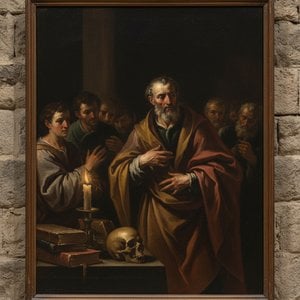
Mary

Experience the captivating beauty of Alonso Cano’s ‘Mary,’ a Baroque masterpiece housed at Budapest's Szépmûvészeti Múzeum. Explore its serene composition and profound emotional depth.

Hispania baroki meistri Alonso Cano panulmas maali, skulptuuri ja arhitektuuris läbi ikooniliste teostest nagu Patmosel Apostel Johannes, kutsumdes teid avastama tema sügavale ulatuvat vaimset visiooni.

Giclée / Kunstiprint

Muuseumikvaliteediga giclée- või kangasprint kiire tootmisega ja paindlikud viimistlusvõimalused. ( Telli käsitsi maalitud reproduktsioon Ülemineku digitaalse pildi müügi kanalisse)

Corner sample of the P118B picture frame: moulded polystyrene, 5 cm wide and 3 cm thick
P118B €10
Corner sample of the P118H picture frame: moulded polystyrene, 5 cm wide and 3 cm thick
P118H €10
Corner sample of the P118W picture frame: moulded polystyrene, 5 cm wide and 3 cm thick
P118W €10
Corner sample of the P438Z picture frame: moulded polystyrene, 5.5 cm wide and 3.5 cm thick
P438Z €10
Corner sample of the P508JH picture frame: moulded polystyrene, 7 cm wide and 3.5 cm thick
P508JH €12
Corner sample of the P508YH picture frame: moulded polystyrene, 7 cm wide and 3.5 cm thick
P508YH €12
Corner sample of the P805H picture frame: moulded polystyrene, 5 cm wide and 3.5 cm thick
P805H €10
Corner sample of the P805Z picture frame: moulded polystyrene, 5 cm wide and 3.5 cm thick
P805Z €10
Corner sample of the P919BZ picture frame: moulded polystyrene, 7 cm wide and 3.5 cm thick
P919BZ €10
Corner sample of the P919G picture frame: moulded polystyrene, 7 cm wide and 3.5 cm thick
P919G €10
Corner sample of the P919XJ picture frame: moulded polystyrene, 7 cm wide and 3.5 cm thick
P919XJ €10
Corner sample of the P959ZH picture frame: moulded polystyrene, 5 cm wide and 3 cm thick
P959ZH €10
Corner sample of the P968JZ picture frame: moulded polystyrene, 6 cm wide and 4 cm thick
P968JZ €12
Corner sample of the W106C picture frame: solid wood, 5 cm wide and 3 cm thick
W106C €8
Corner sample of the W218G picture frame: solid wood, 5 cm wide and 3 cm thick
W218G €10
Corner sample of the W218JH picture frame: solid wood, 5 cm wide and 3 cm thick
W218JH €8
Corner sample of the W218Y picture frame: solid wood, 5 cm wide and 3 cm thick
W218Y €10
Corner sample of the W307PJ picture frame: solid wood, 6 cm wide and 3 cm thick
W307PJ €10
Corner sample of the W316G picture frame: solid wood, 6 cm wide and 3 cm thick
W316G €10
Corner sample of the W316PJ picture frame: solid wood, 6 cm wide and 3 cm thick
W316PJ €8
Corner sample of the W316Y picture frame: solid wood, 6 cm wide and 3 cm thick
W316Y €10
Corner sample of the W398PJ picture frame: solid wood, 5 cm wide and 3 cm thick
W398PJ €8
Corner sample of the W4111J picture frame: solid wood, 6.5 cm wide and 3.5 cm thick
W4111J €10
Corner sample of the W500HY picture frame: solid wood, 7 cm wide and 5 cm thick
W500HY €15
Corner sample of the W500JH picture frame: solid wood, 7 cm wide and 5 cm thick
W500JH €15
Corner sample of the W692G picture frame: solid wood, 8 cm wide and 4 cm thick
W692G €12
Corner sample of the W849H picture frame: solid wood, 5 cm wide and 3 cm thick
W849H €8
Corner sample of the W940BG picture frame: solid wood, 7.5 cm wide and 4.5 cm thick
W940BG €15
Corner sample of the W953PJ picture frame: solid wood, 6 cm wide and 3.5 cm thick
W953PJ €8

Standardne suurus
kohandatud
CM
INCH

Vali meie eelmääratud suurused, mis vastavad teose algupärastele proportsioonidele.

laius
kõrgus

Saate sisestada oma mõõdud, et need sobiks konkreetse raami või ruumi sisse. Kui valitud suurus ei vasta originaalteose proportsioonidele, lõigame teose ära või laiendame pilti peegeldatud või ühtlase servaga. Enne tootmisprotsessi algust saadetakse Teie kinnitamiseks digitaalne näidis.
Palun märka, et ekraanil kuvatav eelvaade ei kajasta tegelikku lõigamist või laiendamist. Ainult näidis kujutab täpselt lõplikku kompositsiooni.
Kuigi erimõõdu on saadaval, soovitame originaaproportsioonide säilitamiseks valida mõõt ette määratud nimekirjast.

Ülemaailmne tarne () 2 nädala jooksul, tavalise 4/5 nädala asemel. (10 oktoober)

Tasuta ekspresssaatmine üle maailma
Kõrgekvaliteediline lina-kangastest muld
Täielik transpordikindlustus
Tollimaksude tagastamise garantii
Värvitoime täpsuse garantii
100 päeva tagastusõigus (ainult defektide korral)
100% raha tagasi garantii
Hulgusoodustus

Kogu summa

€ 59

Mary

Giclée / Kunstiprint

Reproduktsiooni mõõtmed

-

Lõppsumma

€ 59

Teave teose kohta

  • Location: Szépmûvészeti Múzeum, Budapest
  • Dimensions: 49 x 43 cm
  • Notable elements or techniques: Fragment of larger painting.
  • Medium: Oil on canvas
  • Movement: Baroque
  • Artistic style: Erotic
  • Year: 1646-50

A Baroque Revelation: Exploring Alonso Cano’s “Mary”

Alonso Cano’s “Mary,” housed at Budapest's Szépmûvészeti Múzeum, isn’t merely a depiction of the Virgin Mary; it’s an embodiment of the turbulent spirit of Baroque art—a testament to its audacious embrace of emotion and its masterful manipulation of light. Painted in 1646-50, this oil on canvas work represents a pivotal moment in Cano’s oeuvre, showcasing his unparalleled ability to distill profound spiritual contemplation into deceptively simple visual form.

The Artist's Vision: Cano's Bold Experimentation

Guido Cagnacci, Cano’s mentor and fellow innovator, instilled in him a rebellious spirit that would permeate his artistic endeavors. Unlike many of his contemporaries who adhered rigidly to established conventions, Cano actively challenged societal expectations through his art, particularly concerning the portrayal of female figures. “Mary” exemplifies this defiance with its unsettling honesty—a woman lost in reverie, her gaze downward as if grappling with an unspoken truth. This isn’t a passive Madonna; it's a figure wrestling with existential questions, mirroring the anxieties prevalent during Cano’s lifetime – a period marked by religious upheaval and intellectual ferment.

Technique and Style: Baroque Mastery Illuminated

Cano’s technique is characterized by its meticulous attention to detail and its masterful use of chiaroscuro—the dramatic interplay between light and shadow—a hallmark of Baroque painting. The subdued sky serves as a canvas for this luminous effect, casting delicate highlights across Mary's face and drapery, subtly emphasizing her inner turmoil. Layers upon layers of thinly applied paint create an illusionistic depth that draws the viewer into the scene, fostering a palpable sense of intimacy and contemplation. The artist skillfully employs tonal gradations to convey not just visual information but also emotional resonance—a profound stillness punctuated by unspoken yearning.

Historical Context: Spain Under Habsburg Rule

“Mary” emerged during the reign of Philip IV in Spain, a time when the Habsburg monarchy sought to solidify its prestige through artistic patronage. Cano’s work reflects the broader cultural currents of the era – an obsession with religious iconography and a fervent desire to express spiritual fervor. However, unlike many other commissions of the period, “Mary” transcends mere decorative function; it engages in a complex dialogue with theological concepts, prompting viewers to consider themes of faith, doubt, and divine grace. The Szépmûvészeti Múzeum’s acquisition underscores the enduring significance of Cano's artistic legacy—a reminder that beauty can coexist with unsettling psychological depth.

Symbolism: Inner Reflection Embodied

The downward gaze of Mary is laden with symbolic weight. It represents not merely physical posture but also a state of mind—a preoccupation with matters beyond the visible realm, an acknowledgement of the mysteries inherent in human existence. The serene sky serves as a counterpoint to this inner turmoil, suggesting that true understanding requires transcending superficial appearances and delving into the depths of consciousness. Cano’s “Mary” invites contemplation on the nature of spirituality and challenges viewers to confront their own vulnerabilities—a timeless masterpiece that continues to resonate with audiences centuries after its creation.

Emotional Impact: A Moment Frozen in Time

Ultimately, “Mary” succeeds in capturing a fleeting moment of profound emotional intensity—a palpable stillness imbued with unspoken longing. It’s a painting that lingers in the memory long after viewing, prompting reflection on themes of faith and introspection. The Szépmûvészeti Múzeum's careful preservation ensures that this Baroque revelation remains accessible to generations of art lovers—a testament to Cano’s enduring artistic vision and its ability to evoke empathy and wonder.

Küsimused ja vastused

Kui palju oli Alonso Cano aastane, kui teos "Mary" loodi?

Alonso Cano oli 45 aastane, kui ta lõi teose "Mary" aastal 1646. Empiiriline vanus on arvutatud kunstniku sünnaaasta põhjal, 1601.

Kui karge on teose "Mary" väripalett?

Teose „Mary“, autor Alonso Cano värvid on Clear Color Presence kütkusega. Kütkuse aste kirjeldab, kui erksad või pehmed värvid on.

Millal loodi teos "Mary"?

Teose „Mary“, autor Alonso Cano loomimisaeg on 1646.

Kes lõi "Mary"?

Teose "Mary" autoriks on mõeldud Alonso Cano.

Kas teose „Mary“, autor Alonso Cano autoriõigused lubavad selle reproduktsiooni?

Teos „Mary“, autor Alonso Cano, mis asub Szépművészeti Múzeum kogumuses, kuulub lubaõigusliku ala kategoria avalikus õiguses – selle autoriõigud onหมดunud. See staatus määravad, kas teose reproduktsioone on lubatud valmistada.

Milline rahvuslik päritolu seisab teose "Mary" Baroque taga?

Teose "Mary" on loonud Hispaania-s sündinud Alonso Cano, tuginedes Baroque suunale. Kunstniku päritolu seob teose Baroque stiiliga, mida praktiseerivad Hispaania kunstnikud.

Mis on teose „Mary“, autor Alonso Cano valgusus?

Teose „Mary“, autor Alonso Cano luminants on Gentle Luminance. Luminants kirjeldab, kui palju valgust värvid peegeldavad.


Kunstniku elulugu

Granada renessanssimees

Alonso Cano Almansa astub esile Spaania kuldajärgu unikaalse isikuna, tõelise polümaatrina, kelle loovvaim keeldus end ühe laiendusega piirata. Sündinud Granadas, Spanyol, oli ta haruldane talent, kes valtsistas maaliumi, skulptuuri ja arhitektuuri eraldi discipliini samavõrgse põletusega. Tema kunstiline teekond algas ishis Miguel Cano juhendamisel, keda ta päris arhitektuuri alusprintsiibid. See struktuurne arusaatus annaks hiljem vormile sügavust ja monumentaalset kohvust, mida on nähtav tema visuaalsetes teostes.

Tema haridus oli kanga, millel olid kootud kokku Spaania kunstimaailma parimad mõjutid. Maaliumi valdkonnas täiustas ta oma pintstroki Juan del Castilloi akadeemias ning õppis Francisco Pacheche juures, kes oli Venetsia meistri Velázquezi austatud õpetaja. See pärimustraditsioon ühendas teda otse barokkliikumuse südamega, infuseerides tema laintead dramaatilise pingega ja vaimse luminosusega. Samal ajal puhus tema skulpturaalne võime üles Juan Martínez Montañesees õppetöö all, võimaldades tal tuua kivi ja puidu ellu sügava anatomilise elegantsi ja emotsionaalse resonantsiga.

Formi ja vaimu meisterlikkus

Cano loomingut iseloomustab erakordne võime tabada jumalikku inimvormi sees. Skulptuurina saavutas ta püsiva kuulsuse teostega nagu Madonna ja laps Lebrija kirikus ning tema kolossaalsed, kummardust vääriv San Pedro ja San Pablo figuurid. Need teosed demonstreerivad suuret mõõtust ja võimet tekitada sügavat religioostlikku pühendumust läbi füüsilise kohvuse.

Omas maaliduses kasutas Cano barokkajastu dramaatilisi tehnikaid, et luua intensiivsete vaimsete kohtumiste hetki. Tema kompositsioonides on sageli nähtav:

  • Valgus ja vari vaheldus, kus nähtamatud valgiallikad valgustavad pühasid isikuid, nagu tema kujutuses Evangeelist Jüüs Apost Patmosil.
  • Emotsionaalne lähedus, mida on näha teoses Noli me Tangere, kus pinge jumaliku armu ja inimliku igatsuse vahel on kätta katsutav.
  • Ohri raskus, mis on tabatud tõusule tõusule kargusest ja draamast Surnud Kristus inglise toetusega.

Pärand ja kuninglik tunnustus

Alonso Canos talendi olulisust tunnustati Spaania õukonna kõrgetel tasemetel. Tema prestiiž viis tema amet任命 (ametistulekuni) esimeseks kuninglikuks arhitektiks ja Filip IV maaliseks. Tema mõju ulatus isegi järgmise põlvkonna hariduse juurde, olles õpetajaks printselle Balthasar Charlesile. See lähedus võimule võimaldas tal jätta tematu jälje Spaania arhitektuurilendale; märkimisväärne on tema roll Granada katedraali peaarhitektina, luues selle suurepärase fassaadi, mis tõusis esile juba pärast tema surma.

Lisaks oma ametlike tiitlitele on Cano pärand säilitatud Andaluusia kultuuri sügavates kiududes. Tema võime ühendada arhitektuuri struktuuriline rangus, skulptuuri füüline emotsioon ja maali loov lugulaul tagab tema koha ühe Spaania barokki mitmekülgseima ja olulisema meistrina.

Alonso Cano

Alonso Cano

1601 - 1667 , Hispaania

Lühikest infot

  • Artistic Movement Or Style: Barokk
  • Artists Who Influenced This Artist:
    • Miguel Cano
    • Juan del Castillo
    • Francisco Pacheco
    • Juan Martínez Montañés
  • Date Of Birth: 1601
  • Date Of Death: 1667
  • Full Name: Alonso Cano Almansa
  • Nationality: Hispaania
  • Notable Artworks:
    • Patmosel ujuva Jüohannes Evangeelium
    • Surnud Kristus mala angeliga toetatud
    • Noli me Tangere
    • Ristiline
    • Madonna ja laps
  • Place Of Birth: Granada, Hispaania