Vista previa Vista previa en RA Cambiar a formato impreso Encargar reproducción pintada a mano Compartir
Ver detalles Guía Añadir a favoritos Descargar Ver artículos similares Radiografía Presentación de diapositivas Estadísticas

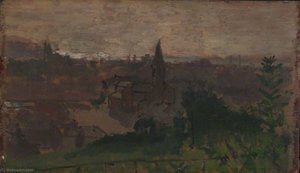
Bathing Huts, Dieppe

Walter Richard Sickert's 'Bathing Huts, Dieppe' captures a poignant coastal scene with loose brushstrokes and muted colors, reflecting the artist’s unique style and evocative atmosphere.

Descubre a Walter Richard Sickert (1860-1942), pintor británico clave del arte de vanguardia. Sus escenas londinenses y retratos evocan la vida urbana.

Adquiera una imagen digital de alta resolución y optimizada, muy superior a la vista previa en línea.

Cada archivo es preparado meticulosamente por nuestros especialistas internos mediante el uso de herramientas avanzadas y un experto retoque manual. Nos aseguramos de que cada imagen posea una claridad excepcional, una precisión cromática impecable y un detalle minucioso.

El archivo final se entrega por correo electrónico en un plazo de 72 horas, optimizado para su uso inmediato en entornos profesionales, editoriales y de impresión. Esta es la misma calidad en la que confían los estudios de diseño, las editoriales y las galerías de primer nivel.

Imagen Digital

Descarga un archivo de alta resolución para exhibición personal, impresión y proyectos creativos. ( Cambiar a formato impreso Encargar reproducción pintada a mano)

Precio total

$ 24,90

Incluido en cada pedido de imágenes digitales

Entrega digital experta, garantizada.

Al elegir WahooArt.com, no solo está adquiriendo una imagen; está recibiendo una obra de arte digital mejorada profesionalmente, elaborada con precisión y respaldada por una garantía de satisfacción. Esto es todo lo que incluye su pedido, automáticamente:

shipping_icon
Entrega inmediata por email

Recibirá su archivo de imagen digital en alta resolución por correo electrónico en un plazo de 72 horas tras realizar su pedido, listo para su uso inmediato.

canvas_icon
Archivo digital optimizado por IA

Su obra de arte se optimiza profesionalmente mediante herramientas avanzadas de IA y edición manual, garantizando el máximo detalle, claridad y precisión cromática.

insurance_icon
Reenvío gratuito de por vida

¿Has borrado o perdido tu archivo por error? No te preocupes: te lo volveremos a enviar en cualquier momento, sin coste adicional.

tax_icon
Sin gastos de importación, siempre

Disfrute de su obra de arte al instante sin aduanas, aranceles ni gastos de envío; las descargas digitales siempre están libres de impuestos.

color_icon
Garantía de precisión de color

Garantizamos que su imagen digital refleje los colores originales con la mayor fidelidad posible, mediante el uso de herramientas profesionales y gestión del color.

return_icon
Garantía de satisfacción de 100 días

Si no está satisfecho con su imagen digital, la revisaremos o le reembolsaremos el 100% en un plazo de 100 días, sin preguntas.

guarantee_icon
100% Garantía de devolución de dinero

¿No está satisfecho? Obtenga un reembolso completo dentro de los 100 días posteriores a la recepción de su archivo digital, sin preguntas.

discount_icon
Descuentos por volumen

Compra 3 imágenes, ahorra 10% - Compra 5, ahorra 15% - Compra 10+, ahorra 20%. Ideal para proyectos creativos, galerías y agencias.

Datos clave

  • Artistic style: Somber realism
  • Influences:
    • Degas
    • Whistler
  • Year: 1890
  • Medium: Oil on panel
  • Notable elements: Loose brushstrokes
  • Artist: Walter Sickert
  • Location: Courtauld, London

Cuestionario de arte

Cada pregunta tiene una única respuesta correcta.

Pregunta 1:
What is the primary subject depicted in Walter Richard Sickert’s ‘Bathing Huts, Dieppe’?
Pregunta 2:
The painting ‘Bathing Huts, Dieppe’ is characteristic of which artistic movement?
Pregunta 3:
What is a notable feature of Sickert’s technique in ‘Bathing Huts, Dieppe’?
Pregunta 4:
According to the description, what is a key characteristic of Sickert’s portrayal of Dieppe?
Pregunta 5:
In what year was ‘Bathing Huts, Dieppe’ created?

A Glimpse of Seaside Leisure: Walter Richard Sickert’s “Bathing Huts, Dieppe”

Walter Richard Sickert's "Bathing Huts, Dieppe" isn’t merely a depiction of a coastal scene; it’s a carefully constructed tableau brimming with atmosphere and a subtle undercurrent of melancholy. Painted around 1890, this work offers a poignant glimpse into the leisure culture of late Victorian Britain, viewed through the discerning eye of an artist fascinated by the fringes of society – the transient figures enjoying the seaside at Dieppe, France. The painting captures not just the visual elements of the scene but also the feeling of a fleeting moment, a captured memory suspended in time.

Sickert’s approach diverges significantly from the bright, optimistic Impressionism prevalent at the time. Instead, he employs a muted palette dominated by greys, browns, and subtle blues – colors that evoke a sense of overcast skies and the dampness of the coastal air. Loose, visible brushstrokes create a textured surface, almost tactile in its quality, suggesting the roughness of the weathered huts and the fleeting nature of the light. This deliberate lack of polish contributes to the painting’s overall mood, imbuing it with an intimacy and immediacy rarely found in more formally rendered works.

The Camden Town Aesthetic: Style and Technique

“Bathing Huts, Dieppe” firmly places itself within Sickert's distinctive style, often associated with the Camden Town Group. This group, centered around London’s bohemian district of Camden Town, rejected academic painting traditions in favor of a more direct and emotionally charged approach. Sickert’s work reflects this ethos through its focus on urban life, particularly the darker aspects – the music halls, pubs, and marginalized figures that populated his surroundings. The influence of Edgar Degas is palpable; Sickert adopted Degas's emphasis on capturing movement and gesture, as well as his innovative use of perspective and composition.

Technically, the painting showcases a masterful blend of observation and imagination. While rooted in direct observation of Dieppe, Sickert doesn’t strive for photographic realism. Instead, he simplifies forms, exaggerates details, and manipulates color to create an emotionally resonant image. The arrangement of the bathing huts is deliberately asymmetrical, drawing the eye across the canvas and creating a sense of dynamic tension. Notice how Sickert uses broken lines and blurred edges to suggest movement and atmosphere – the figures strolling along the beach, the waves lapping against the shore.

A Study in Transient Moments: Symbolism and Emotional Resonance

Beyond its visual qualities, “Bathing Huts, Dieppe” is rich in symbolism. The bathing huts themselves represent a temporary escape from the constraints of Victorian society – a space for leisure, socializing, and perhaps even illicit encounters. The muted colors and somber atmosphere suggest a sense of melancholy or disillusionment, hinting at the underlying anxieties of the era. Sickert’s frequent depiction of marginalized figures—often women engaged in activities deemed scandalous by contemporary standards—underscores this theme.

The painting's emotional impact is profound. It evokes a feeling of nostalgia for a bygone era, a sense of longing for lost innocence and fleeting pleasures. There’s an undeniable sadness woven into the scene, perhaps reflecting Sickert’s own complex relationship with London society and his fascination with the darker side of human experience. The composition invites contemplation—a quiet invitation to consider the transient nature of life and the beauty that can be found even in moments of melancholy.

Historical Context and Legacy

Painted during a period of rapid social and artistic change, “Bathing Huts, Dieppe” stands as a pivotal work in Sickert’s oeuvre. It exemplifies his transition from earlier, more academic influences to a bolder, more expressive style that would define his career. The painting's exploration of urban life and its subtle critique of Victorian morality resonated with the avant-garde artists of the early 20th century, influencing generations of painters who followed.

Sickert’s legacy extends beyond his individual paintings. He was a key figure in the development of British modernism, challenging traditional artistic conventions and paving the way for new forms of expression. “Bathing Huts, Dieppe” remains a powerful testament to his unique vision—a hauntingly beautiful depiction of a fleeting moment in time, imbued with both melancholy and enduring appeal.


Biografía del artista

Primeros años y formación

Walter Richard Sickert, un pintor británico de origen alemán, nació el 31 de mayo de 1860 en Múnich, Reino de Baviera. Su familia se estableció en Inglaterra en 1868, tras la anexión alemana de Schleswig-Holstein. La educación temprana de Sickert tuvo lugar en la University College School y la King's College School, donde estudió hasta los 18 años.

Desarrollo artístico

El viaje artístico de Sickert comenzó con una breve incursión como actor, seguida de su inscripción en la Slade School en 1881. Posteriormente, se convirtió en alumno de James Abbott McNeill Whistler, quien influyó significativamente en su obra. Sus primeras pinturas fueron pequeños estudios tonales pintados "alla prima" desde la naturaleza siguiendo el ejemplo de Whistler.

Obras destacadas y controversia

Las primeras obras importantes de Sickert, que datan de finales de la década de 1880, representaban escenas en los teatros de música de Londres. Una de sus pinturas notables, Katie Lawrence at Gatti's, generó controversia debido a su representación de una conocida cantante de teatro musical, considerada "fea y vulgar" por los críticos.

Asociación con el Grupo de Camden Town

Sickert fue una influencia importante en los estilos británicos de arte vanguardista del siglo XX. Se unió al New English Art Club en 1888, un grupo de artistas realistas influenciados por los franceses, y posteriormente se convirtió en miembro del Grupo de Camden Town.

Legado

La obra de Sickert puede encontrarse en varios museos, incluido el Museum Kunstsalon Franke Schenk, que presenta obras desde los siglos XVI al XX. Su legado se extiende más allá de su propio arte, influyendo en los estilos británicos de arte vanguardista a mediados y finales del siglo XX. Fechas clave:
  • 31 de mayo de 1860: Nacimiento en Múnich, Reino de Baviera
  • 1888: Se unió al New English Art Club
  • 1903-04: Desarrolló un enfoque distintivo para los conjuntos de múltiples figuras durante su último viaje de pintura a Venecia

Conclusión

El trabajo pionero de Walter Richard Sickert en el arte británico de vanguardia ha dejado una huella indeleble en el mundo del arte. Su legado continúa inspirando e influyendo en artistas, convirtiéndolo en una figura crucial en la historia del arte moderno.
Walter Richard Sickert

Walter Richard Sickert

1860 - 1942 , Alemania

Datos clave

  • Artistas Que Influyeron: ['James Abbott McNeill Whistler']
  • Fecha De Fallecimiento: 22 de enero de 1942
  • Fecha De Nacimiento: 31 de mayo de 1860
  • Influencia Artística: Camden Town Group, Arte británico moderno
  • Lugar De Nacimiento: Múnich, Alemania
  • Movimiento Artístico: Postimpresionismo, Realismo
  • Nacionalidad: Británico (de origen alemán)
  • Nombre Completo: Walter Richard Sickert
  • Obras Notables:
    • Katie Lawrence en Gatti's
    • Gaieté Montparnasse