A Glimpse of Seaside Leisure: Walter Richard Sickert’s “Bathing Huts, Dieppe”
Walter Richard Sickert's "Bathing Huts, Dieppe" isn’t merely a depiction of a coastal scene; it’s a carefully constructed tableau brimming with atmosphere and a subtle undercurrent of melancholy. Painted around 1890, this work offers a poignant glimpse into the leisure culture of late Victorian Britain, viewed through the discerning eye of an artist fascinated by the fringes of society – the transient figures enjoying the seaside at Dieppe, France. The painting captures not just the visual elements of the scene but also the feeling of a fleeting moment, a captured memory suspended in time.
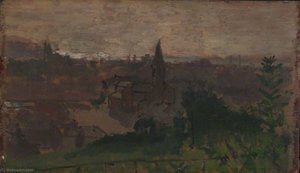
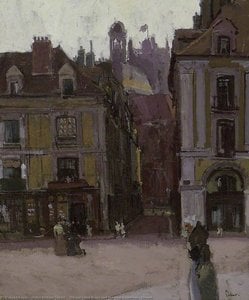
Sickert’s approach diverges significantly from the bright, optimistic Impressionism prevalent at the time. Instead, he employs a muted palette dominated by greys, browns, and subtle blues – colors that evoke a sense of overcast skies and the dampness of the coastal air. Loose, visible brushstrokes create a textured surface, almost tactile in its quality, suggesting the roughness of the weathered huts and the fleeting nature of the light. This deliberate lack of polish contributes to the painting’s overall mood, imbuing it with an intimacy and immediacy rarely found in more formally rendered works.
The Camden Town Aesthetic: Style and Technique
“Bathing Huts, Dieppe” firmly places itself within Sickert's distinctive style, often associated with the Camden Town Group. This group, centered around London’s bohemian district of Camden Town, rejected academic painting traditions in favor of a more direct and emotionally charged approach. Sickert’s work reflects this ethos through its focus on urban life, particularly the darker aspects – the music halls, pubs, and marginalized figures that populated his surroundings. The influence of Edgar Degas is palpable; Sickert adopted Degas's emphasis on capturing movement and gesture, as well as his innovative use of perspective and composition.
Technically, the painting showcases a masterful blend of observation and imagination. While rooted in direct observation of Dieppe, Sickert doesn’t strive for photographic realism. Instead, he simplifies forms, exaggerates details, and manipulates color to create an emotionally resonant image. The arrangement of the bathing huts is deliberately asymmetrical, drawing the eye across the canvas and creating a sense of dynamic tension. Notice how Sickert uses broken lines and blurred edges to suggest movement and atmosphere – the figures strolling along the beach, the waves lapping against the shore.
A Study in Transient Moments: Symbolism and Emotional Resonance
Beyond its visual qualities, “Bathing Huts, Dieppe” is rich in symbolism. The bathing huts themselves represent a temporary escape from the constraints of Victorian society – a space for leisure, socializing, and perhaps even illicit encounters. The muted colors and somber atmosphere suggest a sense of melancholy or disillusionment, hinting at the underlying anxieties of the era. Sickert’s frequent depiction of marginalized figures—often women engaged in activities deemed scandalous by contemporary standards—underscores this theme.
The painting's emotional impact is profound. It evokes a feeling of nostalgia for a bygone era, a sense of longing for lost innocence and fleeting pleasures. There’s an undeniable sadness woven into the scene, perhaps reflecting Sickert’s own complex relationship with London society and his fascination with the darker side of human experience. The composition invites contemplation—a quiet invitation to consider the transient nature of life and the beauty that can be found even in moments of melancholy.
Historical Context and Legacy
Painted during a period of rapid social and artistic change, “Bathing Huts, Dieppe” stands as a pivotal work in Sickert’s oeuvre. It exemplifies his transition from earlier, more academic influences to a bolder, more expressive style that would define his career. The painting's exploration of urban life and its subtle critique of Victorian morality resonated with the avant-garde artists of the early 20th century, influencing generations of painters who followed.
Sickert’s legacy extends beyond his individual paintings. He was a key figure in the development of British modernism, challenging traditional artistic conventions and paving the way for new forms of expression. “Bathing Huts, Dieppe” remains a powerful testament to his unique vision—a hauntingly beautiful depiction of a fleeting moment in time, imbued with both melancholy and enduring appeal.



 Vista previa
 Cambiar a formato impreso
 Compartir
 Compartir
 Ver detalles
 Guía
Guía

 Descargar
 Ver artículos similares
 Radiografía
 Presentación de diapositivas
 Estadísticas


 Leer más






































 La opción de vidrio solo está disponible en tamaños inferiores a 110 cm.