Vista previa Vista previa en RA Encargar reproducción pintada a mano Ver versión en imagen digital Compartir
Ver detalles Guía Añadir a favoritos Descargar Ver artículos similares Radiografía Presentación de diapositivas Estadísticas

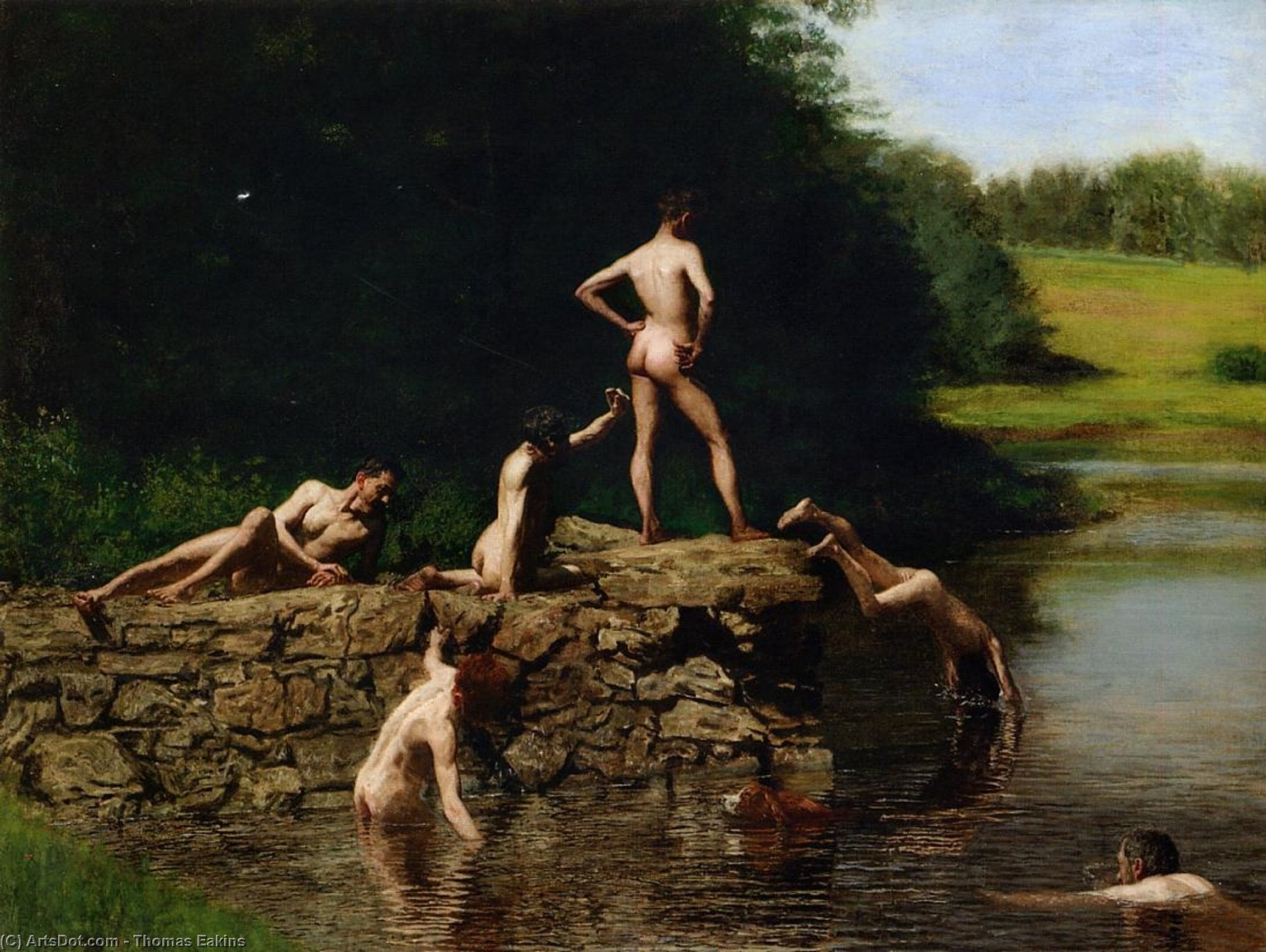
Swimming

Explore Thomas Eakins’ ‘Swimming,’ a seminal American masterpiece! This 1884 oil painting captures nude male figures in motion with realism & intrigue. Discover its homoerotic themes & artistic significance.

Descubre a Thomas Eakins (1844-1916), pintor realista americano conocido por sus retratos impactantes y escenas dinámicas. ¡Explora su legado en WahooArt!

Giclée / Impresión de arte

Impresiones giclée o en lienzo de calidad de museo con producción rápida y opciones de acabado flexibles. ( Encargar reproducción pintada a mano Ver versión en imagen digital)

Corner sample of the P118B picture frame: moulded polystyrene, 5 cm wide and 3 cm thick
P118B €10
Corner sample of the P118H picture frame: moulded polystyrene, 5 cm wide and 3 cm thick
P118H €10
Corner sample of the P118W picture frame: moulded polystyrene, 5 cm wide and 3 cm thick
P118W €10
Corner sample of the P438Z picture frame: moulded polystyrene, 5.5 cm wide and 3.5 cm thick
P438Z €10
Corner sample of the P508JH picture frame: moulded polystyrene, 7 cm wide and 3.5 cm thick
P508JH €12
Corner sample of the P508YH picture frame: moulded polystyrene, 7 cm wide and 3.5 cm thick
P508YH €12
Corner sample of the P805H picture frame: moulded polystyrene, 5 cm wide and 3.5 cm thick
P805H €10
Corner sample of the P805Z picture frame: moulded polystyrene, 5 cm wide and 3.5 cm thick
P805Z €10
Corner sample of the P919BZ picture frame: moulded polystyrene, 7 cm wide and 3.5 cm thick
P919BZ €10
Corner sample of the P919G picture frame: moulded polystyrene, 7 cm wide and 3.5 cm thick
P919G €10
Corner sample of the P919XJ picture frame: moulded polystyrene, 7 cm wide and 3.5 cm thick
P919XJ €10
Corner sample of the P959ZH picture frame: moulded polystyrene, 5 cm wide and 3 cm thick
P959ZH €10
Corner sample of the P968JZ picture frame: moulded polystyrene, 6 cm wide and 4 cm thick
P968JZ €12
Corner sample of the W106C picture frame: solid wood, 5 cm wide and 3 cm thick
W106C €8
Corner sample of the W218G picture frame: solid wood, 5 cm wide and 3 cm thick
W218G €10
Corner sample of the W218JH picture frame: solid wood, 5 cm wide and 3 cm thick
W218JH €8
Corner sample of the W218Y picture frame: solid wood, 5 cm wide and 3 cm thick
W218Y €10
Corner sample of the W307PJ picture frame: solid wood, 6 cm wide and 3 cm thick
W307PJ €10
Corner sample of the W316G picture frame: solid wood, 6 cm wide and 3 cm thick
W316G €10
Corner sample of the W316PJ picture frame: solid wood, 6 cm wide and 3 cm thick
W316PJ €8
Corner sample of the W316Y picture frame: solid wood, 6 cm wide and 3 cm thick
W316Y €10
Corner sample of the W398PJ picture frame: solid wood, 5 cm wide and 3 cm thick
W398PJ €8
Corner sample of the W4111J picture frame: solid wood, 6.5 cm wide and 3.5 cm thick
W4111J €10
Corner sample of the W500HY picture frame: solid wood, 7 cm wide and 5 cm thick
W500HY €15
Corner sample of the W500JH picture frame: solid wood, 7 cm wide and 5 cm thick
W500JH €15
Corner sample of the W692G picture frame: solid wood, 8 cm wide and 4 cm thick
W692G €12
Corner sample of the W849H picture frame: solid wood, 5 cm wide and 3 cm thick
W849H €8
Corner sample of the W940BG picture frame: solid wood, 7.5 cm wide and 4.5 cm thick
W940BG €15
Corner sample of the W953PJ picture frame: solid wood, 6 cm wide and 3.5 cm thick
W953PJ €8

Estándar
personalizado
CM
INCH

Elija entre nuestros tamaños predefinidos que respetan las proporciones originales de la obra.

ancho
altura

Puede introducir sus propias dimensiones para adaptarse a un marco o espacio específico. Si el tamaño seleccionado no coincide con las proporciones de la imagen original, recortaremos la obra de arte o extenderemos la imagen con un borde con efecto espejo o de color sólido. Se enviará una maqueta digital para su aprobación antes de que comience la producción.
Tenga en cuenta que la vista previa en pantalla no refleja el recorte o la extensión real. Solo la maqueta mostrará con precisión la composición final.
Aunque existen tamaños personalizados, recomendamos seleccionar una dimensión de la lista predefinida para preservar las proporciones originales.

Envío a todo el mundo () en 2 semanas en lugar de las 4/5 semanas estándar. (8 octubre)

Envío exprés gratuito a todo el mundo
Lienzo de lino de alta calidad
Seguro de envío completo
Garantía de reembolso de impuestos aduaneros
Garantía de fidelidad cromática exacta
Política de devolución de 100 días (solo por defectos)
Garantía de devolución del 100% del dinero
Oferta por volumen

Precio total

€ 58

Swimming

Giclée / Impresión de arte

Tamaño de la reproducción

-

Precio total

€ 58

Datos clave

  • Influences:
    • Michelangelo
    • Daumier
  • Location: Amon Carter Museum
  • Title: Swimming
  • Subject or theme: Swimming, leisure
  • Notable elements: Nude figures, motion
  • Artist: Thomas Eakins
  • Movement: Realism

Cuestionario de arte

Cada pregunta tiene una única respuesta correcta.

Pregunta 1:
What is the primary subject depicted in Thomas Eakins’ ‘Swimming’?
Pregunta 2:
In what year was ‘Swimming’ painted?
Pregunta 3:
Which of the following best describes Eakins’ artistic approach in ‘Swimming’?
Pregunta 4:
The painting ‘Swimming’ is considered significant within American art history primarily because it:
Pregunta 5:
What artistic movement did Eakins' work, including 'Swimming', align with?

The Genesis of a Revolutionary Image

Thomas Eakins’ “Swimming,” painted in 1884, isn't merely a depiction of men enjoying a summer day; it’s a profound exploration of the human form, movement, and the burgeoning spirit of American realism. Born from meticulous observation and a desire to capture not just appearances but the very essence of experience, this oil on canvas transcends simple representation, inviting viewers into a world of dynamic energy and subtle psychological depth. Eakins, deeply influenced by his scientific training – he’d studied anatomy at Jefferson Medical College – approached the subject with an almost clinical precision, yet infused it with a remarkable sensitivity to light, color, and the inherent beauty of the human body in motion.

The genesis of “Swimming” lies within Eakins' broader project: documenting the lives of Philadelphia’s elite. He sought subjects not for their social standing alone, but for their physicality – their strength, grace, and vulnerability. The painting itself emerged from a series of preparatory sketches and photographs taken at Dove Lake, a popular swimming spot outside the city. These studies reveal Eakins' painstaking process: capturing the precise angles of limbs in water, analyzing the interplay of light on skin, and meticulously charting the subtle shifts in posture as men plunged into the lake. The resulting image is not a spontaneous snapshot but the culmination of countless hours of observation and artistic refinement.

A Bold Statement of Form and Sexuality

“Swimming” immediately challenged the prevailing Victorian sensibilities surrounding nudity in art. While classical sculpture often idealized the male nude, Eakins presented figures stripped bare with an unapologetic directness. The painting’s composition—six men positioned within a rocky stream environment—creates a dynamic tableau of movement and camaraderie. The deliberate positioning of the bodies, particularly the prominent but subtly ambiguous rendering of one figure's lower torso, sparked considerable controversy at the time. Eakins wasn’t simply depicting a swimming scene; he was engaging with complex questions about masculinity, sexuality, and the role of the male body in American culture.

The homoerotic undertones within “Swimming” are undeniable, yet they aren't presented in a sensationalized or overtly provocative manner. Instead, Eakins’ focus remains firmly on capturing the physicality of the human form – the ripple of muscles, the sheen of wet skin, the fluidity of movement. The painting invites viewers to contemplate not just the act of swimming but also the unspoken connections between the men depicted, fostering a sense of intimacy and shared experience.

Technique and Atmosphere: A Symphony of Realism

Eakins’ mastery of technique is immediately apparent in “Swimming.” He employed a layered approach to oil paint, building up form through meticulous brushwork that captures the texture of skin, stone, and water. The use of light is particularly striking – soft, diffused illumination creates an atmosphere of hazy warmth, while carefully rendered shadows define the contours of the figures’ bodies. The painting's perspective draws the eye into the scene, guiding it from the foreground to the distant trees and hills, creating a sense of depth and immersion.

Furthermore, Eakins’ understanding of color is remarkable. He skillfully utilized muted earth tones—ochres, browns, greens—to evoke the natural setting while simultaneously highlighting the vibrant hues of skin and water. The subtle variations in tone create a dynamic interplay of light and shadow, adding to the painting's overall sense of realism and immediacy. The careful attention to detail – from the ripples on the water’s surface to the texture of the stone wall—demonstrates Eakins’ commitment to capturing every nuance of his subject.

A Legacy of Innovation

“Swimming” stands as a pivotal work in American art history, representing a significant departure from traditional academic painting. It exemplifies Eakins' pioneering approach to realism – his willingness to depict the human body with unflinching honesty and psychological insight. The painting’s influence can be seen in the works of subsequent generations of American artists who sought to capture the complexities of modern life with a similar blend of observation, emotion, and technical skill. Today, “Swimming” continues to captivate viewers with its dynamic composition, evocative atmosphere, and profound exploration of the human condition.

Preguntas y respuestas

¿Cuál es la fecha y el estilo de "Swimming" de Thomas Eakins?

"Swimming" fue creada en 1884 como una obra del movimiento Contemporary Realism. La fecha y el movimiento sitúan la obra en la historia del arte.

¿En qué año se creó "Swimming"?

"Swimming" data de 1884. La fecha sitúa la obra dentro de la trayectoria de Thomas Eakins y de su época.

¿Cuántas personas ven "Swimming"?

Las estadísticas sobre "Swimming" de Thomas Eakins se encuentran en la página de Estadísticas de la obra: visitas mensuales de la obra, visitas a las obras del artista y desgloses por país e idioma de los visitantes recientes.

¿Se encuentra "Swimming" de Thomas Eakins entre las obras más codiciadas del Contemporary Realism?

"Swimming" de Thomas Eakins se clasifica como Icónico y pertenece al movimiento Contemporary Realism.

¿Es "Swimming" de Thomas Eakins una obra de tonos claros u oscuros?

Los valores registrados para "Swimming" de Thomas Eakins son: sombra profunda de brillo y Oscuro de luminancia.

¿Quién creó "Swimming"?

"Swimming" se atribuye a Thomas Eakins.

¿Qué edad tenía Thomas Eakins cuando creó "Swimming" en 1884?

Thomas Eakins tenía 40 años cuando creó "Swimming" en 1884. La edad se calcula a partir del año de nacimiento del artista, 1844.


Biografía del artista

Una vida dedicada a capturar la realidad

Thomas Cowperthwait Eakins, pintor realista estadounidense, fotógrafo, escultor y educador en bellas artes, dejó una huella imborrable en el lienzo de la historia del arte americano. Nacido el 25 de julio de 1844 en Filadelfia, Pensilvania, su vida fue un testimonio de su inquebrantable dedicación a capturar la esencia de la realidad.

Primeros años y educación

Los primeros años de Eakins estuvieron marcados por su agudo interés en el dibujo y las ciencias. Asistió a la escuela secundaria central y luego estudió en la Academia de Bellas Artes de Pensilvania, donde perfeccionó sus habilidades en dibujo y anatomía. Su tiempo en Europa, particularmente bajo la tutela de Jean-Léon Gérôme en París, influyó significativamente en su enfoque artístico.

Una carrera definida por el realismo

La obra de Eakins se caracteriza por su implacable realismo, una característica que lo distinguía de sus contemporáneos. Sus retratos, que suman varios cientos, ofrecen una visión conmovedora del tejido intelectual y social de finales del siglo XIX y principios del XX en Filadelfia. Obras notables incluyen Max Schmitt en una Cesta de Remo Individual, que no solo muestra la maestría de Eakins para capturar el movimiento, sino también su profundo interés en la forma humana.

Enseñanza y controversia

El período de Eakins como instructor en la Academia de Bellas Artes de Pensilvania se caracterizó tanto por la influencia como por la controversia. Su enfoque docente, que enfatizaba la importancia de estudiar la forma humana desde la vida, a menudo provocaba fricciones con sus colegas. Esto, junto con escándalos personales, truncó su éxito y dañó su reputación durante su vida.

Legado

A pesar de los desafíos que enfrentó, Eakins es ahora celebrado como "el realista más fuerte y profundo en el arte estadounidense del siglo XIX y principios del XX". Su obra se puede encontrar en varios museos, incluido el Museo Metropolitano de Arte, que alberga varias de sus obras notables. Conclusión El compromiso inquebrantable de Thomas Eakins con el realismo ha dejado un legado perdurable en el arte estadounidense. Su enfoque implacable para capturar la forma humana, tanto en movimiento como en reposo, continúa inspirando a artistas y entusiastas del arte por igual. A través de su obra, vislumbramos no solo la esencia de sus sujetos, sino también el propio tejido de la América temprana del siglo XX.

Thomas Eakins

Thomas Eakins

1844 - 1916 , Estados Unidos de América

Datos clave

  • Artistas Que Influyeron: ['Jean-Léon Gérôme']
  • Fecha De Fallecimiento: 25 de junio de 1916
  • Fecha De Nacimiento: 25 de julio de 1844
  • Lugar De Nacimiento: Filadelfia, Estados Unidos
  • Movimiento Artístico: Realismo estadounidense
  • Nacionalidad: Estadounidense
  • Nombre Completo: Thomas Cowperthwait Eakins
  • Obras Notables:
    • La Clínica Gross
    • Max Schmitt en una cesta individual
    • El Agnew Clinic
Explore obras de arte organizadas por temas, estilos y características.


































