Asesoría de arte gratuita

x
Comprar impresión Comprar impresiónEncargar reproducción Encargar reproducción EnviarEnviar
DetallesDetalles Añadir a favoritos Añadir a favoritos DescargarDescargar SimilaresSimilares RadiografíaRadiografía Presentación de diapositivasPresentación de diapositivas

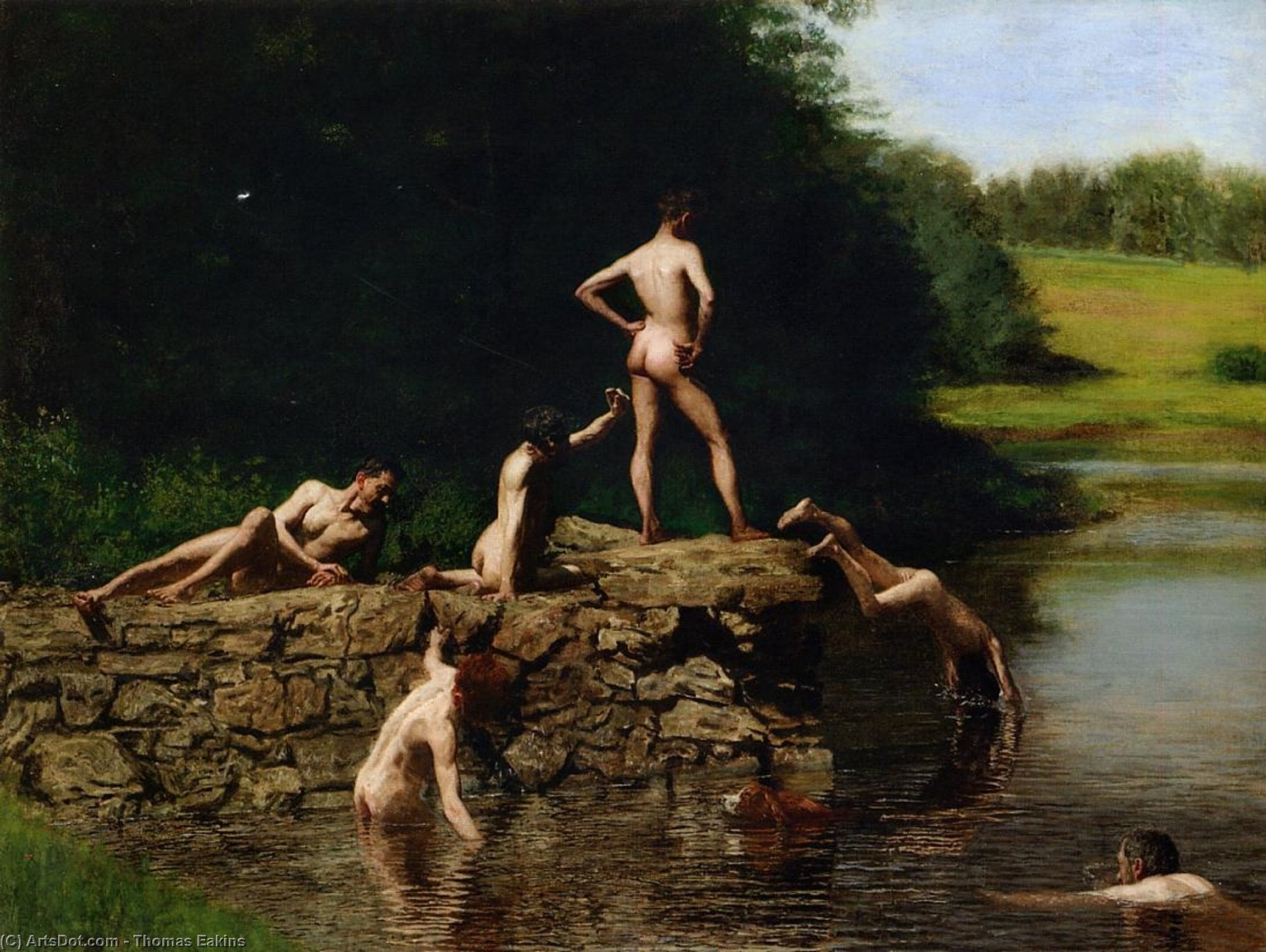
Swimming

Explore Thomas Eakins’ ‘Swimming,’ a seminal American masterpiece! This 1884 oil painting captures nude male figures in motion with realism & intrigue. Discover its homoerotic themes & artistic significance.

Descubre a Thomas Eakins (1844-1916), pintor realista americano conocido por sus retratos impactantes y escenas dinámicas. ¡Explora su legado en WahooArt!

Adquiera una imagen digital de alta resolución y optimizada, muy superior a la vista previa en línea.

Cada archivo es preparado meticulosamente por nuestros especialistas internos mediante el uso de herramientas avanzadas y un experto retoque manual. Nos aseguramos de que cada imagen posea una claridad excepcional, una precisión cromática impecable y un detalle minucioso.

El archivo final se entrega por correo electrónico en un plazo de 72 horas, optimizado para su uso inmediato en entornos profesionales, editoriales y de impresión. Esta es la misma calidad en la que confían los estudios de diseño, las editoriales y las galerías de primer nivel.

Imagen Digital

Descarga un archivo de alta resolución para exhibición personal, impresión y proyectos creativos.

Precio total

$9.99

Incluido en cada pedido de imagen digital

Entrega digital experta, garantizada.

Al elegir WahooArt.com, no solo está adquiriendo una imagen; está recibiendo una obra de arte digital mejorada profesionalmente, elaborada con precisión y respaldada por una garantía de satisfacción. Esto es todo lo que incluye su pedido, automáticamente:

shipping_icon
Entrega rápida por email

Recibirá su archivo de imagen digital en alta resolución por correo electrónico en un plazo de 72 horas tras realizar su pedido, listo para su uso inmediato.

canvas_icon
Archivo digital optimizado con IA

Su obra de arte se optimiza profesionalmente mediante herramientas avanzadas de IA y edición manual, garantizando el máximo detalle, claridad y precisión cromática.

insurance_icon
Reenvío gratuito de por vida

¿Has borrado o perdido tu archivo por error? No te preocupes: te lo volveremos a enviar en cualquier momento, sin coste adicional.

tax_icon
Sin cargos de importación - Siempre

Disfrute de su obra de arte al instante sin aduanas, aranceles ni gastos de envío; las descargas digitales siempre están libres de impuestos.

color_icon
Garantía de fidelidad de color

Garantizamos que su imagen digital refleje los colores originales con la mayor fidelidad posible, mediante el uso de herramientas profesionales y gestión del color.

return_icon
Garantía de satisfacción de 60 días

Si no está satisfecho con su imagen digital, la revisaremos o le reembolsaremos el 100% en un plazo de 60 días, sin preguntas.

guarantee_icon
100% Garantía de devolución de dinero

¿No está satisfecho? Obtenga un reembolso completo dentro de los 60 días posteriores a la recepción de su archivo digital, sin preguntas.

discount_icon
Descuentos por pedidos al por mayor

Compra 3 imágenes, ahorra 10% - Compra 5, ahorra 15% - Compra 10+, ahorra 20%. Ideal para proyectos creativos, galerías y agencias.

Datos clave

  • Subject or theme: Swimming, leisure
  • Influences:
    • Michelangelo
    • Daumier
  • Location: Amon Carter Museum
  • Medium: Oil on canvas
  • Title: Swimming
  • Notable elements: Nude figures, motion
  • Year: 1884

Test de arte

Solo hay una respuesta correcta para cada pregunta.

Pregunta 1:
What is the primary subject depicted in Thomas Eakins’ ‘Swimming’?
Pregunta 2:
In what year was ‘Swimming’ painted?
Pregunta 3:
Which of the following best describes Eakins’ artistic approach in ‘Swimming’?
Pregunta 4:
The painting ‘Swimming’ is considered significant within American art history primarily because it:
Pregunta 5:
What artistic movement did Eakins' work, including 'Swimming', align with?

Descripción del coleccionable

The Genesis of a Revolutionary Image

Thomas Eakins’ “Swimming,” painted in 1884, isn't merely a depiction of men enjoying a summer day; it’s a profound exploration of the human form, movement, and the burgeoning spirit of American realism. Born from meticulous observation and a desire to capture not just appearances but the very essence of experience, this oil on canvas transcends simple representation, inviting viewers into a world of dynamic energy and subtle psychological depth. Eakins, deeply influenced by his scientific training – he’d studied anatomy at Jefferson Medical College – approached the subject with an almost clinical precision, yet infused it with a remarkable sensitivity to light, color, and the inherent beauty of the human body in motion.

The genesis of “Swimming” lies within Eakins' broader project: documenting the lives of Philadelphia’s elite. He sought subjects not for their social standing alone, but for their physicality – their strength, grace, and vulnerability. The painting itself emerged from a series of preparatory sketches and photographs taken at Dove Lake, a popular swimming spot outside the city. These studies reveal Eakins' painstaking process: capturing the precise angles of limbs in water, analyzing the interplay of light on skin, and meticulously charting the subtle shifts in posture as men plunged into the lake. The resulting image is not a spontaneous snapshot but the culmination of countless hours of observation and artistic refinement.

A Bold Statement of Form and Sexuality

“Swimming” immediately challenged the prevailing Victorian sensibilities surrounding nudity in art. While classical sculpture often idealized the male nude, Eakins presented figures stripped bare with an unapologetic directness. The painting’s composition—six men positioned within a rocky stream environment—creates a dynamic tableau of movement and camaraderie. The deliberate positioning of the bodies, particularly the prominent but subtly ambiguous rendering of one figure's lower torso, sparked considerable controversy at the time. Eakins wasn’t simply depicting a swimming scene; he was engaging with complex questions about masculinity, sexuality, and the role of the male body in American culture.

The homoerotic undertones within “Swimming” are undeniable, yet they aren't presented in a sensationalized or overtly provocative manner. Instead, Eakins’ focus remains firmly on capturing the physicality of the human form – the ripple of muscles, the sheen of wet skin, the fluidity of movement. The painting invites viewers to contemplate not just the act of swimming but also the unspoken connections between the men depicted, fostering a sense of intimacy and shared experience.

Technique and Atmosphere: A Symphony of Realism

Eakins’ mastery of technique is immediately apparent in “Swimming.” He employed a layered approach to oil paint, building up form through meticulous brushwork that captures the texture of skin, stone, and water. The use of light is particularly striking – soft, diffused illumination creates an atmosphere of hazy warmth, while carefully rendered shadows define the contours of the figures’ bodies. The painting's perspective draws the eye into the scene, guiding it from the foreground to the distant trees and hills, creating a sense of depth and immersion.

Furthermore, Eakins’ understanding of color is remarkable. He skillfully utilized muted earth tones—ochres, browns, greens—to evoke the natural setting while simultaneously highlighting the vibrant hues of skin and water. The subtle variations in tone create a dynamic interplay of light and shadow, adding to the painting's overall sense of realism and immediacy. The careful attention to detail – from the ripples on the water’s surface to the texture of the stone wall—demonstrates Eakins’ commitment to capturing every nuance of his subject.

A Legacy of Innovation

“Swimming” stands as a pivotal work in American art history, representing a significant departure from traditional academic painting. It exemplifies Eakins' pioneering approach to realism – his willingness to depict the human body with unflinching honesty and psychological insight. The painting’s influence can be seen in the works of subsequent generations of American artists who sought to capture the complexities of modern life with a similar blend of observation, emotion, and technical skill. Today, “Swimming” continues to captivate viewers with its dynamic composition, evocative atmosphere, and profound exploration of the human condition.


Biografía del artista

Una vida dedicada a capturar la realidad

Thomas Cowperthwait Eakins, pintor realista estadounidense, fotógrafo, escultor y educador en bellas artes, dejó una huella imborrable en el lienzo de la historia del arte americano. Nacido el 25 de julio de 1844 en Filadelfia, Pensilvania, su vida fue un testimonio de su inquebrantable dedicación a capturar la esencia de la realidad.

Primeros años y educación

Los primeros años de Eakins estuvieron marcados por su agudo interés en el dibujo y las ciencias. Asistió a la escuela secundaria central y luego estudió en la Academia de Bellas Artes de Pensilvania, donde perfeccionó sus habilidades en dibujo y anatomía. Su tiempo en Europa, particularmente bajo la tutela de Jean-Léon Gérôme en París, influyó significativamente en su enfoque artístico.

Una carrera definida por el realismo

La obra de Eakins se caracteriza por su implacable realismo, una característica que lo distinguía de sus contemporáneos. Sus retratos, que suman varios cientos, ofrecen una visión conmovedora del tejido intelectual y social de finales del siglo XIX y principios del XX en Filadelfia. Obras notables incluyen Max Schmitt en una Cesta de Remo Individual, que no solo muestra la maestría de Eakins para capturar el movimiento, sino también su profundo interés en la forma humana.

Enseñanza y controversia

El período de Eakins como instructor en la Academia de Bellas Artes de Pensilvania se caracterizó tanto por la influencia como por la controversia. Su enfoque docente, que enfatizaba la importancia de estudiar la forma humana desde la vida, a menudo provocaba fricciones con sus colegas. Esto, junto con escándalos personales, truncó su éxito y dañó su reputación durante su vida.

Legado

A pesar de los desafíos que enfrentó, Eakins es ahora celebrado como "el realista más fuerte y profundo en el arte estadounidense del siglo XIX y principios del XX". Su obra se puede encontrar en varios museos, incluido el Museo Metropolitano de Arte, que alberga varias de sus obras notables. Conclusión El compromiso inquebrantable de Thomas Eakins con el realismo ha dejado un legado perdurable en el arte estadounidense. Su enfoque implacable para capturar la forma humana, tanto en movimiento como en reposo, continúa inspirando a artistas y entusiastas del arte por igual. A través de su obra, vislumbramos no solo la esencia de sus sujetos, sino también el propio tejido de la América temprana del siglo XX.
Thomas Eakins

Thomas Eakins

1844 - 1916 , Estados Unidos de América

Información clave

  • Artistas Que Influyeron: ['Jean-Léon Gérôme']
  • Fecha De Fallecimiento: 25 de junio de 1916
  • Fecha De Nacimiento: 25 de julio de 1844
  • Lugar De Nacimiento: Filadelfia, Estados Unidos
  • Movimiento Artístico: Realismo estadounidense
  • Nacionalidad: Estadounidense
  • Nombre Completo: Thomas Cowperthwait Eakins
  • Obras Notables:
    • La Clínica Gross
    • Max Schmitt en una cesta individual
    • El Agnew Clinic