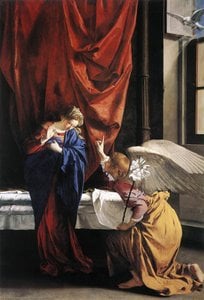
A Celestial Encounter in Oil and Light
In the quiet, hallowed stillness of Scipione Pulzone’s 1587 masterpiece, The Annunciation, time seems to suspend itself. This profound work captures the precise, breathless moment when the Archangel Gabriel descends to deliver a divine decree to the Virgin Mary. It is not merely a depiction of a biblical event, but a carefully orchestrated visual drama that invites the viewer into a sacred dialogue. As your eyes wander through the composition, you encounter the tender presence of a young John the Baptist, whose excited gestures toward a blossoming lily serve as a poignant reminder of the life and purity about to unfold. The painting breathes with a sense of spiritual immediacy, pulling the observer into an intimate interior space where the earthly and the divine intersect through a soft, ethereal glow.
The technical brilliance of Pulzone lies in his ability to move beyond the artificiality of Mannerism toward a refined, luminous realism. Utilizing oil on canvas, the artist employs meticulous brushwork to sculpt the figures with anatomical precision and a palpable sense of volume. One cannot help but be captivated by the dramatic chiaroscuro—the masterful interplay of light and shadow that defines the scene. A celestial light source, seemingly emanating from an unseen heaven, bathes the central figures in a radiant warmth, creating a halo effect around the dove of the Holy Spirit. This light does more than illuminate; it sanctifies, casting deep, velvety shadows into the recesses of the room and highlighting the rich textures of flowing fabrics and smooth skin, making the scene feel both monumental and deeply human.
Symbolism and the Soul of the Counter-Reformation
To understand this painting is to understand the heartbeat of the late Renaissance and the dawn of the Baroque era. Created in the wake of the Council of Trent, Pulzone’s work embodies the Counter-Reformation's mission: to use art as a vessel for intense religious devotion and emotional resonance. Every element within the frame is heavy with symbolic meaning, designed to inspire awe and contemplation in the faithful. The lily, held or gestured toward, stands as an eternal emblem of Mary’s purity, while the dove descending through the light represents the divine presence of the Holy Spirit. These symbols are not merely decorative; they are the theological anchors that ground the viewer's emotional response in a sense of profound grace and salvation.
For the discerning collector or interior designer, The Annunciation offers more than just historical significance; it provides a centerpiece of unparalleled emotional depth. The painting’s vertical orientation and balanced composition make it an exquisite addition to a space that seeks to evoke tranquility, dignity, and intellectual curiosity. Whether placed in a grand gallery or a quiet study, the rich palette of deep blues and vibrant reds, contrasted against the dramatic shadows, creates a focal point that commands attention while fostering a meditative atmosphere. Owning a high-quality reproduction of this Baroque treasure allows one to bring a piece of Italy's spiritual and artistic heritage into the modern home, transforming any environment into a sanctuary of beauty and light.



 Vista previa
 Cambiar a formato impreso
 Compartir
 Compartir
 Ver detalles
 Guía
Guía

 Descargar
 Ver artículos similares
 Radiografía
 Presentación de diapositivas
 Estadísticas


 Leer más