Vista previa Vista previa en RA Cambiar a formato impreso Encargar reproducción pintada a mano Compartir
Ver detalles Guía Añadir a favoritos Descargar Ver artículos similares Radiografía Presentación de diapositivas Estadísticas

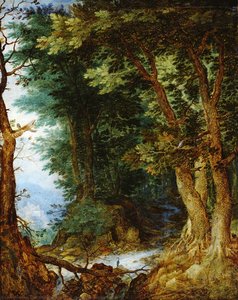
Paisagem [Landscape]

A serene forest landscape featuring sunlit trees and quiet figures by Pedro Weingärtner, capturing a peaceful moment from 1900 that invites you to bring this piece of Brazilian realism into your collection.

"meta_description": "Pedro Weingärtner (1853-1929): pintor brasileño reconocido por sus paisajes realistas, escenas mitológicas y evocadoras pinturas de gauchos e inmigrantes. Descubre su legado artístico en colecciones destacadas."

Adquiera una imagen digital de alta resolución y optimizada, muy superior a la vista previa en línea.

Cada archivo es preparado meticulosamente por nuestros especialistas internos mediante el uso de herramientas avanzadas y un experto retoque manual. Nos aseguramos de que cada imagen posea una claridad excepcional, una precisión cromática impecable y un detalle minucioso.

El archivo final se entrega por correo electrónico en un plazo de 72 horas, optimizado para su uso inmediato en entornos profesionales, editoriales y de impresión. Esta es la misma calidad en la que confían los estudios de diseño, las editoriales y las galerías de primer nivel.

Imagen Digital

Descarga un archivo de alta resolución para exhibición personal, impresión y proyectos creativos. ( Cambiar a formato impreso Encargar reproducción pintada a mano)

Precio total

$ 24,90

Incluido en cada pedido de imágenes digitales

Entrega digital experta, garantizada.

Al elegir WahooArt.com, no solo está adquiriendo una imagen; está recibiendo una obra de arte digital mejorada profesionalmente, elaborada con precisión y respaldada por una garantía de satisfacción. Esto es todo lo que incluye su pedido, automáticamente:

shipping_icon
Entrega inmediata por email

Recibirá su archivo de imagen digital en alta resolución por correo electrónico en un plazo de 72 horas tras realizar su pedido, listo para su uso inmediato.

canvas_icon
Archivo digital optimizado por IA

Su obra de arte se optimiza profesionalmente mediante herramientas avanzadas de IA y edición manual, garantizando el máximo detalle, claridad y precisión cromática.

insurance_icon
Reenvío gratuito de por vida

¿Has borrado o perdido tu archivo por error? No te preocupes: te lo volveremos a enviar en cualquier momento, sin coste adicional.

tax_icon
Sin gastos de importación, siempre

Disfrute de su obra de arte al instante sin aduanas, aranceles ni gastos de envío; las descargas digitales siempre están libres de impuestos.

color_icon
Garantía de precisión de color

Garantizamos que su imagen digital refleje los colores originales con la mayor fidelidad posible, mediante el uso de herramientas profesionales y gestión del color.

return_icon
Garantía de satisfacción de 100 días

Si no está satisfecho con su imagen digital, la revisaremos o le reembolsaremos el 100% en un plazo de 100 días, sin preguntas.

guarantee_icon
100% Garantía de devolución de dinero

¿No está satisfecho? Obtenga un reembolso completo dentro de los 100 días posteriores a la recepción de su archivo digital, sin preguntas.

discount_icon
Descuentos por volumen

Compra 3 imágenes, ahorra 10% - Compra 5, ahorra 15% - Compra 10+, ahorra 20%. Ideal para proyectos creativos, galerías y agencias.

Datos clave

  • Year: 1900
  • Subject or theme: Forest landscape with figures
  • Dimensions: 51 x 101 cm
  • Artistic style: Realism and Romanticism
  • Title: Paisagem [Landscape]

A Serene Encounter with Nature

In the quietude of Paisagem [Landscape], created in 1900 by the master Pedro Weingärtner, we are invited into a world where time seems to decelerate. This evocative work captures a sun-drenched moment within a lush forest, where light filters through a dense canopy to illuminate a tranquil clearing. At the heart of this composition sits a modest building, nestled harmoniously among the trees, serving as a silent witness to the passage of time. The scene is not merely a depiction of flora and architecture, but a carefully orchestrated stage where nature and humanity exist in a delicate, peaceful equilibrium. Scattered throughout the landscape are benches, inviting the viewer to mentally step into the frame and find a place of rest amidst the verdant surroundings.

The presence of two solitary figures—one positioned near the left periphery and another closer to the right—infuses the stillness with a gentle pulse of life. These figures do not dominate the landscape; rather, they are integrated into its rhythm, suggesting a profound connection between the human spirit and the natural world. Their placement creates a subtle narrative tension, a sense of shared experience within a vast, breathing ecosystem. For the collector or interior designer, this painting offers more than just visual beauty; it provides a window into a state of mindfulness, making it an ideal centerpiece for spaces dedicated to reflection, study, or quiet relaxation.

The Mastery of Light and Realism

Technically, Paisagem stands as a testament to Weingärtner’s rigorous academic training in the prestigious academies of Germany and France. His ability to manipulate light is nothing short of extraordinary; he employs a technique that allows sunlight to appear almost tactile, as it dances across the leaves and settles upon the forest floor. This mastery of chiaroscuro—the interplay of light and shadow—creates a sense of three-dimensional depth that draws the eye deep into the woodland thicket. The brushwork, while precise enough to maintain the integrity of the realistic style, possesses a soft, atmospheric quality that evokes the romanticism characteristic of his most celebrated works.

The color palette is a sophisticated arrangement of earthy greens, deep browns, and luminous golds, all working in concert to establish a warm, inviting atmosphere. This careful selection of tones ensures that the painting remains timeless, capable of complementing a wide variety of interior aesthetics, from classical traditionalism to more contemporary, organic modernism. To possess a reproduction of this work is to bring a piece of late 19th-century European academic excellence into a modern home, offering an enduring sense of prestige and tranquility.

A Legacy of Brazilian Impressionism

To understand the emotional weight of this landscape, one must consider the historical context of Pedro Weingärtner’s life. As a pioneer who bridged the gap between the rugged landscapes of his native Brazil and the refined academic traditions of Europe, his work carries a unique cultural duality. Paisagem embodies this synthesis—the structural discipline of the German school blended with a romantic sensibility that celebrates the ephemeral beauty of a single moment in time. It is a piece that speaks to the universal human desire for sanctuary.

For those seeking to curate an art collection that inspires peace and intellectual curiosity, this landscape serves as a foundational element. It does not shout for attention; instead, it whispers of ancient forests, quiet afternoons, and the eternal beauty of the natural world. Whether placed in a grand salon or a private library, the painting acts as an emotional anchor, grounding the surrounding space with its profound sense of serenity and historical depth.


Biografía del artista

Early Life and Artistic Beginnings

Pedro Weingärtner Weingaertner, a pivotal figure in Brazilian art, emerged from the heart of Porto Alegre, Rio Grande do Sul, on July 26, 1853. His early life was deeply rooted in German immigrant traditions, shaping his artistic sensibilities from its inception. Unlike many artists of his time, Weingärtner’s journey into painting began not as a deliberate career choice, but rather as a nurtured passion guided by his brother, Inácio, a skilled lithographer, and possibly the influence of Delfim da Câmara, a painter who may have served as an early mentor. This informal training laid the groundwork for his subsequent formal studies in Germany. In 1878, at the age of twenty-five, Weingärtner embarked on a transformative journey to Karlsruhe, Germany, where he enrolled in the prestigious Grossherzoglich Badische Kunstschule. This institution provided him with rigorous academic instruction under the tutelage of renowned artists such as Ferdinand Keller, Theodor Poeckh, and Ernst Hildebrand – masters who instilled within him the principles of classical composition, meticulous technique, and a deep appreciation for artistic tradition. His time in Karlsruhe wasn’t merely about acquiring technical skills; it was a period of profound intellectual and aesthetic development, shaping his understanding of art history and establishing a foundation for his future work. Following his studies in Karlsruhe, Weingärtner continued his artistic education in Berlin, under the guidance of Ferdinand Keller once again. This move marked a significant shift in his artistic trajectory, exposing him to new influences and broadening his horizons. However, financial difficulties soon prompted a change of plans, leading him to France in 1882. There, he immersed himself in the vibrant art scene of Paris, studying under Tony Robert-Fleury and William-Adolphe Bouguereau – two prominent figures in the French Academic tradition. These encounters further solidified his commitment to classical principles while simultaneously introducing him to new approaches to color, light, and composition.

Artistic Style and Thematic Exploration

Weingärtner’s artistic style is a captivating synthesis of realism and romanticism, reflecting both the academic rigor he received and his deep connection to Brazilian culture. His paintings frequently explored mythological scenes – a testament to his formal training and fascination with the classical world – alongside evocative landscapes that captured the diverse beauty of Brazil's varied terrain. Yet, perhaps most notably, Weingärtner dedicated significant attention to genre paintings, particularly those depicting the gaucho—a quintessential figure of Rio Grande do Sul’s rural heritage. These works weren’t merely portraits; they were imbued with a profound sense of cultural pride and a nuanced understanding of the gaucho's life, traditions, and spirit. While adhering to traditional academicism, Weingärtner’s work possessed a distinctive quality—a subtle blend of meticulous detail and expressive emotion. He was known for his ability to capture not only the physical appearance of his subjects but also their inner lives, imbuing each painting with a sense of narrative depth. His compositions were carefully balanced, his brushwork precise, and his color palettes rich and harmonious. It’s important to note that Weingärtner's style wasn't simply imitation; he skillfully integrated elements of Brazilian folklore and regional identity into his academic training, creating a uniquely Brazilian artistic voice.

Key Works and Historical Context

Pedro Weingärtner Weingaertner’s legacy is preserved in several notable collections across Brazil and beyond. His works can be found at the Museu de Arte do Rio Grande do Sul Ado Malagoli in Porto Alegre, the Sergio Sahione Fadel Private Collection Museum in Rio de Janeiro, and also within prominent collections such as the Colección Andrés Blaisten in Mexico. These institutions serve as vital repositories of his artistic output, allowing future generations to appreciate the breadth and depth of his oeuvre. Weingärtner’s work emerged during a period of significant social and cultural transformation in Brazil—a time marked by rapid modernization, immigration, and shifting identities. His paintings offer valuable insights into this complex era, capturing the spirit of a nation grappling with its past while simultaneously embracing the future. His depictions of immigrants and gauchos, for example, reflect the diverse populations that shaped Brazilian society during the late 19th and early 20th centuries.

Legacy and Recognition

Despite facing challenges in the later years of his career due to evolving artistic trends and increased competition, Pedro Weingärtner Weingaertner remains a highly regarded figure in Brazilian art history. His contributions were recognized during his lifetime, earning him acclaim as one of the most important artists from Rio Grande do Sul. His paintings continue to be studied and admired for their technical skill, emotional depth, and cultural significance. The Museo de Arte del Rio Grande do Sul Ado Malagoli and the Sergio Sahione Fadel Private Collection Museum stand as testaments to his enduring legacy, ensuring that his artistic vision will continue to inspire and captivate audiences for years to come.
Pedro Weingärtner

Pedro Weingärtner

1853 - 1929 , Brasil

Datos clave

  • Artistic Movement Or Style: Pintura académica
  • Artists Or Movements Influenced By This Artist:
    • Tony Robert-Fleury
    • William-Adolphe Bouguereau
  • Artists Who Influenced This Artist:
    • Ferdinand Keller
    • Theodor Poeckh
    • Ernst Hildebrand
  • Date Of Birth: 26 de julio de 1853
  • Date Of Death: 26 de diciembre de 1929
  • Full Name: Pedro Weingärtner Weingaertner
  • Nationality: Brasileño
  • Notable Artworks:
    • Escenas mitológicas
    • Paisajes
    • Pinturas de género
  • Place Of Birth: Porto Alegre, Brasil