


Óleo sobre lienzo pintado a mano en el tamaño y marco de su elección, realizado por encargo por nuestros artistas. ( Comprar impresión Comprar imagen)





























Elija entre nuestros tamaños predefinidos que respetan las proporciones originales de la obra.

Puede ingresar sus propias dimensiones para adaptarse a un marco o espacio específico. Si el tamaño seleccionado no coincide con las proporciones de la imagen original, recortaremos la obra o extenderemos la pintura con elementos adicionales pintados a mano. Se le enviará una maqueta digital para su aprobación antes de comenzar la producción.
Tenga en cuenta que la vista previa en pantalla no refleja el recorte o la extensión reales. Solo la maqueta mostrará con precisión la composición final.
Si bien existen tamaños personalizados, recomendamos seleccionar una dimensión de la lista predefinida para preservar las proporciones originales.
Envío a todo el mundo () en 3-4 semanas en lugar de las 5 semanas estándar. (6 septiembre). Sin comprometer la calidad.


Druid Landscape
Dimensiones de la reproducción
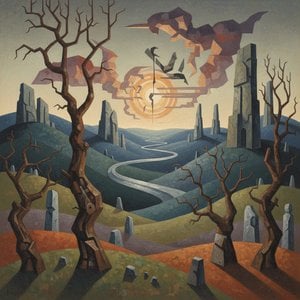
Paul Nash’s Druid Landscape, painted in 1938, isn't merely a depiction of a landscape; it’s an immersion into a carefully constructed dreamscape. Created during a period of profound social and political upheaval – just before the outbreak of World War II – the painting offers a poignant reflection on Britain’s past, its relationship with nature, and the anxieties of a rapidly changing world. Nash, deeply influenced by the Romantic movement and particularly by the visionary works of William Blake, sought to capture not simply what he saw, but what he *felt* about the land itself. The canvas pulsates with an almost unsettling stillness, drawing the viewer into a realm where ancient symbols and modern anxieties intertwine.
The title itself – Druid Landscape – immediately connects the painting to the ancient Celtic tradition of Druidism. While Nash wasn’t a practicing Druid, he was fascinated by the mythology and symbolism associated with these enigmatic figures. The stone circle, a recurring motif in his work, represents a connection to the past, a gateway to the spiritual realm, and a locus of power. It's easy to imagine the Druids performing rituals within this very space, seeking guidance from the spirits of nature. The solitary figure before the stones can be interpreted as an individual searching for meaning or confronting their own mortality – a timeless theme explored throughout art history.
Historical Context:Painted in 1938, the work reflects the growing anxieties surrounding impending war and the loss of traditional values. Nash’s use of ancient symbols served as a way to grapple with these uncertainties, suggesting that Britain's strength lay not in its military might, but in its connection to its roots.
Beyond the obvious references to Stonehenge, Druid Landscape is rich in symbolic detail. The geometric shapes – particularly the circles – are not merely decorative; they represent cycles of time, the interconnectedness of all things, and the underlying order of the universe. The muted color palette contributes to the painting’s overall sense of unease and introspection. Notice how the blues evoke a feeling of melancholy and distance, while the browns ground the scene in the earth. The placement of the figure is crucial; positioned slightly off-center, he seems both lost and strangely at peace within this otherworldly landscape.
Druid Landscape is more than just a painting; it’s an experience. It invites the viewer to step into a world where myth and reality blur, where ancient symbols resonate with contemporary concerns. Paul Nash's ability to capture both the beauty and the unsettling aspects of the British landscape—and the human condition—makes this work a truly remarkable achievement. Today, reproductions of Druid Landscape continue to captivate audiences, offering a glimpse into the mind of one of Britain’s most visionary artists.


1889 - 1946 , Reino Unido

Descubre las 25 obras maestras de Paul Cézanne que revolucionaron el arte moderno. Explora su técnica, inspiración y significado en paisajes, bodegones y retratos. Reproducciones de alta calidad para decorar tu hogar con arte inolvidable. ¡Explora la colección completa en WahooArt.com!
Explore the evocative landscapes & poignant war art of Paul Nash (1889-1946), a key figure in British Modernism. Discover his unique style and lasting impact on art history with WahooArt.

Descubre las 25 obras maestras de Paul Klee, el genio del arte moderno. Explora su expresionismo único, composiciones abstractas y vibrantes paletas de colores. Reproducciones de alta calidad y decoración con arte en WahooArt.com.

Descubre las 25 obras maestras de John Constable, el pintor romántico inglés que capturó la belleza del paisaje. Explora su técnica, historia y significado en WahooArt.com. Reproducciones de arte de alta calidad para tu hogar.

Descubre los 10 paisajes románticos más influyentes de artistas como Caspar David Friedrich y Turner. Explora la belleza, el simbolismo y las técnicas del movimiento romántico. Reproducciones de arte exclusivas en WahooArt.com.

 Ver en contexto
 Enviar
 Compartir
 Detalles

 Descargar
 Similares
 Radiografía
 Presentación de diapositivas


 Ver más







 La opción de vidrio solo está disponible en tamaños inferiores a 110 cm.


