Ver en contextoVer en contexto Vista previa en RAVista previa en RA Comprar pintura hecha a mano Comprar pintura hecha a manoCambiar a imagen digital Cambiar a imagen digital EnviarEnviar
DetallesDetalles Añadir a favoritos Añadir a favoritos DescargarDescargar SimilaresSimilares RadiografíaRadiografía Presentación de diapositivasPresentación de diapositivas EstadísticasEstadísticas

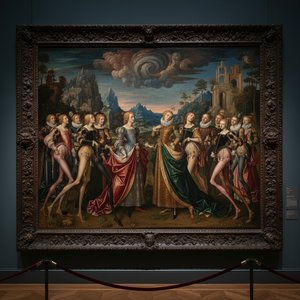
Retrato de Ursula Tucher

Un retrato exquisito de Ursula Tucher por Michael Wolgemut, reflejo del Renacimiento alemán y la nobleza nürnbergera, dominado por el realismo flemmingo y cargado de simbolismo religioso.

Descubre a Michael Wolgemut (1434-1519), pintor y grabador alemán mentor de Dürer! Explora sus influencias flamencas y los icónicos grabados de la Crónica de Nuremberg.

Giclée / Impresión de arte

Impresiones giclée o en lienzo de calidad de museo con producción rápida y opciones de acabado flexibles. (Comprar pintura hecha a mano Comprar pintura hecha a manoCambiar a imagen digital Cambiar a imagen digital)

P118B $10
P118H $10
P118W $10
P438Z $10
P508JH $12
P508YH $12
P805H $10
P805Z $10
P919BZ $10
P919G $10
P919XJ $10
P959ZH $10
P968JZ $12
W106C $8
W218G $10
W218JH $8
W218Y $10
W307PJ $10
W316G $10
W316PJ $8
W316Y $10
W398PJ $8
W4111J $10
W500HY $15
W500JH $15
W692G $12
W849H $8
W940BG $15
W953PJ $8

Estándar
a medida
CM
INCH

Elija entre nuestros tamaños predefinidos que respetan las proporciones originales de la obra.

ancho
altura

Puede introducir sus propias dimensiones para adaptarse a un marco o espacio específico. Si el tamaño seleccionado no coincide con las proporciones de la imagen original, recortaremos la obra de arte o extenderemos la imagen con un borde con efecto espejo o de color sólido. Se enviará una maqueta digital para su aprobación antes de que comience la producción.
Tenga en cuenta que la vista previa en pantalla no refleja el recorte o la extensión real. Solo la maqueta mostrará con precisión la composición final.
Aunque existen tamaños personalizados, recomendamos seleccionar una dimensión de la lista predefinida para preservar las proporciones originales.

Envío a todo el mundo () en 2 semanas en lugar de las 4/5 semanas estándar. (13 septiembre)

why_choose_icon
Envío exprés gratuito a todo el mundo
why_choose_icon
Lienzo de lino de alta calidad
why_choose_icon
Seguro de envío total
why_choose_icon
Garantía de reembolso de impuestos aduaneros
why_choose_icon
Garantía de fidelidad cromática exacta
why_choose_icon
Política de devolución de 100 días (solo por defectos)
why_choose_icon
Garantía de devolución del 100% del dinero
why_choose_icon
Descuento por cantidad

Precio total

$ 68

reproduction

Retrato de Ursula Tucher

Giclée / Impresión de arte

Dimensiones de la reproducción

-

Precio total final

$ 68

Datos clave

  • Title: Portrait of Ursula Tucher
  • Subject or theme: Portraiture
  • Medium: Oil on limewood
  • Influences: Flemish Art
  • Artist: Michael Wolgemut
  • Movement: Northern Renaissance

Test de arte

Cada pregunta tiene una única respuesta correcta.

Pregunta 1:
What artistic movement is prominently represented in the portrait of Ursula Tucher?
Pregunta 2:
Who mentored Michael Wolgemut, significantly influencing his artistic style?
Pregunta 3:
What material was primarily used to create the portrait of Ursula Tucher?
Pregunta 4:
The headdress worn by Ursula Tucher symbolizes what characteristic feature of medieval society?
Pregunta 5:
What is the significance of the small red flower pinned to Ursula Tucher's chest in the painting?

A Window into Renaissance Dignity: Michael Wolgemut’s Portrait of Ursula Tucher

Michael Wolgemut's “Portrait of Ursula Tucher,” painted in 1478, stands as a testament to the burgeoning humanist spirit of Northern Renaissance art. More than just a depiction of an aristocratic woman—Ursula Tucherin herself—the painting embodies ideals of piety, refinement, and familial devotion, reflecting the values prevalent within Nuremberg’s wealthy merchant families during this transformative period.

  • Subject Matter: The portrait focuses on Ursula Tucher, a prominent figure in Nuremberg society. Her dignified pose conveys composure and grace, characteristic of depictions of noblewomen intended to project an aura of virtue and respectability.
  • Style & Technique: Wolgemut’s masterful realism is evident in the meticulous rendering of textures—particularly the folds of Ursula’s gown—demonstrating a sophisticated understanding of chiaroscuro (light and shadow), a technique borrowed heavily from Flemish painting traditions.
  • Material & Medium: Executed on limewood, a durable wood favored for portraiture, the painting utilizes oil paint, allowing for subtle gradations of color and capturing nuanced details that would have been unattainable with tempera.

Symbolism Embedded in Detail

Beyond mere representation, Wolgemut infused the artwork with symbolic elements designed to communicate Ursula’s status and character. The white headdress—a ubiquitous feature of aristocratic women's attire—signifies purity and modesty, aligning perfectly with Christian ideals of piety. Similarly, the red flower pinned to Ursula’s chest symbolizes love and beauty – perhaps a personal emblem reflecting her marital happiness.

  • The Headdress: Representing chastity and social standing, it underscores the importance of familial honor within Renaissance society.
  • The Flower: Symbolizing affection and vitality, it speaks to Ursula’s inner life and contributes to the overall impression of serenity and grace.

A Reflection of Nuremberg's Artistic Landscape

Wolgemut’s workshop was at the epicenter of Nuremberg’s artistic flourishing—a city renowned for its printing press and burgeoning patronage of the arts. His influence extended far beyond his own creations, notably shaping the formative years of Albrecht Dürer, arguably Germany’s most celebrated Renaissance artist. Studying Wolgemut's work offers invaluable insight into the stylistic conventions and intellectual currents that defined this era.

  • Workshop Influence: Wolgemut served as mentor to Dürer, fostering a collaborative spirit that propelled both artists to unprecedented heights of artistic achievement.
  • Contextual Significance: The painting’s stylistic choices—particularly its embrace of Flemish realism—reflect the broader trend toward naturalistic representation and emotional depth within Northern Renaissance art.

Emotional Resonance & Legacy

"Portrait of Ursula Tucher" transcends mere visual depiction; it captures a moment in time, encapsulating the values and aspirations of its subject. The artist’s careful attention to detail—the gaze, the posture, the subtle expressions—invites contemplation on themes of dignity, virtue, and familial devotion. It remains an enduring masterpiece, demonstrating Wolgemut's unparalleled skill and cementing Nuremberg’s place as a beacon of artistic innovation during the Renaissance.


Biografía del artista

Michael Wolgemut: Un Maestro de Núremberg y Mentor de Dürer

  • Nacido: Núremberg, Alemania (1434)
  • Fallecido: 1519

Vida Temprana y Formación

  • Michael Wolgemut nació en Núremberg alrededor de 1434. Su padre, Valentin Wolgemut, también era pintor, y Michael comenzó su formación artística con él.
  • Alrededor de 1465, creó un retablo que consistía en cuatro paneles, marcando una de sus primeras obras conocidas.
  • Posteriormente trabajó como asistente de Hans Pleydenwurff en Núremberg, adquiriendo valiosa experiencia en un taller prominente.
  • Un breve período lo vio trabajando con Gabriel Malesskircher en Múnich (principios de 1471), aunque esto terminó después de una disputa legal.

Asunción del Taller y Desarrollo Artístico

  • En 1472, Wolgemut se casó con la viuda de Pleydenwurff e heredó su taller, convirtiéndose en uno de los artistas líderes de Núremberg. Wilhelm Pleydenwurff, hijo de Hans, se convirtió en asistente y luego en socio del taller.
  • El estilo de Wolgemut estuvo influenciado por maestros flamencos, lo que sugiere posibles viajes dentro de Flandes (moderna Bélgica y áreas circundantes). Sus pinturas demuestran esta influencia con su atención al detalle y el uso del color.
  • El taller floreció bajo el liderazgo de Wolgemut, produciendo una amplia gama de obras que incluyen retablos, retablos de madera tallada y pintados, e importantes numerosos grabados en xilografía.

Xilografías, la Crónica de Núremberg y Legado

  • Wolgemut fue una figura clave en la revitalización del arte de la xilografía alemana. Su taller produjo muchas xilografías para editores en Núremberg, a menudo utilizadas para ilustrar libros.
  • Sus xilografías mostraron avances sobre las técnicas anteriores, representando el volumen y el sombreado de manera más efectiva. A menudo se coloreaban a mano después de la impresión.

  • Un logro monumental fue su colaboración con Wilhelm Pleydenwurff en las ilustraciones para el Liber Chronicarum (Crónica de Núremberg) de Hartmann Schedel, publicado en 1493. Esta crónica ricamente ilustrada se convirtió en una publicación emblemática y mostró la habilidad de Wolgemut en el diseño de xilografías. El proyecto implicó una planificación extensa, incluyendo diseños manuscritos tanto del texto como de las imágenes.
  • Quizás su legado más significativo es como maestro de Albrecht Dürer. Dürer se formó con Wolgemut entre 1486 y 1489, aprendiendo técnicas y principios artísticos valiosos que moldearían su propia carrera innovadora. Si bien Dürer superó a su mentor en fama, reconoció la influencia de Wolgemut durante toda su vida.

Obras Principales y Significado Histórico

  • Retablo del Altar Mayor en Zwickau (1479): Una obra temprana significativa que demuestra su habilidad en la pintura de retablos.
  • Gran Retablo para la Iglesia de los Hermanos Augustinos, Núremberg: Una de sus obras más grandes e importantes, ahora ubicada en el museo.
  • Decoraciones del Ayuntamiento en Goslar (1501): Una gran serie de pinturas que demuestran su versatilidad.
  • Retratos: Wolgemut también fue un respetado retratista, conocido por sus representaciones realistas con meticuloso detalle. Ejemplos incluyen retratos conservados por la Royal Institution en Liverpool.

  • La contribución de Wolgemut al arte alemán radica no solo en sus propias obras, sino también en el establecimiento de un taller próspero que formó a numerosos artistas, más notablemente Albrecht Dürer. Su papel en popularizar la ilustración de xilografía a través de proyectos como la Crónica de Núremberg impactó significativamente la producción de libros y la difusión artística durante el Renacimiento.
  • Sus influencias flamencas combinadas con su enfoque innovador del diseño de xilografías ayudaron a dar forma al desarrollo del arte alemán a finales del siglo XV.
Michael Wolgemut

Michael Wolgemut

1434 - 1519 , Alemania

Datos clave

  • Artistas Influyentes:
    • Hans Pleydenwurff
    • Martin Schongauer
  • Fecha De Fallecimiento: 1519
  • Fecha De Nacimiento: 1434
  • Influenciado Por: ['Albrecht Dürer']
  • Lugar De Nacimiento: Núremberg, Alemania
  • Movimiento Artístico: Renacimiento alemán
  • Nacionalidad: Alemán
  • Nombre Completo: Michael Wolgemut
  • Obras Notables:
    • Retablo de Zwickau
    • Gran retablo de Núremberg
    • Crónica de Núremberg
Explore obras de arte organizadas por temas, estilos y características.