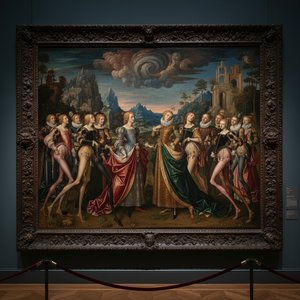
A Window into Renaissance Dignity: Michael Wolgemut’s Portrait of Ursula Tucher
Michael Wolgemut's “Portrait of Ursula Tucher,” painted in 1478, stands as a testament to the burgeoning humanist spirit of Northern Renaissance art. More than just a depiction of an aristocratic woman—Ursula Tucherin herself—the painting embodies ideals of piety, refinement, and familial devotion, reflecting the values prevalent within Nuremberg’s wealthy merchant families during this transformative period.
- Subject Matter: The portrait focuses on Ursula Tucher, a prominent figure in Nuremberg society. Her dignified pose conveys composure and grace, characteristic of depictions of noblewomen intended to project an aura of virtue and respectability.
- Style & Technique: Wolgemut’s masterful realism is evident in the meticulous rendering of textures—particularly the folds of Ursula’s gown—demonstrating a sophisticated understanding of chiaroscuro (light and shadow), a technique borrowed heavily from Flemish painting traditions.
- Material & Medium: Executed on limewood, a durable wood favored for portraiture, the painting utilizes oil paint, allowing for subtle gradations of color and capturing nuanced details that would have been unattainable with tempera.
Symbolism Embedded in Detail
Beyond mere representation, Wolgemut infused the artwork with symbolic elements designed to communicate Ursula’s status and character. The white headdress—a ubiquitous feature of aristocratic women's attire—signifies purity and modesty, aligning perfectly with Christian ideals of piety. Similarly, the red flower pinned to Ursula’s chest symbolizes love and beauty – perhaps a personal emblem reflecting her marital happiness.
- The Headdress: Representing chastity and social standing, it underscores the importance of familial honor within Renaissance society.
- The Flower: Symbolizing affection and vitality, it speaks to Ursula’s inner life and contributes to the overall impression of serenity and grace.
A Reflection of Nuremberg's Artistic Landscape
Wolgemut’s workshop was at the epicenter of Nuremberg’s artistic flourishing—a city renowned for its printing press and burgeoning patronage of the arts. His influence extended far beyond his own creations, notably shaping the formative years of Albrecht Dürer, arguably Germany’s most celebrated Renaissance artist. Studying Wolgemut's work offers invaluable insight into the stylistic conventions and intellectual currents that defined this era.
- Workshop Influence: Wolgemut served as mentor to Dürer, fostering a collaborative spirit that propelled both artists to unprecedented heights of artistic achievement.
- Contextual Significance: The painting’s stylistic choices—particularly its embrace of Flemish realism—reflect the broader trend toward naturalistic representation and emotional depth within Northern Renaissance art.
Emotional Resonance & Legacy
"Portrait of Ursula Tucher" transcends mere visual depiction; it captures a moment in time, encapsulating the values and aspirations of its subject. The artist’s careful attention to detail—the gaze, the posture, the subtle expressions—invites contemplation on themes of dignity, virtue, and familial devotion. It remains an enduring masterpiece, demonstrating Wolgemut's unparalleled skill and cementing Nuremberg’s place as a beacon of artistic innovation during the Renaissance.



 Vista previa
 Cambiar a formato impreso
 Compartir
 Compartir
 Ver detalles

 Descargar
 Ver artículos similares
 Radiografía
 Presentación de diapositivas
 Estadísticas


 Leer más






































 La opción de vidrio solo está disponible en tamaños inferiores a 110 cm.