Vista previa Vista previa en RA Cambiar a formato impreso Ver versión en imagen digital Compartir
Ver detalles Guía Añadir a favoritos Descargar Ver artículos similares Radiografía Presentación de diapositivas Estadísticas

Ca d

A poignant 1845 depiction of the decaying Venetian Casa d'Oro by John Ruskin captures the tragic beauty of Gothic architecture during its restoration, inviting you to explore this evocative piece of history.

Descubre a John Ruskin (1819-1900), polímata victoriano, crítico de arte y pensador social. Explora sus paisajes, análisis arquitectónicos e influyentes ensayos sobre la naturaleza y la sociedad.

Reproducción al óleo hecha a mano

Óleo sobre lienzo pintado a mano en el tamaño y marco de su elección, realizado por encargo por nuestros artistas. ( Cambiar a formato impreso Ver versión en imagen digital)

Corner sample of the P118B picture frame: poliestireno moldeado, 5 cm wide and 3 cm thick
P118B 10
Corner sample of the P118H picture frame: poliestireno moldeado, 5 cm wide and 3 cm thick
P118H 10
Corner sample of the P118W picture frame: poliestireno moldeado, 5 cm wide and 3 cm thick
P118W 10
Corner sample of the P438Z picture frame: poliestireno moldeado, 5.5 cm wide and 3.5 cm thick
P438Z 10
Corner sample of the P508JH picture frame: poliestireno moldeado, 7 cm wide and 3.5 cm thick
P508JH 12
Corner sample of the P508YH picture frame: poliestireno moldeado, 7 cm wide and 3.5 cm thick
P508YH 12
Corner sample of the P805H picture frame: poliestireno moldeado, 5 cm wide and 3.5 cm thick
P805H 10
Corner sample of the P805Z picture frame: poliestireno moldeado, 5 cm wide and 3.5 cm thick
P805Z 10
Corner sample of the P919BZ picture frame: poliestireno moldeado, 7 cm wide and 3.5 cm thick
P919BZ 10
Corner sample of the P919G picture frame: poliestireno moldeado, 7 cm wide and 3.5 cm thick
P919G 10
Corner sample of the P919XJ picture frame: poliestireno moldeado, 7 cm wide and 3.5 cm thick
P919XJ 10
Corner sample of the P959ZH picture frame: poliestireno moldeado, 5 cm wide and 3 cm thick
P959ZH 10
Corner sample of the P968JZ picture frame: poliestireno moldeado, 6 cm wide and 4 cm thick
P968JZ 12
Corner sample of the W106C picture frame: madera maciza, 5 cm wide and 3 cm thick
W106C 8
Corner sample of the W218G picture frame: madera maciza, 5 cm wide and 3 cm thick
W218G 10
Corner sample of the W218JH picture frame: madera maciza, 5 cm wide and 3 cm thick
W218JH 8
Corner sample of the W218Y picture frame: madera maciza, 5 cm wide and 3 cm thick
W218Y 10
Corner sample of the W307PJ picture frame: madera maciza, 6 cm wide and 3 cm thick
W307PJ 10
Corner sample of the W316G picture frame: madera maciza, 6 cm wide and 3 cm thick
W316G 10
Corner sample of the W316PJ picture frame: madera maciza, 6 cm wide and 3 cm thick
W316PJ 8
Corner sample of the W316Y picture frame: madera maciza, 6 cm wide and 3 cm thick
W316Y 10
Corner sample of the W398PJ picture frame: madera maciza, 5 cm wide and 3 cm thick
W398PJ 8
Corner sample of the W4111J picture frame: madera maciza, 6.5 cm wide and 3.5 cm thick
W4111J 10
Corner sample of the W500HY picture frame: madera maciza, 7 cm wide and 5 cm thick
W500HY 15
Corner sample of the W500JH picture frame: madera maciza, 7 cm wide and 5 cm thick
W500JH 15
Corner sample of the W692G picture frame: madera maciza, 8 cm wide and 4 cm thick
W692G 12
Corner sample of the W849H picture frame: madera maciza, 5 cm wide and 3 cm thick
W849H 8
Corner sample of the W940BG picture frame: madera maciza, 7.5 cm wide and 4.5 cm thick
W940BG 15
Corner sample of the W953PJ picture frame: madera maciza, 6 cm wide and 3.5 cm thick
W953PJ 8

Estándar
personalizado
CM
INCH

Elija entre nuestros tamaños predefinidos que respetan las proporciones originales de la obra.

ancho
altura

Type the width and the height you need, to fit your frame or your wall. This is hand-painted, so for a size with a different shape the artist can paint a bit more around the picture, or cut a bit — you choose. We send you a digital mockup to approve before the painting starts. The picture shown on this page does not show the real result — only the mockup does.

Ejemplos de lo que se puede personalizar: Reemplace el rostro con una foto del cliente; Agregue una mascota (por ejemplo, cambie un gato por un perro); Incluya un mensaje oculto en el fondo; Cambie el paisaje o los elementos del fondo.
Tras realizar el pedido, el equipo de WahooArt.com enviará un correo electrónico al cliente para solicitar instrucciones y proporcionarle una vista previa del boceto.

Envío a todo el mundo () en 3-4 semanas en lugar de las 5 semanas estándar. (14 octubre). Sin comprometer la calidad.

Envío exprés gratuito a todo el mundo
Lienzo de lino de alta calidad
Seguro de envío completo
Garantía de reembolso de impuestos aduaneros
Garantía de fidelidad cromática exacta
Política de devolución de 100 días (solo por defectos)
Garantía de devolución del 100% del dinero
Oferta por volumen

Precio total

€ 236

Ca d

Técnica de reproducción

Tamaño de la reproducción

-

Precio total

€ 236

Datos clave

  • Title: Ca d
  • Subject or theme: Venetian architecture and decay
  • Dimensions: 33 x 47 cm

A Witness to Vanishing Splendor

In the delicate, precise lines of John Ruskin’s 1845 work, Ca d'Oro, we find more than just a depiction of Venetian architecture; we encounter a poignant eulogy for a fading era. Created during a transformative and turbulent period in Venice, this piece captures the Casa d’Oro at a moment of profound vulnerability. As Ruskin traversed the canals in 1845, he was not merely an observer of beauty but a witness to its systematic dismantling. The painting serves as a hauntingly beautiful record of the building's facade, capturing the intricate Gothic details and the subtle irregularities that spoke of a glorious, yet decaying, past. For the discerning collector, this work offers a rare window into the soul of 19th-century Venice, preserving the very textures that the era’s "restorations" sought to erase.

The composition is anchored by the magnificent, ornate architecture of the palace, where large, numerous windows create a rhythmic sense of grandeur and light. Ruskin’s technique, rooted in his deep commitment to truth in art, allows the viewer to perceive the weight and history of the stone. The prominent clock tower rises with a commanding presence, acting as a sentinel over the bustling scene below. Scattered throughout the foreground, small figures move through the space, providing a sense of scale that emphasizes the monumental nature of the structure. There is a palpable tension in the brushwork—a careful balance between the architectural precision required to document the Gothic carvings and a soft, atmospheric quality that evokes the humid, shimmering air of the Venetian lagoon.

Beyond its technical mastery, the emotional resonance of Ca d'Oro lies in its inherent melancholy. To look upon this piece is to feel the heartache of the artist, who famously lamented seeing the "noble pile" being hammered down by workmen. The painting captures a fleeting moment of existence before the loss of the red marble bases and the legendary interior staircase. For an interior designer or art enthusiast, this work brings a sense of historical depth and intellectual gravity to any space. It is not merely a decorative element but a conversation piece that invites contemplation on the themes of preservation, the passage of time, and the sanctity of original craftsmanship. Owning a reproduction of this masterpiece means hosting a fragment of history—a tribute to the enduring power of beauty even in the face of inevitable decay.

Preguntas y respuestas

¿De qué tamaño se recomienda "Ca d" para un Living Room?

En un Living Room, se sugiere imprimir "Ca d" en un tamaño de Small.

¿Qué tema y atmósfera combina "Ca d" de John Ruskin?

"Ca d" de John Ruskin representa architecture, clock tower, windows, people, building facade, ornate details, con un ambiente Nostalgic. El tema y la atmósfera describen juntos la obra.

¿Para qué estancia se recomienda "Ca d" de John Ruskin?

Una reproducción de "Ca d" encaja perfectamente en un Living Room.


Biografía del artista

Primeros años y educación

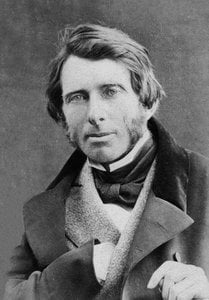
John Ruskin, un renombrado polímata inglés, nació el 8 de febrero de 1819 en Londres, Reino Unido. Su infancia estuvo marcada por las influencias contrastantes de su padre, John James Ruskin, y su madre, Margaret Cock. Esta dualidad se reflejaría más tarde en sus diversos intereses y estilos de escritura. La educación temprana de Ruskin tuvo lugar en casa, bajo la guía de sus padres y tutores privados. Posteriormente asistió al King's College de Londres, donde se preparó para la Universidad de Oxford. Este fundamento académico sentó las bases para sus futuros proyectos.

Trayectoria artística y literaria

Los estilos de escritura y las formas literarias de John Ruskin fueron tan variados como sus intereses. Escribió ensayos, tratados, poesía, conferencias, guías de viaje e incluso un cuento de hadas. Sus detallados bocetos y pinturas de rocas, plantas, aves, paisajes y estructuras arquitectónicas demostraron su destreza artística. Su primera obra importante, *Modern Painters* (1843), defendió la obra de J.M.W. Turner, enfatizando la importancia de "la verdad a la naturaleza". Esto marcó el comienzo de su amplio reconocimiento e influencia en el arte y la literatura del siglo XIX.

Obras destacadas y legado

  • Dawn, Coniston (Abbot Hall Art Gallery, Kendal, Reino Unido) - una pintura a la acuarela que muestra la habilidad de Ruskin para capturar la belleza de la naturaleza.
  • Fors Clavigera (1871-1884) - una serie de cartas a los trabajadores y jornaleros de Gran Bretaña, destacando sus preocupaciones sociales y políticas.
El legado de Ruskin se extiende más allá de sus creaciones artísticas. Fue miembro fundador del Guild of St George, una organización que perdura en la actualidad. Su pensamiento influyó profundamente en el movimiento Arts and Crafts, promoviendo la artesanía y la oposición a la producción industrial masiva. Ruskin abogó por la preservación de edificios históricos y contribuyó significativamente al campo de la arquitectura gótica.

Influencias y desarrollo

Ruskin fue influenciado por una amplia gama de fuentes, incluyendo las obras de William Wordsworth, Thomas Carlyle y los escritos sobre la naturaleza y el arte medieval. Su temprano interés en la geología y la botánica se reflejó en sus detalladas observaciones de la naturaleza. A medida que maduró, su pensamiento evolucionó hacia una crítica social más profunda, abordando temas como la pobreza, la desigualdad y la relación entre el hombre y el medio ambiente. Ruskin desarrolló una filosofía estética basada en la honestidad, la sinceridad y la conexión con la naturaleza, rechazando la artificialidad y la superficialidad del arte moderno.

Significado histórico

John Ruskin es considerado una figura clave del pensamiento victoriano. Su crítica al arte y a la sociedad influyó profundamente en artistas, arquitectos, reformadores sociales y educadores. Sus escritos sobre arquitectura gótica ayudaron a promover su conservación y estudio. Ruskin también fue un pionero en el campo de la ecología, anticipando muchas de las preocupaciones ambientales que son relevantes hoy en día. Su legado continúa inspirando a aquellos que buscan una comprensión más profunda del arte, la naturaleza y la sociedad.

John Ruskin

John Ruskin

1819 - 1900 , Reino Unido

Datos clave

  • Artistas Que Influyeron: ['J.M.W. Turner']
  • Fecha De Muerte: 1900
  • Fecha De Nacimiento: 8 de febrero de 1819
  • Influencia En Artistas: ['Sir John Everett Millais']
  • Lugar De Nacimiento: Londres, Reino Unido
  • Movimiento Artístico: Prerrafaelismo, Romanticismo
  • Nacionalidad: Británico
  • Nombre Completo: John Ruskin
  • Obras Notables:
    • Amanecer, Coniston
    • Fors Clavigera