Cambiar a Impresión Cambiar a ImpresiónComprar pintura hecha a mano Comprar pintura hecha a mano EnviarEnviar
DetallesDetalles Añadir a favoritos Añadir a favoritos DescargarDescargar SimilaresSimilares Presentación de diapositivasPresentación de diapositivas EstadísticasEstadísticas

For Humanity Obverse

Explore 'For Humanity Obverse,' a poignant bronze medal commemorating WWI efforts by James Earle Fraser. Featuring a soldier and landscape, it reflects the era's humanitarian spirit & artistic mastery.

Descubre James Earle Fraser, escultor americano del Oeste: 'Fin del Sendero', el níquel de búfalo y su legado capturando la cultura nativa americana.

Adquiera una imagen digital de alta resolución y optimizada, muy superior a la vista previa en línea.

Cada archivo es preparado meticulosamente por nuestros especialistas internos mediante el uso de herramientas avanzadas y un experto retoque manual. Nos aseguramos de que cada imagen posea una claridad excepcional, una precisión cromática impecable y un detalle minucioso.

El archivo final se entrega por correo electrónico en un plazo de 72 horas, optimizado para su uso inmediato en entornos profesionales, editoriales y de impresión. Esta es la misma calidad en la que confían los estudios de diseño, las editoriales y las galerías de primer nivel.

Imagen Digital

Descarga un archivo de alta resolución para exhibición personal, impresión y proyectos creativos. (Cambiar a Impresión Cambiar a ImpresiónComprar pintura hecha a mano Comprar pintura hecha a mano)

Precio total

$ 24,90

Incluido en cada pedido de imágenes digitales

Entrega digital experta, garantizada.

Al elegir WahooArt.com, no solo está adquiriendo una imagen; está recibiendo una obra de arte digital mejorada profesionalmente, elaborada con precisión y respaldada por una garantía de satisfacción. Esto es todo lo que incluye su pedido, automáticamente:

shipping_icon
Entrega rápida por email

Recibirá su archivo de imagen digital en alta resolución por correo electrónico en un plazo de 72 horas tras realizar su pedido, listo para su uso inmediato.

canvas_icon
Archivo digital optimizado por IA

Su obra de arte se optimiza profesionalmente mediante herramientas avanzadas de IA y edición manual, garantizando el máximo detalle, claridad y precisión cromática.

insurance_icon
Reenvío gratuito de por vida

¿Has borrado o perdido tu archivo por error? No te preocupes: te lo volveremos a enviar en cualquier momento, sin coste adicional.

tax_icon
Sin gastos de importación, siempre

Disfrute de su obra de arte al instante sin aduanas, aranceles ni gastos de envío; las descargas digitales siempre están libres de impuestos.

color_icon
Garantía de fidelidad de color

Garantizamos que su imagen digital refleje los colores originales con la mayor fidelidad posible, mediante el uso de herramientas profesionales y gestión del color.

return_icon
Garantía de satisfacción de 100 días

Si no está satisfecho con su imagen digital, la revisaremos o le reembolsaremos el 100% en un plazo de 100 días, sin preguntas.

guarantee_icon
100% Garantía de devolución de dinero

¿No está satisfecho? Obtenga un reembolso completo dentro de los 100 días posteriores a la recepción de su archivo digital, sin preguntas.

discount_icon
Descuentos por pedidos grandes

Compra 3 imágenes, ahorra 10% - Compra 5, ahorra 15% - Compra 10+, ahorra 20%. Ideal para proyectos creativos, galerías y agencias.

Datos clave

  • Year: 1918
  • Artistic style: Realistic
  • Subject or theme: Humanitarian efforts
  • Title: For Humanity Obverse
  • Artist: James Earle Fraser
  • Movement: Art Deco
  • Influences:
    • Western art
    • Historical

Test de arte

Cada pregunta tiene una única respuesta correcta.

Pregunta 1:
What is the primary subject depicted in the image of "For Humanity Obverse"?
Pregunta 2:
Which year is prominently featured on the medal in the image?
Pregunta 3:
Who is credited as the artist of "For Humanity Obverse"?
Pregunta 4:
The crossed swords on the medal represent which theme?
Pregunta 5:
What does the landscape depicted on the medal symbolize?

The Weight of Remembrance: James Earle Fraser’s “For Humanity Obverse”

James Earle Fraser's "For Humanity Obverse," a bronze medal commemorating the efforts during World War I, transcends mere commemorative function. It stands as a poignant testament to sacrifice, resilience, and the enduring human spirit in the face of conflict. Crafted by one of America’s most celebrated sculptors, Fraser masterfully captures a pivotal moment – a line of soldiers advancing with resolute determination – within a meticulously detailed bronze surface that speaks volumes about both the era and the artist's profound understanding of form and emotion.

The medal’s design immediately draws the eye to the central figure: a soldier, rendered in profile, carrying his rifle over his shoulder. His posture is one of unwavering commitment, yet there’s an underlying tension, a suggestion of the immense burden he carries. To his left, crossed swords – a potent symbol of battle and conflict – are subtly integrated, reminding us of the brutal realities that fueled this humanitarian effort. Below him, a landscape of rolling hills or mountains provides a grounding element, anchoring the scene in a tangible reality while simultaneously hinting at the vastness of the war’s impact. The weathered patina of the bronze itself contributes significantly to the piece's narrative; it whispers tales of time and exposure, lending an air of authenticity and historical weight.

A Sculptor Forged by the West

James Earle Fraser’s artistic journey was deeply intertwined with the American West. Born in Minnesota and raised amidst frontier life, he developed a unique perspective shaped by his family's history – his father an engineer involved in recovering remains from Little Bighorn, and his mother tracing her lineage back to the Pilgrims. This formative experience instilled within him a profound appreciation for both the rugged beauty of the landscape and the complexities of American identity. Fraser’s early exposure to Native American culture further enriched his artistic sensibilities, informing his approach to depicting human figures with sensitivity and respect.

His training in Paris provided him with invaluable exposure to European artistic traditions, particularly classical sculpture, which he skillfully integrated into his own distinctive style. Fraser's work is characterized by a remarkable realism, achieved through painstaking attention to detail – the folds of the soldier’s uniform, the texture of the landscape, and the subtle nuances of expression on the figure’s face. This commitment to accuracy, combined with an intuitive understanding of human psychology, elevates “For Humanity Obverse” beyond a simple commemorative medal; it becomes a powerful visual narrative.

Symbolism and Historical Context

The inscription "FOR HUMANITY" boldly declares the medal’s purpose – a recognition of those who dedicated themselves to humanitarian efforts during World War I. However, the image itself carries deeper symbolic weight. The advancing soldiers represent not just military strength but also courage, sacrifice, and unwavering resolve. The crossed swords serve as a reminder of the conflict that necessitated these actions, while the landscape symbolizes the world being shaped by war’s consequences.

Created in 1918, during the height of the Great War, “For Humanity Obverse” reflects the nation's collective response to a global crisis. It was commissioned as part of a series of medals recognizing individuals and organizations involved in humanitarian work – efforts ranging from medical care to refugee assistance. The medal’s design embodies the spirit of patriotism and service that defined America’s wartime experience, capturing both the solemnity of loss and the unwavering hope for a better future.

A Legacy in Bronze

James Earle Fraser's "For Humanity Obverse" remains a significant work of American art. Beyond its historical context, it stands as a testament to the artist’s skill, vision, and profound understanding of human nature. The medal’s enduring appeal lies not only in its technical brilliance but also in its ability to evoke powerful emotions – empathy, respect, and a sense of shared humanity. Reproductions of this remarkable bronze piece offer a tangible connection to a pivotal moment in history, allowing us to contemplate the sacrifices made by those who fought for peace and justice.


Biografía del artista

Vida Temprana y Educación

  • Nacimiento y Familia: James Earle Fraser nació el 4 de noviembre de 1876 en Winona, Minnesota, hijo de Thomas Alexander Fraser y Caroline E. (West) Fraser.
  • Antecedentes Familiares: La ascendencia de su madre se remontaba a los peregrinos de Plymouth, mientras que su padre era un ingeniero involucrado en la expansión del ferrocarril por el oeste americano.
  • Primeros Contactos con el Oeste: La familia se mudó cerca de Mitchell, Dakota del Sur, cuando James tenía cuatro años, sumergiéndolo en la vida fronteriza y la cultura nativa americana. El trabajo de su padre recuperando restos de la Batalla de Little Bighorn impactó profundamente su crianza.
  • Comienzos Artísticos: Fraser comenzó a esculpir con losas de piedra caliza que encontró cerca de su casa, demostrando un talento artístico temprano.
  • Formación Formal: Estudió en el Instituto de Arte de Chicago en 1890 y más tarde en París en la École des Beaux Arts y Académie Julian.

Desarrollo Artístico e Influencias

  • Mentoría bajo Saint-Gaudens: Fraser sirvió como asistente de Augustus Saint-Gaudens, un escultor prominente, influyendo significativamente en su estilo y técnica.
  • Influencia Impresionista: Su obra reflejó el énfasis del movimiento impresionista en capturar momentos fugaces y la luz natural.
  • Temas del Oeste Americano: El arte de Fraser se centró constantemente en temas relacionados con el oeste americano, los nativos americanos y la vida fronteriza, provenientes de sus experiencias infantiles.
  • Carrera Docente: Enseñó en la Art Students League de Nueva York a partir de 1906, más tarde convirtiéndose en su director, compartiendo su conocimiento y pasión por la escultura.
  • Colaboración con Laura Gardin Fraser: Su esposa, Laura Gardin Fraser, también fue una escultora talentosa, y colaboraron en varios proyectos, incluyendo el medio dólar del Monumento al Sendero de Oregón.

Obras Mayores y Logros

  • Fin del Sendero (1894-1915): Esta icónica escultura representa a un nativo americano cansado sobre su caballo, simbolizando el declive de su cultura y forma de vida. Originalmente creada como una pieza de yeso en 1894, ganó prominencia en la Exposición Internacional Panamá-Pacífico de 1915.
  • Moneda de Búfalo (1913): Fraser diseñó la moneda de búfalo, oficialmente conocida como la moneda de cabeza india, con un retrato de un nativo americano y un bisonte americano. Sigue siendo una de las monedas más queridas y reconocibles en la historia de los Estados Unidos.
  • Esculturas Arquitectónicas en Washington D.C.: Contribuyó significativamente al paisaje arquitectónico de Washington, D.C., con esculturas en el Tribunal Supremo (La Autoridad de la Ley y La Contemplación de la Justicia), Archivos Nacionales, Edificio del Tesoro y Monumento a Jefferson.
  • Otras Obras Notables: Estas incluyen *Por la Humanidad Anverso* (1918) y *Comité Americano para las Regiones Devastadas de Francia* (1919), demostrando su versatilidad en el diseño de medallas.

Legado e Importancia Histórica

  • Simbolismo del Oeste Americano: La obra de Fraser capturó el espíritu y las complejidades del oeste americano, ofreciendo un retrato matizado de su historia y gente.
  • Impacto en el Arte Numismático: La moneda de búfalo sigue siendo un ejemplo celebrado de logro artístico en el diseño de monedas, influyendo en obras numismáticas posteriores.
  • Reconocimiento y Premios: Recibió numerosos premios, incluyendo la Medalla Saltus de la Sociedad Numismática Americana y la medalla de oro del Instituto Nacional de Artes y Letras.
  • Inspiración Continua: Las esculturas de Fraser continúan inspirando a artistas e historiadores hoy en día, sirviendo como un recordatorio del pasado de América y su diálogo cultural en curso.
  • Su obra es integral a muchas de las estructuras más icónicas de Washington, D.C., consolidando su lugar en la historia del arte americano.
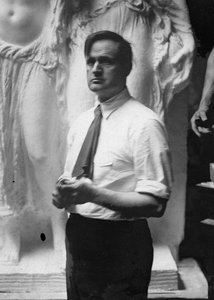
James Earle Fraser

James Earle Fraser

1876 - 1953 , Estados Unidos de América

Breves datos

  • Artistas Que Influyeron: ['Augustus Saint-Gaudens']
  • Fecha De Fallecimiento: 1953
  • Fecha De Nacimiento: 4 de noviembre de 1876
  • Lugar De Nacimiento: Winona, EE. UU.
  • Movimiento Artístico: Realismo, Impresionismo
  • Nacionalidad: Estadounidense
  • Nombre Completo: James Earle Fraser
  • Obras Notables:
    • End of the Trail
    • Buffalo Nickel