x
Ver en contextoVer en contexto Vista previa en RAVista previa en RA Comprar pintura hecha a mano Comprar pintura hecha a manoComprar imagen Comprar imagen EnviarEnviar
DetallesDetalles Añadir a favoritos Añadir a favoritos DescargarDescargar SimilaresSimilares RadiografíaRadiografía Presentación de diapositivasPresentación de diapositivas

LES CHANTEURS AMBULANTS

Hubert Robert’s "Les Chanteurs Ambulants" captures a nostalgic Roman scene with musicians and onlookers amidst ancient ruins, showcasing his mastery of light, atmosphere & romantic decay.

Descubre Hubert Robert (1733-1808), pintor francés de paisajes evocadores y 'caprichos' con ruinas romanas y francesas, capturando la belleza en la decadencia.

Giclée / Impresión de arte

Impresiones giclée o en lienzo de calidad de museo con producción rápida y opciones de acabado flexibles. (Comprar pintura hecha a mano Comprar pintura hecha a manoComprar imagen Comprar imagen)

P118B $10
P118H $10
P118W $10
P438Z $10
P508JH $12
P508YH $12
P805H $10
P805Z $10
P919BZ $10
P919G $10
P919XJ $10
P959ZH $10
P968JZ $12
W106C $8
W218G $10
W218JH $8
W218Y $10
W307PJ $10
W316G $10
W316PJ $8
W316Y $10
W398PJ $8
W4111J $10
W500HY $15
W500JH $15
W692G $12
W849H $8
W940BG $15
W953PJ $8

Estándar
a medida
CM
INCH

Elija entre nuestros tamaños predefinidos que respetan las proporciones originales de la obra.

ancho
altura

Puede introducir sus propias dimensiones para adaptarse a un marco o espacio específico. Si el tamaño seleccionado no coincide con las proporciones de la imagen original, recortaremos la obra de arte o extenderemos la imagen con un borde con efecto espejo o de color sólido. Se enviará una maqueta digital para su aprobación antes de que comience la producción.
Tenga en cuenta que la vista previa en pantalla no refleja el recorte o la extensión real. Solo la maqueta mostrará con precisión la composición final.
Aunque existen tamaños personalizados, recomendamos seleccionar una dimensión de la lista predefinida para preservar las proporciones originales.

Envío a todo el mundo () en 2 semanas en lugar de las 4/5 semanas estándar. (30 agosto)

why_choose_icon
Envío exprés gratuito a todo el mundo
why_choose_icon
Lienzo de lino de alta calidad
why_choose_icon
Seguro de envío total
why_choose_icon
Garantía de reembolso de impuestos aduaneros
why_choose_icon
Garantía de fidelidad cromática exacta
why_choose_icon
Política de devolución de 60 días (solo por defectos)
why_choose_icon
Garantía de devolución del 100% del dinero
why_choose_icon
Descuento por cantidad

Precio total

$ 68

reproduction

LES CHANTEURS AMBULANTS

Giclée / Impresión de arte

Dimensiones de la reproducción

-

Precio total final

$ 68

Datos clave

  • Subject or theme: Street performance
  • Artistic style: Neoclassical/Rococo
  • Notable elements: Ruins, musicians
  • Artist: Hubert Robert
  • Movement: Romanticism
  • Influences: Piranesi

Test de arte

Cada pregunta tiene una única respuesta correcta.

Pregunta 1:
What is the dominant architectural element featured prominently in ‘Les Chanteurs Ambulants’?
Pregunta 2:
The painting's muted color palette primarily evokes which mood or feeling?
Pregunta 3:
Which artistic movement is most closely associated with Hubert Robert’s style as demonstrated in ‘Les Chanteurs Ambulants’?
Pregunta 4:
The use of linear perspective and atmospheric perspective in the painting primarily serves to:
Pregunta 5:
Considering Robert’s known interest in ruins, what is a key symbolic element conveyed by the presence of ancient structures in ‘Les Chanteurs Ambulants’?

Hubert Robert’s Roman Reveries: A Journey Through Time and Illusion

Hubert Robert's "Les Chanteurs Ambulants" (The Wandering Musicians) isn’t merely a depiction of a street scene; it’s an invitation to step back in time, a carefully constructed illusion that masterfully blends observation with the romanticism of the late 18th century. Painted around 1790, this artwork transports us to an imagined Roman setting – a place where antiquity and everyday life intertwine, creating a poignant tableau of beauty, decay, and the enduring power of human connection. Robert, a name intrinsically linked with the evocative allure of ruins and the art of ‘capriccio,’ possessed a unique ability to capture not just the appearance of a landscape but its emotional resonance. His work transcends simple documentation; it’s an exploration of memory, history, and the artist's own imaginative vision.

The composition itself is a testament to Robert’s skill. The monumental stone building on the left immediately establishes a strong vertical axis, anchoring the scene while simultaneously drawing the eye upwards towards the arched window – a portal through which we glimpse a musician lost in his performance. Below, a diverse group of figures gathers, their postures suggesting rapt attention and quiet enjoyment. The background, deliberately hazy and layered with hints of distant ruins and verdant foliage, creates a sense of depth that extends far beyond the immediate scene. This strategic division – building/window, audience, background – isn’t arbitrary; it's a deliberate orchestration designed to guide the viewer’s eye and immerse them in Robert’s carefully crafted world.

A Palette of Earth and Memory

The color palette of “Les Chanteurs Ambulants” is deliberately muted, dominated by earthy browns, tans, and subtle greens. This isn't a vibrant celebration of color; rather, it speaks to the passage of time, suggesting an aged and weathered world. The occasional flash of red in the clothing of some figures – perhaps a cloak or scarf – provides a delicate contrast, adding a touch of warmth without disrupting the overall sense of melancholy. Robert’s masterful use of light is equally subtle, creating a diffused glow that seems to emanate from the left side of the composition, illuminating the building and its inhabitants while leaving the background shrouded in gentle shadow. This soft lighting contributes significantly to the artwork's dreamlike quality.

Technique and the Illusion of Depth

Robert’s technique is characterized by a remarkable attention to detail combined with a loose, expressive brushwork. He employed a layering method – thin washes of paint applied over an underpainting – which creates a soft, blended effect that enhances the sense of atmosphere. While linear perspective is skillfully utilized to establish depth and create a believable spatial arrangement, atmospheric perspective—the subtle blurring and desaturation of distant elements—further reinforces this illusion. Notice how the details on the building diminish as they recede into the background, while the foliage in the distance appears softer and less defined. The visible brushstrokes themselves contribute to the artwork’s aged appearance, suggesting a surface worn by time and experience.

Symbolism of Ruin and Renewal

“Les Chanteurs Ambulants” is rich with symbolic meaning. The presence of classical architecture and ruins immediately evokes themes of history, time, and the inevitable decay of civilizations. Robert wasn’t simply depicting a picturesque scene; he was engaging with the Romantic fascination with the past – a desire to recapture lost glories and contemplate the fleeting nature of human endeavors. The wandering musicians themselves can be interpreted as symbols of art's enduring power—a reminder that beauty, entertainment, and connection can transcend temporal boundaries. The overall mood is one of quiet contemplation, tinged with a sense of nostalgia for a bygone era. It’s a poignant meditation on the relationship between memory, artistry, and the human spirit.

Bringing Robert's Vision Home

WahooArt offers meticulously crafted hand-painted reproductions of Hubert Robert’s “Les Chanteurs Ambulants,” allowing you to experience the beauty and emotional depth of this captivating artwork in your own space. Each reproduction is created using traditional techniques and high-quality materials, ensuring a faithful representation of Robert's original vision. Whether you are an art collector, interior designer, or simply someone seeking a touch of timeless elegance, a WahooArt reproduction of “Les Chanteurs Ambulants” will bring a sense of history, romance, and artistic inspiration to your home.


Biografía del artista

Hubert Robert: Pintor de Ruinas y Visiones

  • Nacimiento: 22 de mayo de 1733, París, Francia
  • Fallecimiento: 15 de abril de 1808, París, Francia

Hubert Robert fue un pintor francés celebrado por sus evocadores paisajes y pinturas de *capricho*—representaciones pintorescas semi-ficticias de ruinas en Italia y Francia. Se le considera una figura clave que une los períodos Rococó y Neoclásico, anticipando aspectos del Romanticismo con su fascinación por la decadencia, la historia y las reconstrucciones imaginativas.

Primeros Años y Formación Artística

Nicolas Robert, el padre de Hubert, sirvió a François-Joseph de Choiseul, Marqués de Stainville. Robert recibió una educación jesuita en el Collège de Navarre en 1751. Luego estudió escultura con Michel-Ange Slodtz, quien lo animó a dedicarse a la pintura. Esta formación temprana le inculcó una sólida base en diseño y perspectiva, elementos cruciales que definirían más tarde su estilo artístico.

Los Años Romanos y Desarrollo Artístico (1754-1765)

  • Traslado a Roma: En 1754, Robert viajó a Roma con Étienne-François de Choiseul, hijo de su empleador.
  • Once Años en Italia: Pasó once años en Roma, un período formativo para su desarrollo artístico.
  • Apoyo y Patronazgo: Se sustentó creando obras para conocedores visitantes como el Abbé de Saint-Non.
  • Influencia de Giovanni Paolo Panini: Robert trabajó junto a Giovanni Paolo Panini, cuya influencia es evidente en sus primeras composiciones de *capricho*.
  • Dibujo y Observación: Dibujó meticulosamente ruinas y paisajes romanos, documentando sitios como la Villa d'Este y Caprarola, demostrando un agudo sentido del detalle y la perspectiva atmosférica.

Su tiempo en Roma moldeó profundamente su visión artística. La yuxtaposición de las antiguas ruinas romanas con la vida contemporánea despertó su interés por representar la decadencia junto a la vitalidad, un tema recurrente a lo largo de su carrera.

Regreso a París y Reconocimiento (1765-1790)

  • Éxito Rápido: Al regresar a París en 1765, Robert rápidamente obtuvo reconocimiento.
  • Admisión en la Académie Royale de Peinture et de Sculpture: Fue admitido en la Académie Royale de Peinture et de Sculpture con un *capricho* romano, "El Puerto de Roma, Ornamentado con Diferentes Monumentos de Arquitectura, Antiguos y Modernos".
  • Exposiciones en el Salón: Sus exposiciones en el Salón (a partir de 1767) atrajeron una atención significativa. Denis Diderot comentó famosamente sobre la grandeza evocada por sus representaciones de ruinas.
  • Obras Notables: Obras clave de este período incluyen "Paisaje con las Ruinas del Templo Circular, con una Estatua de Venus y un Monumento a Marco Aurelio", que muestra su dominio de la pintura de *capricho*.

El éxito parisino de Robert se debió a su capacidad para capturar tanto la grandeza de la antigüedad clásica como la vitalidad de la vida contemporánea. Sus obras resonaron en el público fascinado por la historia, la arqueología y lo pintoresco.

Últimos Años, Revolución y Legado (1790-1808)

  • Revolución Francesa: Robert fue testigo y documentó la Revolución Francesa, incluyendo la demolición de monumentos históricos.
  • Curador del Muséum Central des Arts: Sirvió como curador del recién establecido Muséum Central des Arts (luego el Louvre), demostrando su compromiso con la preservación del patrimonio cultural.
  • Producción Artística Continua: A pesar del turbulento clima político, Robert continuó pintando y dibujando prolíficamente.
  • Reproducción e Influencia: Sus obras fueron frecuentemente reproducidas por artistas como el Abbé de Saint-Non, Châtelain, Linard y Le Veau, lo que atestigua su amplia influencia.

El legado de Hubert Robert radica en su capacidad única para combinar la precisión histórica con la visión imaginativa. Pionero de un género de pintura que celebra tanto la belleza de la decadencia como el poder perdurable de la creatividad humana. Su obra continúa inspirando a artistas y cautivando al público, consolidando su lugar como una figura significativa en el arte del siglo XVIII.

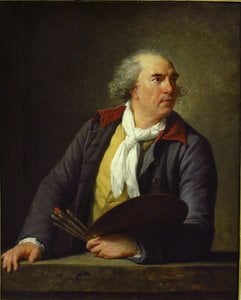
Hubert Robert

Hubert Robert

1733 - 1808 , Francia

Datos clave

  • Artistas Que Influyeron: ['Giovanni Paolo Panini']
  • Fecha De Fallecimiento: 15 de abril de 1808
  • Fecha De Nacimiento: 22 de mayo de 1733
  • Lugar De Nacimiento: París, Francia
  • Movimiento Artístico: Rococó y Neoclasicismo
  • Nacionalidad: Francés
  • Nombre Completo: Hubert Robert
  • Obras Notables:
    • Interior del Templo de Diana
    • Le château de la Roche Guyon
    • El artista dibujando en los jardines
    • Paisaje con terraza y cascada
    • Villa Sachetti
    • Establos en ruinas de Villa Giulia
Explore obras de arte organizadas por temas, estilos y características.